Lowercase letter writing Normal Letter Recognition Worksheets for Ages 4-6
3 filtered results
-
From - To
Introduce your child to the world of literacy with our Lowercase Letter Writing Normal Letter Recognition Worksheets, designed specifically for ages 4-6. These engaging worksheets help young learners recognize and write lowercase letters, building essential language skills. Fun and interactive activities make letter learning a playful experience, encouraging children to practice proper letter formation while enhancing their fine motor skills. Our worksheets are perfect for parents and educators looking to support early literacy development at home or in the classroom. Watch your child's confidence grow as they master lowercase letters and prepare for future reading and writing success!
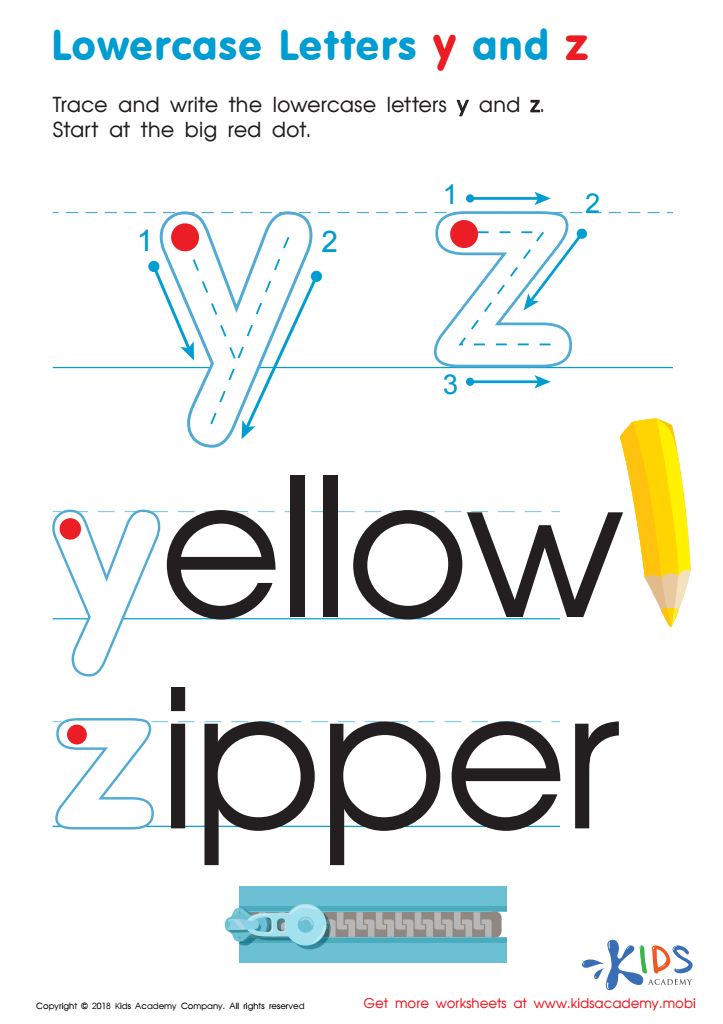
Lowercase Letters y z Worksheet
 Assign to My Students
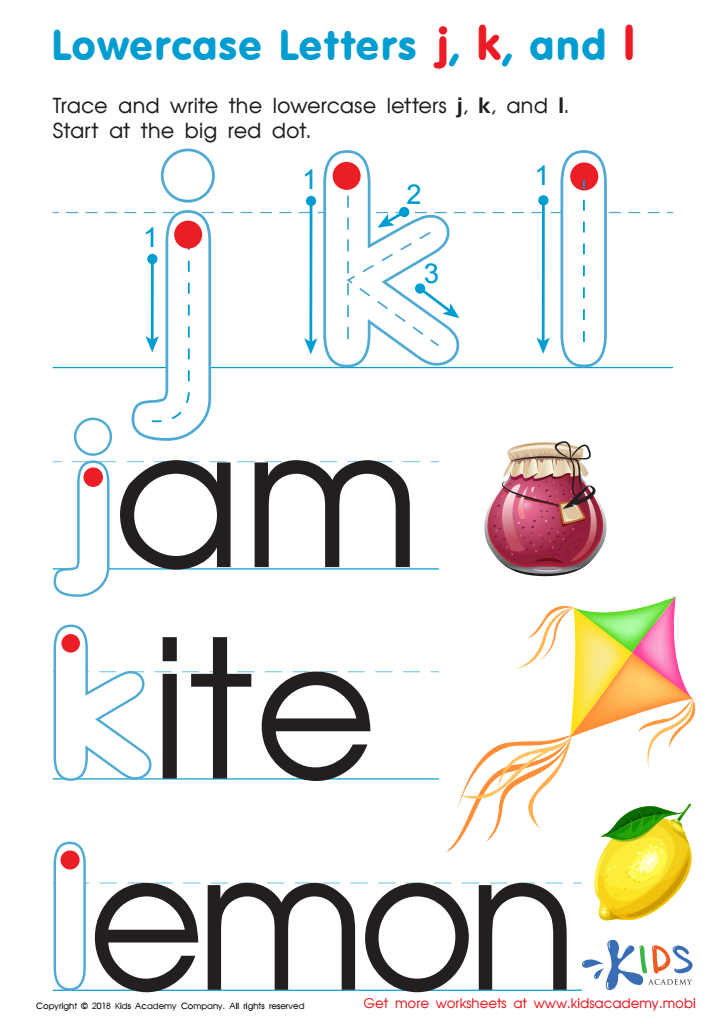
Lowercase Letters j k l Worksheet
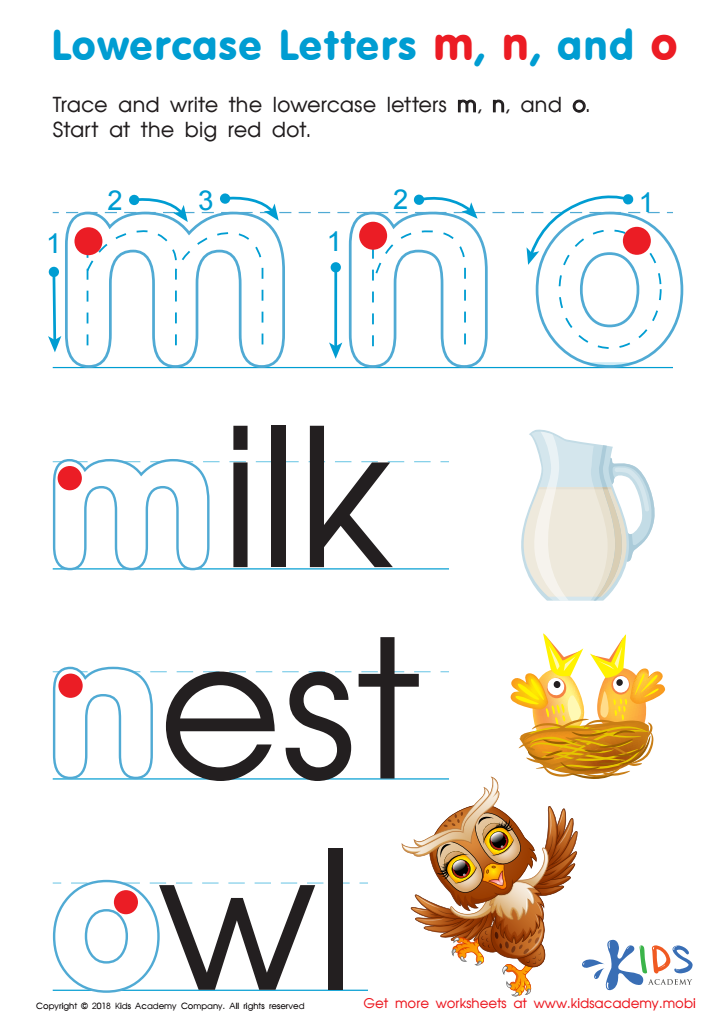
Lowercase Letters m n o Worksheet








Parents and teachers should prioritize lowercase letter writing and normal letter recognition for children ages 4-6 because these foundational skills are crucial for early literacy development. At this stage, children are beginning to interact with written language, and recognizing lowercase letters aids them in reading and writing effectively, as most text is composed in this format. Mastery of lowercase letters supports their ability to decode words, contributing to improved reading fluency and comprehension.
Lowercase writing not only enhances fine motor skills but also promotes cognitive development. As children practice forming letters, they learn to differentiate between letters, understand their sounds, and build phonemic awareness, which is essential for spelling. This process aids in their overall communication skills, allowing them to express themselves clearly in writing.
Moreover, familiarizing children with normal letter recognition fosters confidence in their abilities. This recognition is foundational for future learning, where they will encounter more complex literacy tasks. By instilling a love for letters and words through engaging activities, educators and parents can create a positive learning environment. Overall, attention to lowercase letter skills lays the groundwork for lifelong literacy, setting children up for academic success as they progress through their educational journey.








