
Phonics Skills Normal Letter Recognition Worksheets for Ages 4-6
3 filtered results
Difficulty Level
Grade
Age
-
From - To
Subject
Activity
Standards
Discover our engaging Phonics Skills Normal Letter Recognition Worksheets designed specifically for children ages 4-6! These fun, interactive worksheets help young learners build essential phonemic awareness and letter recognition skills. Each page is thoughtfully crafted to teach the alphabet through exciting activities, including tracing, identifying, and matching letters. Our resources promote early literacy development, making learning enjoyable and effective. Perfect for teachers and parents alike, these worksheets can be easily printed for at-home or classroom use. Support your child's reading foundation today with our colorful, playful Phonics Skills worksheets and watch their confidence grow as they master letter recognition!
Favorites
With answer key
Interactive
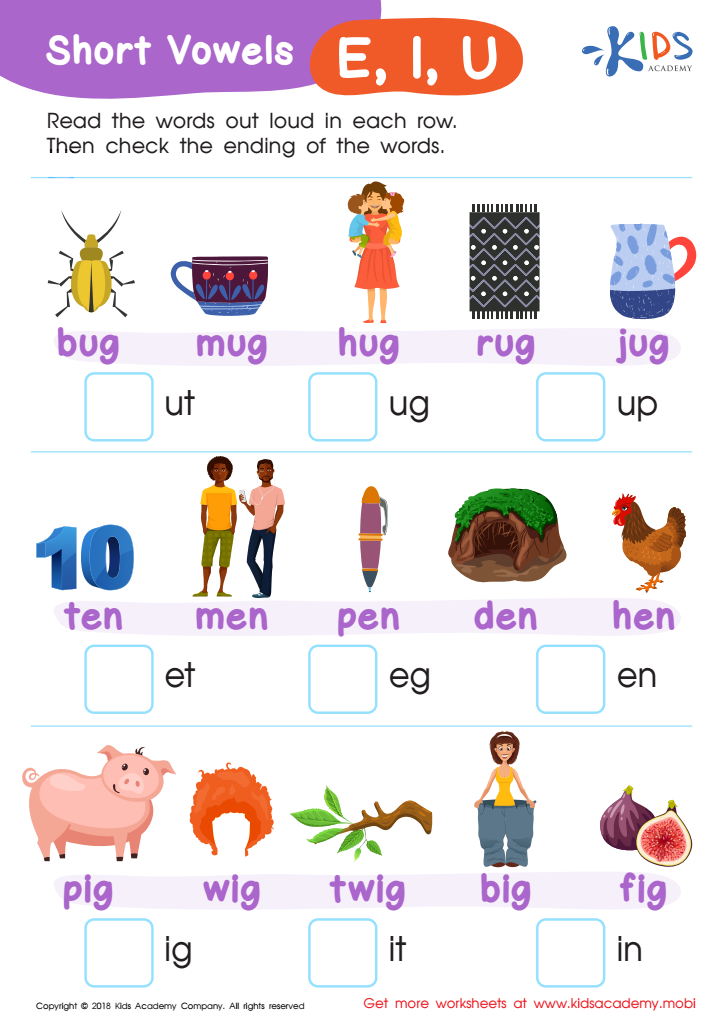
Short Vowels /e/, /i/, and /u/ Worksheet
Your emergent reader can have fun while practicing their short vowel sounds with this free, brightly colored worksheet. They'll identify one-syllable words by their pictures, then match the correct ending for each. They'll gain an understanding of how short vowel sounds vary in closed syllables with different endings, without even realizing it!
 Assign to My Students
Short Vowels /e/, /i/, and /u/ Worksheet
Worksheet
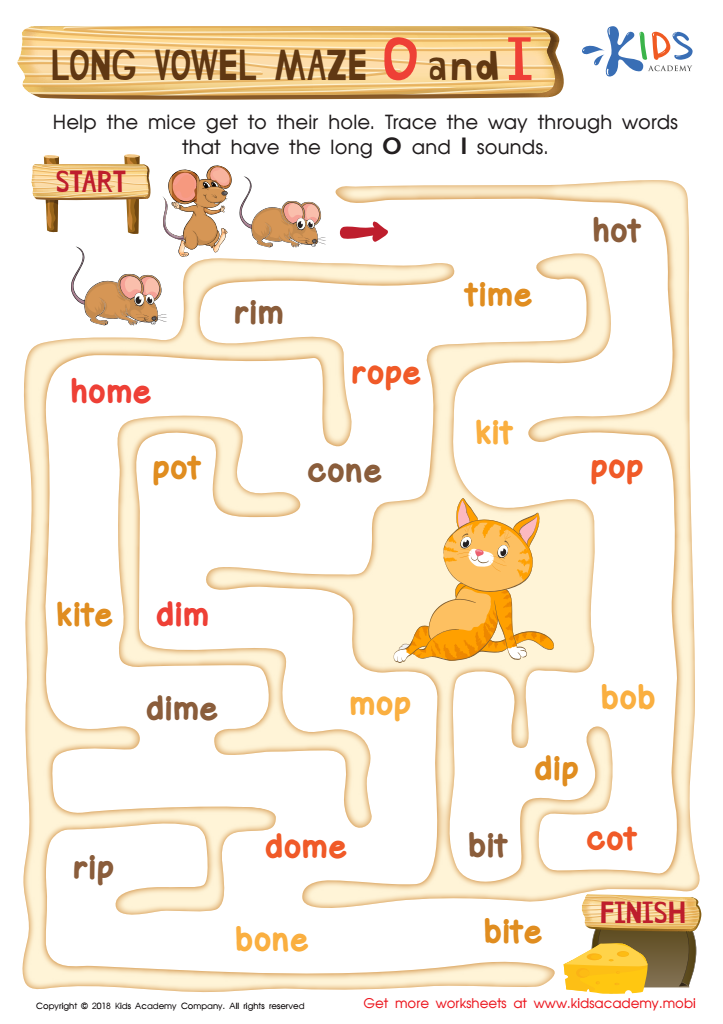
Long Vowel Maze /o/ and /i/ Worksheet
Help your new readers have fun and build their sight word vocabulary! Guide the mice to their prize cheese by having them trace the route on the worksheet, using words with the long o and long i sounds. But watch out for the kitty!
Long Vowel Maze /o/ and /i/ Worksheet
Worksheet
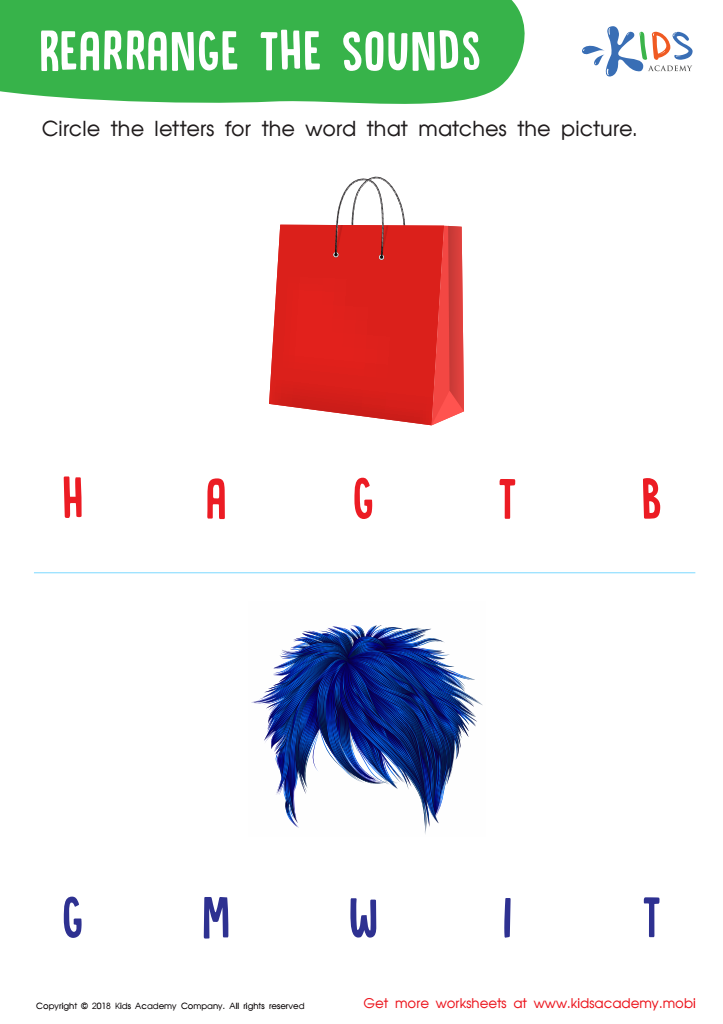
Rearrange the Sounds Worksheet
Ask students if they can identify the objects in the worksheet and spell the words. Guide them to find and circle the letters that match the picture. This exercise should be easy-peasy for advanced spellers.
Rearrange the Sounds Worksheet
Worksheet
Join Kids Academy for Free
Who is primarily going to use this learning content?








Phonics skills and normal letter recognition are crucial components of early literacy development for children aged 4-6. These skills serve as the foundation for reading and writing, enabling young learners to decode words and understand the relationship between sounds and letters. Early recognition of letters equips children with the tools to identify individual phonemes, facilitating better spelling and pronunciation.
Moreover, developing strong phonics skills enhances a child's confidence and enthusiasm for reading, ultimately nurturing a lifelong love for literature. As parents and teachers prioritize phonics and letter recognition, they also foster improvements in vocabulary acquisition, comprehension, and overall academic performance.
Engaging in phonics and letter recognition activities, such as letter games, songs, and interactive storytelling, not only makes learning enjoyable but also strengthens the bond between adults and children through shared educational experiences. As children become proficient in these skills, their literacy abilities will flourish, leading to greater success as they transition to more complex reading tasks. Therefore, it’s essential for parents and teachers to actively support and nurture phonics skills and letter recognition, as they play a vital role in shaping the future literacy capabilities of children.








