Handwriting practice Normal Letter Sounds Worksheets for Ages 4-6
4 filtered results
-
From - To
Discover our engaging Handwriting Practice Normal Letter Sounds Worksheets designed specifically for children ages 4-6. These worksheets combine the foundational skills of handwriting with the essential learning of letter sounds, creating a fun and effective educational experience. With a variety of exercises, young learners can enhance their fine motor skills while mastering the sounds associated with each letter of the alphabet. Each worksheet includes colorful illustrations and clear instructions to keep children motivated and focused. Perfect for preschool and kindergarten settings, these resources will help nurture confident writers and enthusiastic readers. Start your child's learning journey today with our printable worksheets!
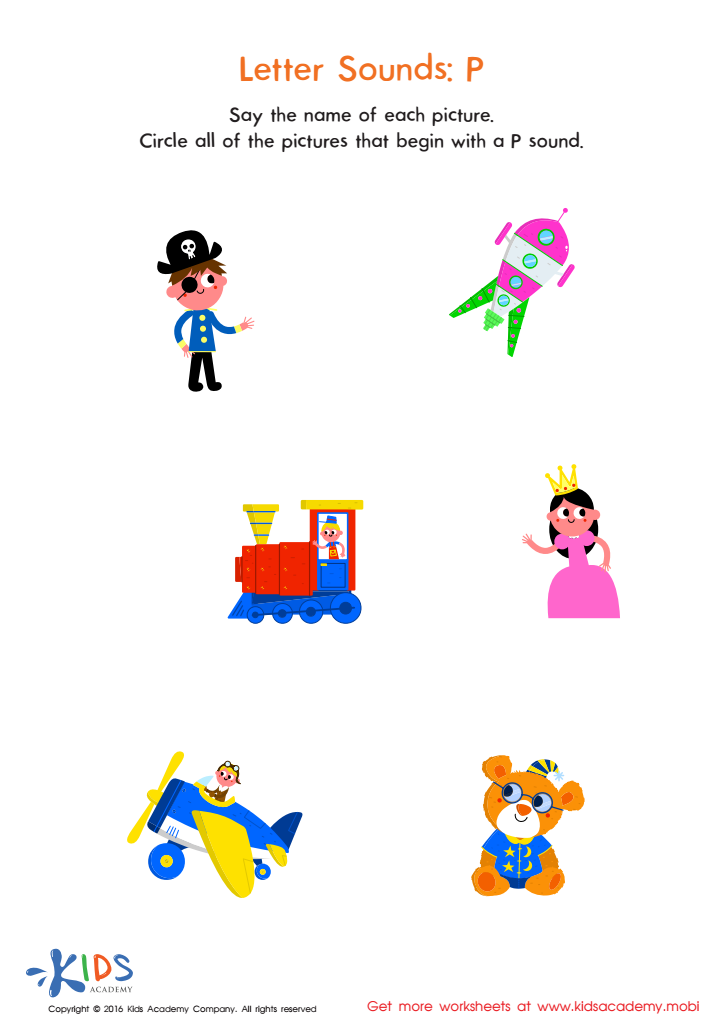
Letter P Sound Worksheet
 Assign to My Students
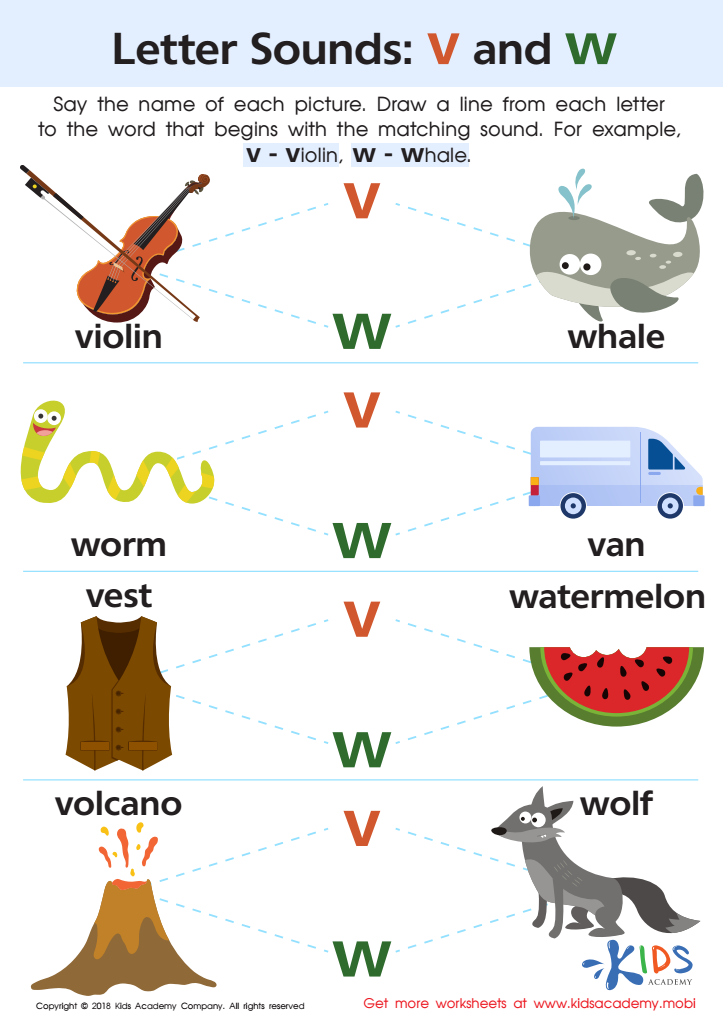
Letter V and W Sounds Worksheet
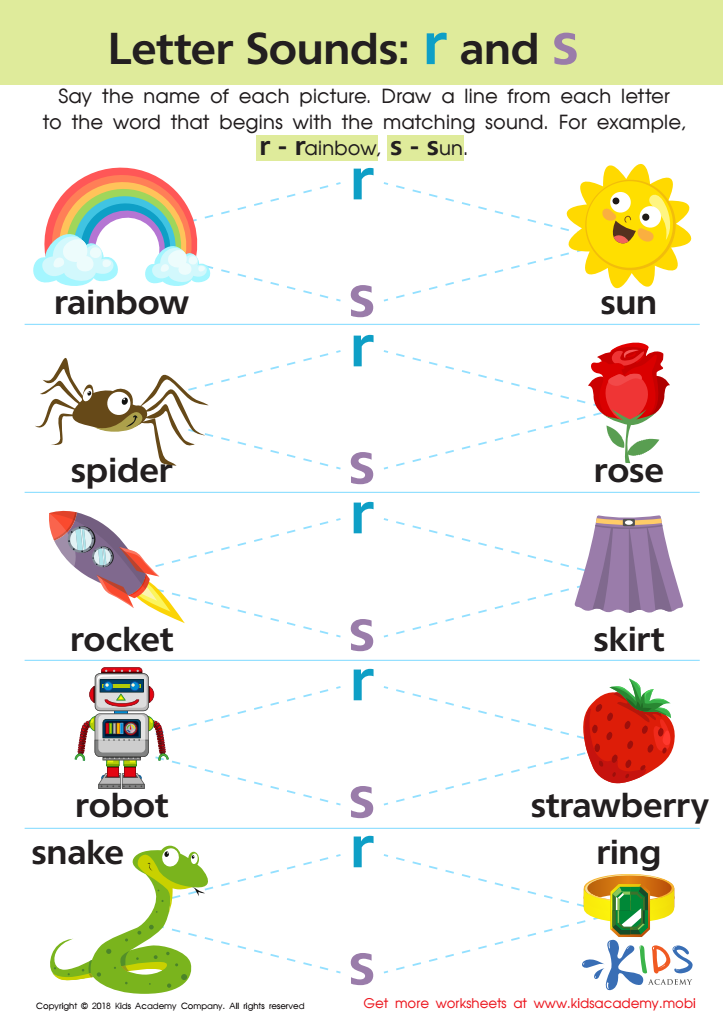
Letter R and S Sounds Worksheet
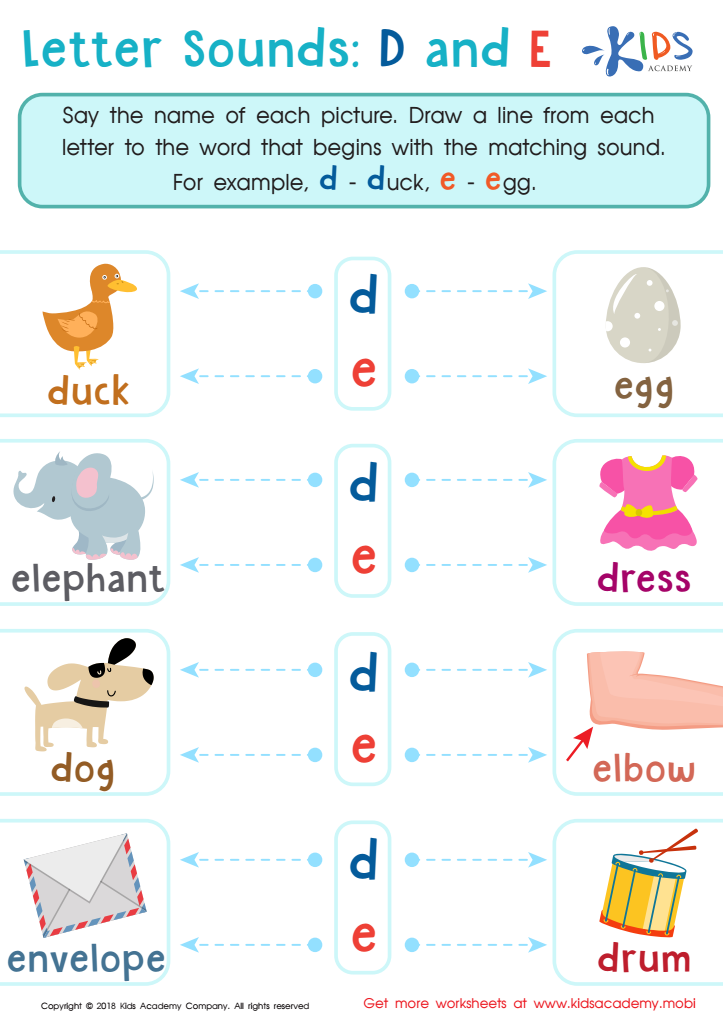
Letter D and E Sounds Worksheet








Handwriting practice, particularly normal letter sounds, is crucial for children aged 4-6 as it lays the foundation for their literacy development. During this formative stage, young learners are not only developing fine motor skills but also making connections between letters and their corresponding sounds. This practice supports the acquisition of phonemic awareness, essential for reading and spelling.
Parents and teachers should care about this practice because it promotes early literacy skills, which are predictors of future academic success. By mastering normal letter sounds and handwriting, children gain confidence in their ability to express themselves through writing, creating a positive feedback loop that fosters a love for learning. Additionally, regular handwriting practice enhances focus and discipline, crucial traits for their educational journey.
Moreover, engaging in handwriting activities can be a fun and interactive experience, allowing parents and teachers to bond with children over shared learning. These activities can improve attention span and boost cognitive development, providing children with a holistic approach to learning. Ultimately, investing time in handwriting practice helps cultivate well-rounded learners equipped with the skills needed to thrive in school and beyond. Creating a strong foundation in these early years can set children on a path to lifelong literacy and overall success.






