Reading skills improvement Normal Letter Sounds Worksheets for Ages 4-6
3 filtered results
-
From - To
Enhance your child's early literacy with our "Reading Skills Improvement Normal Letter Sounds Worksheets" designed for ages 4-6! These engaging and educational worksheets focus on letter recognition, phonemic awareness, and basic reading skills. Through fun activities and interactive exercises, children will master the sounds each letter makes, forming a strong foundation for future reading development. Our worksheets are perfect for use at home or in the classroom, providing young learners with the tools they need to succeed. Help your child embark on their reading journey with confidence and enthusiasm with Kids Academy printables!
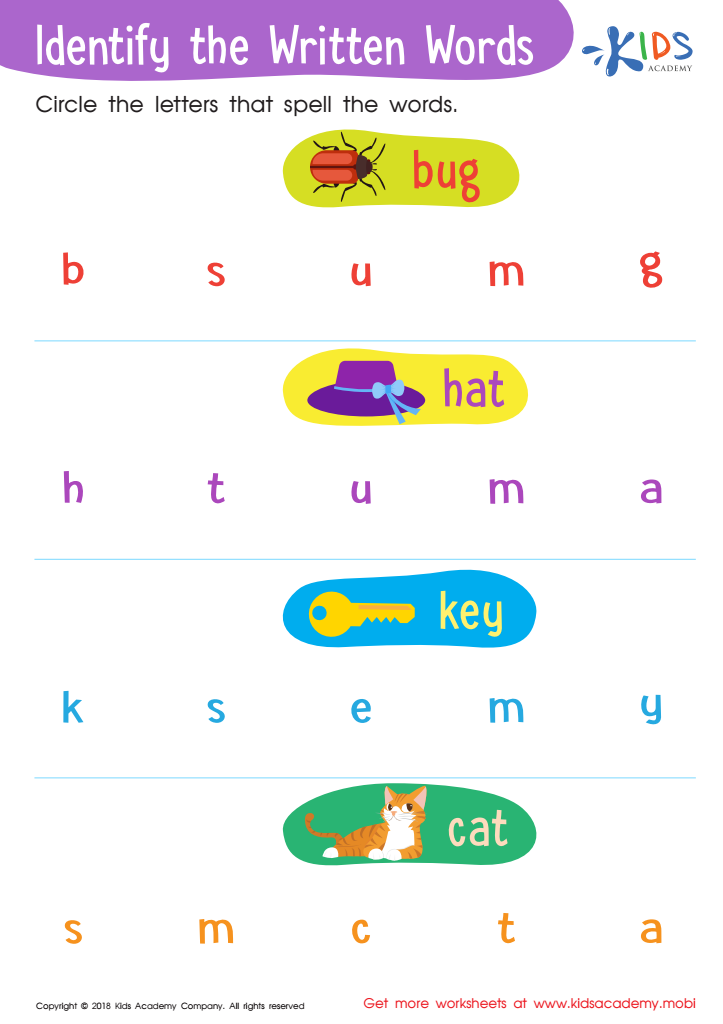
Identify the Written Words Worksheet
 Assign to My Students
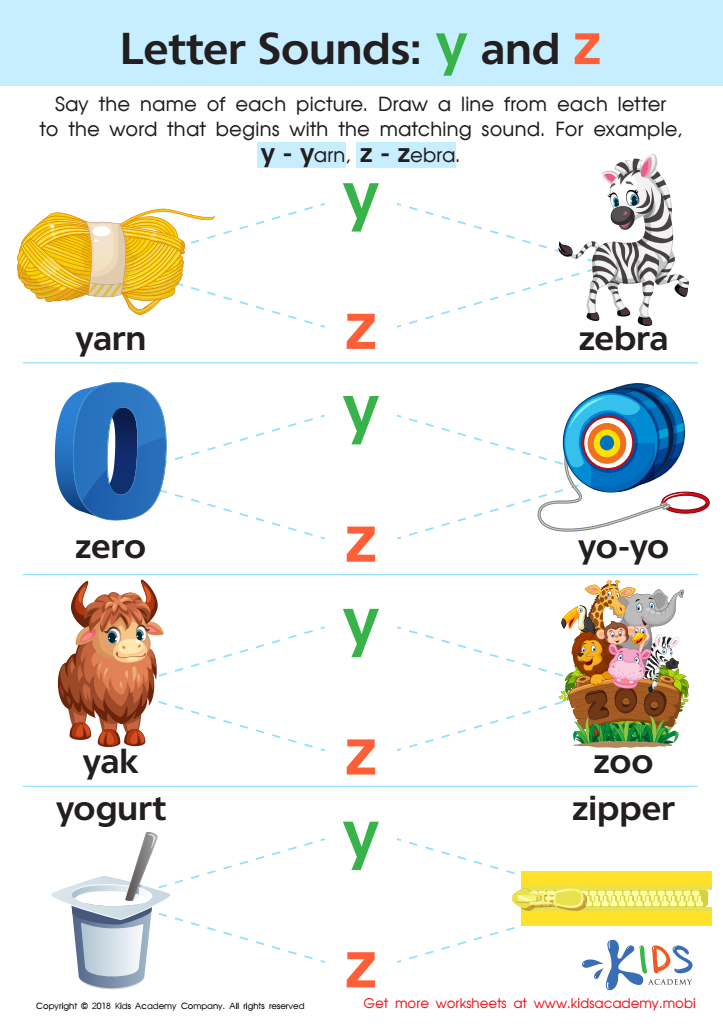
Letter Y and Z Sounds Worksheet
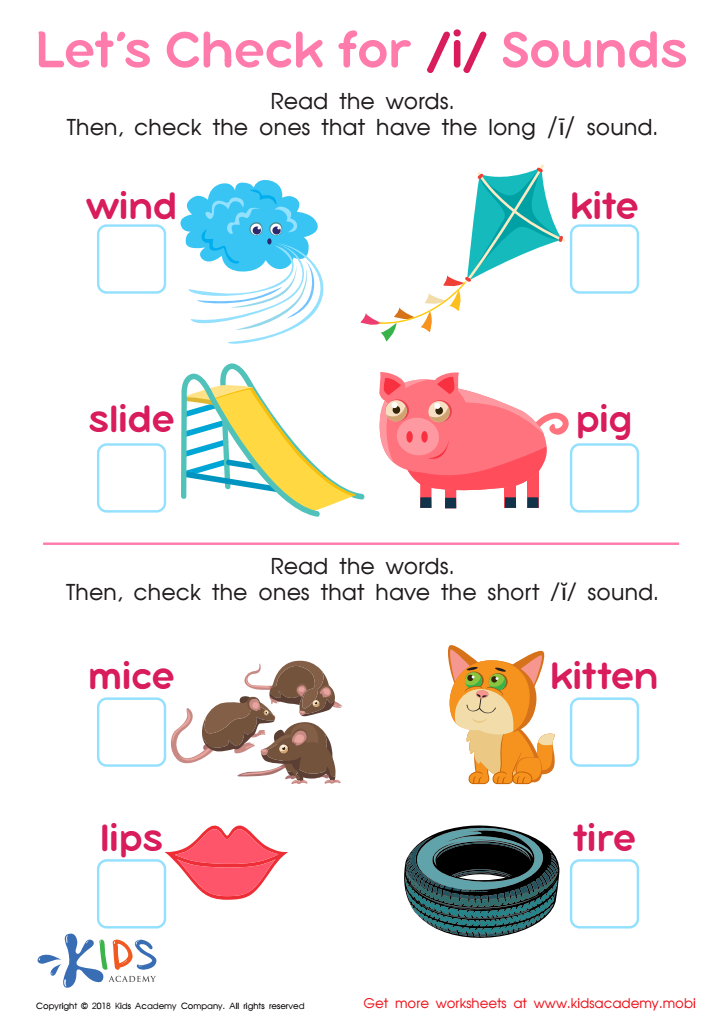
Let's Check for «i» Sounds Worksheet








Improving reading skills and normal letter sounds for children aged 4-6 is crucial because this period marks foundational development in literacy. At this age, children are in the early stages of learning to read, recognizing letters, and understanding letter-sound relationships. Mastery of these fundamental skills sets the groundwork for future academic success and cognitive development.
When children develop strong reading skills early, they are more likely to excel in all school subjects since most learning is language-based. Proficient reading enables them to follow instructions, understand lessons, and acquire new knowledge independently. For parents and teachers, nurturing these skills not only prepares children for academic achievement but also cultivates a love for reading, which supports lifelong learning.
Moreover, early reading skills improvement enhances children's communication abilities. Understanding sounds and letters helps them articulate words correctly, expand their vocabulary, and improve comprehension. This literacy foundation fosters confidence and encourages participation in class discussions and social interactions, enhancing overall personal development.
Investing time and effort in teaching normal letter sounds and fostering reading competence in children aged 4-6 is indispensable. It positively impacts their educational journey, emotional growth, and future opportunities, illustrating just how vital early literacy is in shaping capable, confident, and curious learners.






