Lowercase letter writing Normal Tracing Letters Worksheets for Ages 4-6
3 filtered results
-
From - To
Discover our engaging "Lowercase Letter Writing Normal Tracing Letters Worksheets" crafted specifically for children ages 4-6. These worksheets help young learners master the alphabet through fun and interactive tracing activities. Each sheet focuses on developing precision and confidence in writing lowercase letters, serving as the foundation for effective handwriting skills. Guided, easy-to-follow instructions ensure an enjoyable and educational experience, sparking a love for learning. Ideal for both classroom and home use, these printables support literacy and fine motor development, preparing children for their academic journey. Set your child on the path to writing success today!
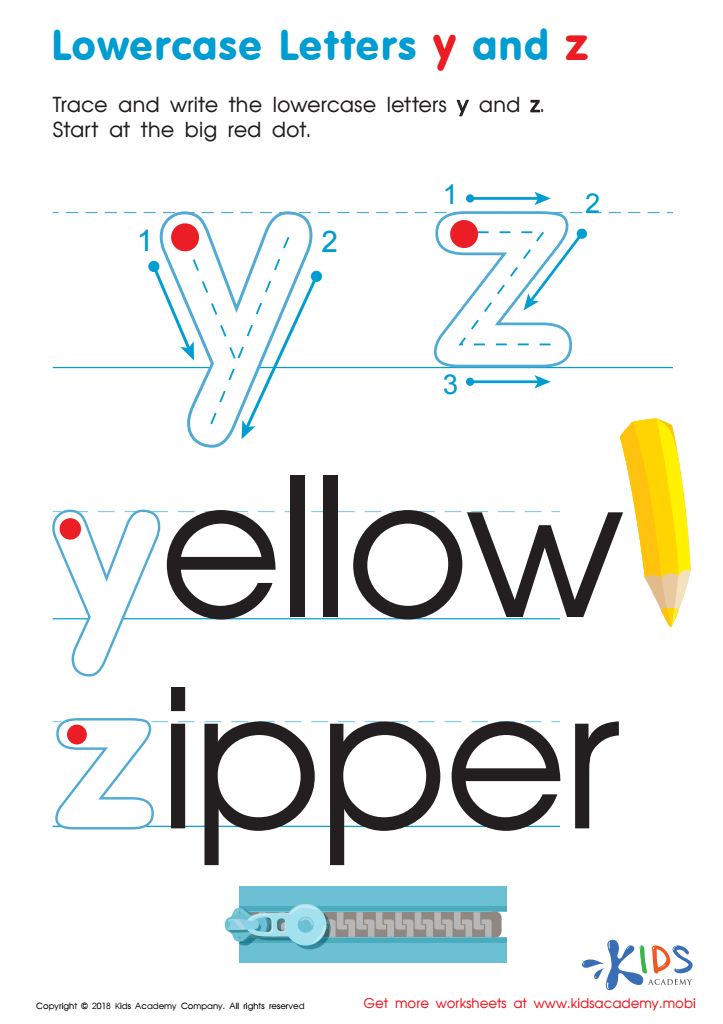
Lowercase Letters y z Worksheet
 Assign to My Students
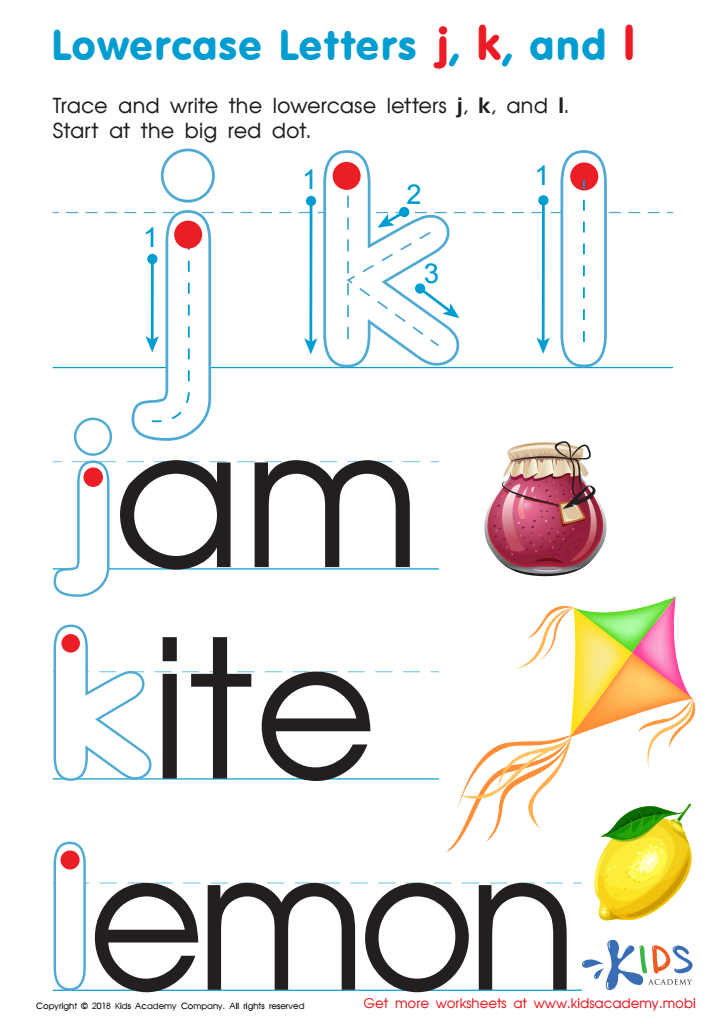
Lowercase Letters j k l Worksheet
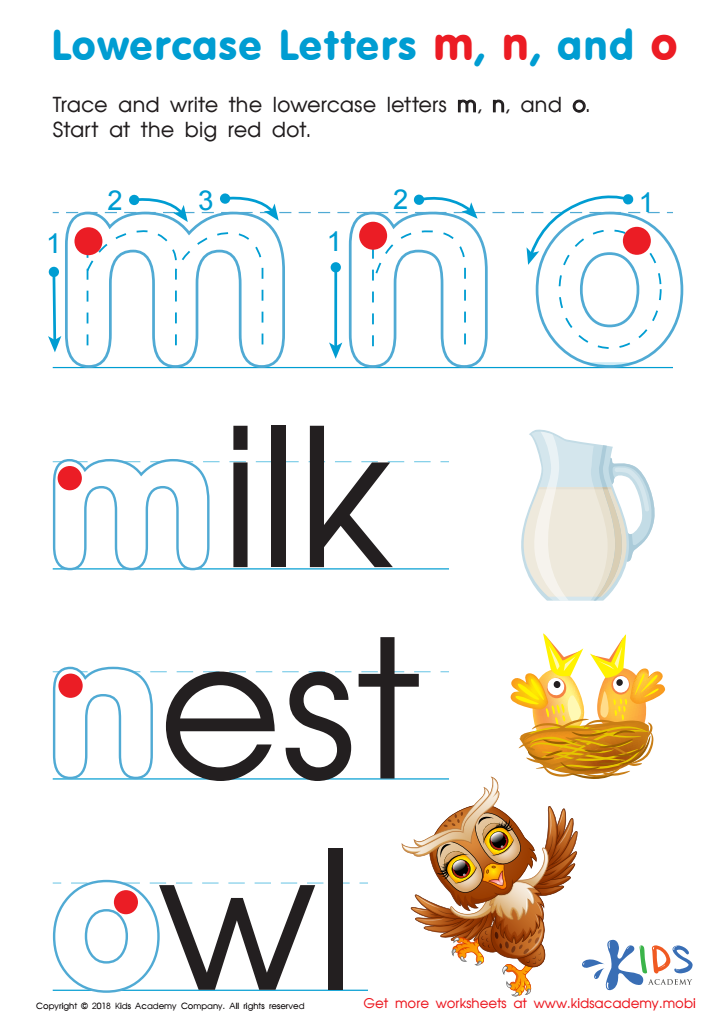
Lowercase Letters m n o Worksheet







Teaching lowercase letter writing and normal tracing to children aged 4-6 is crucial for several developmental and educational reasons. Firstly, this age span is a formative period in children’s fine motor skill development. Engaging in letter tracing exercises helps kids refine their hand-eye coordination, manual dexterity, and pencil grip, which are foundational skills for all future writing and drawing activities.
Secondly, mastering lowercase letters builds the bedrock for literacy. Lowercase letters dominate most written text, so recognizing and writing them fluently is essential for reading and comprehension. By focusing on proper tracing, children also learn the correct stroke order and direction, leading to more legible handwriting.
Moreover, these activities foster cognitive development by requiring attention to detail and focus. Tracing ridged letters helps reinforce letter shapes in a multi-sensory manner, combining visual, tactile, and kinesthetic learning styles, thereby enhancing memory retention.
Finally, success in these early writing skills boosts confidence and promotes a love for learning. Accomplishing one of their earliest academic challenges gives children a sense of achievement, a positive association with literacy activities, and better readiness for more advanced educational tasks in the future. Therefore, parents and teachers play a vital role in guiding children through these foundational exercises.








