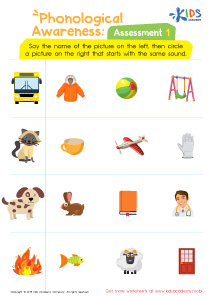
Spelling practice Normal Vowels and Consonants Worksheets for Ages 4-6
4 filtered results
-
From - To
Enhance your child's spelling skills with our specially crafted worksheets focused on Normal Vowels and Consonants. Designed for ages 4-6, these engaging activities help young learners identify, write, and spell basic words with ease. Our worksheets combine fun and education to build a strong foundation in early literacy, boosting confidence and proficiency. Each exercise emphasizes the correct usage of vowels and consonants, fostering better phonemic awareness. Ideal for both classroom and home use, these printable resources ensure continuous learning, making spelling practice enjoyable and effective. Nurture your child’s reading and writing skills today with our proven techniques!
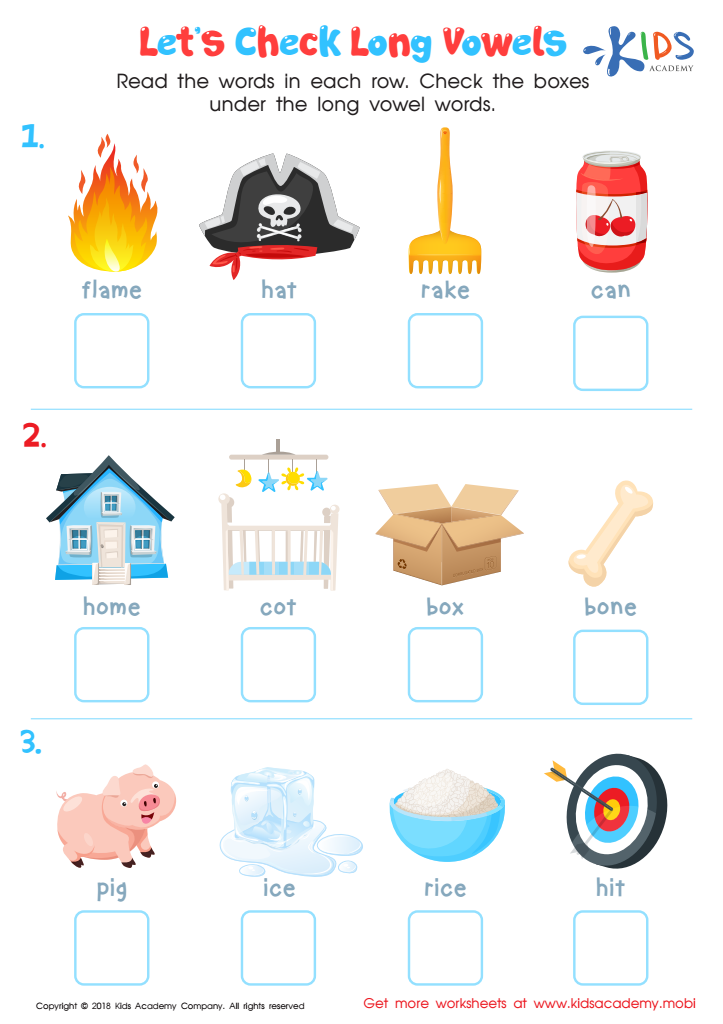
Let's Check Long Vowels: Assessment Worksheet
 Assign to My Students
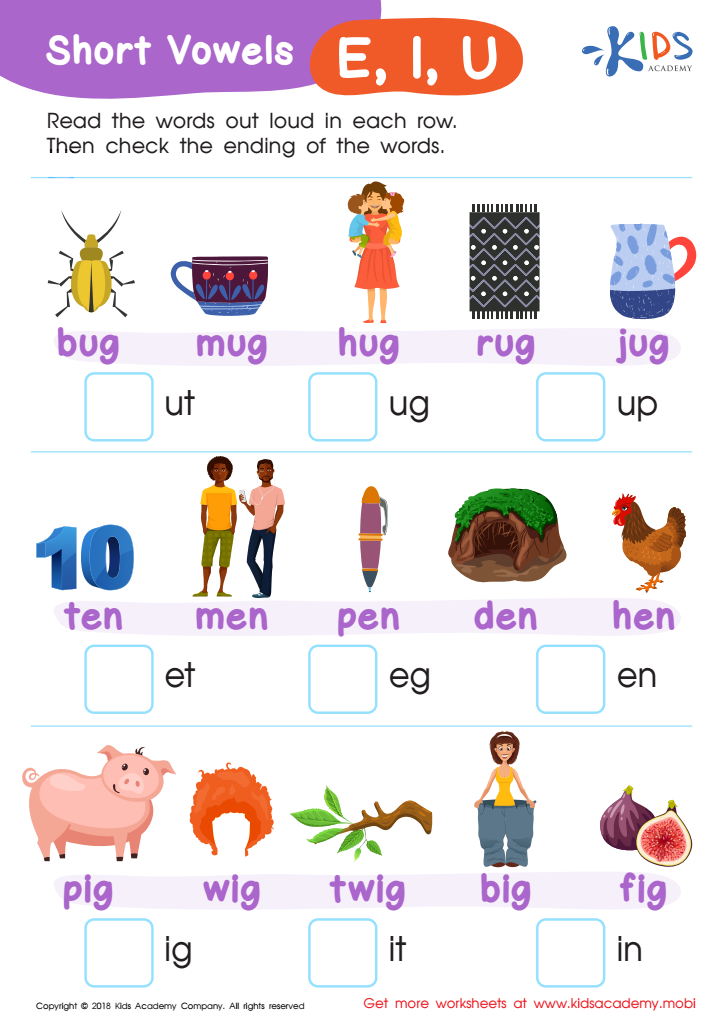
Short Vowels /e/, /i/, and /u/ Worksheet
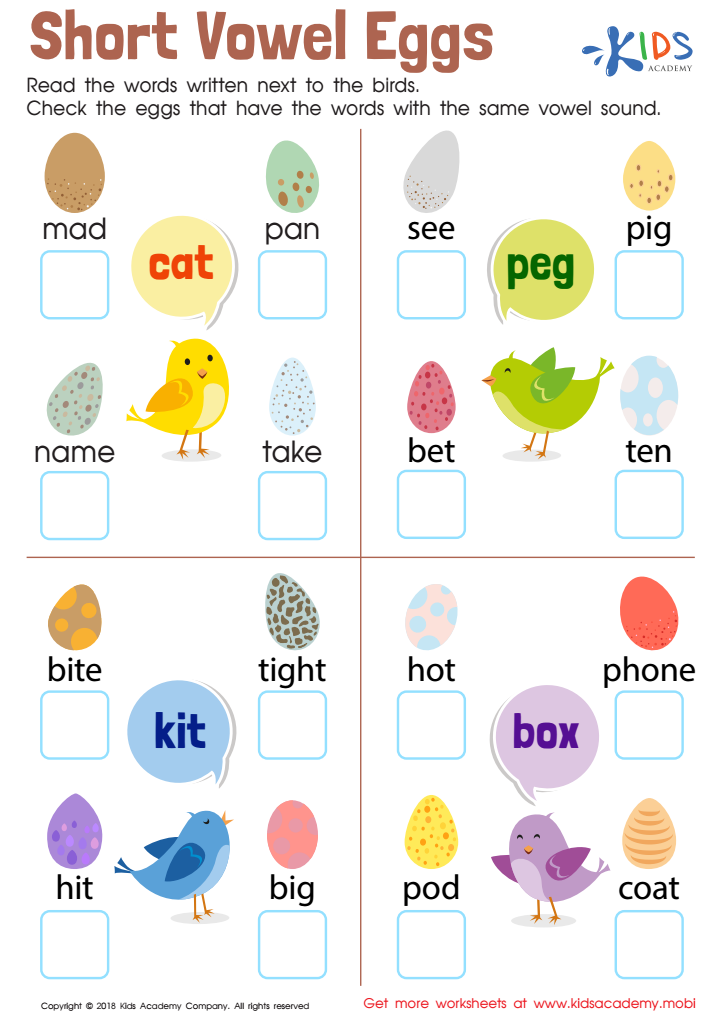
Short Vowel Eggs Worksheet
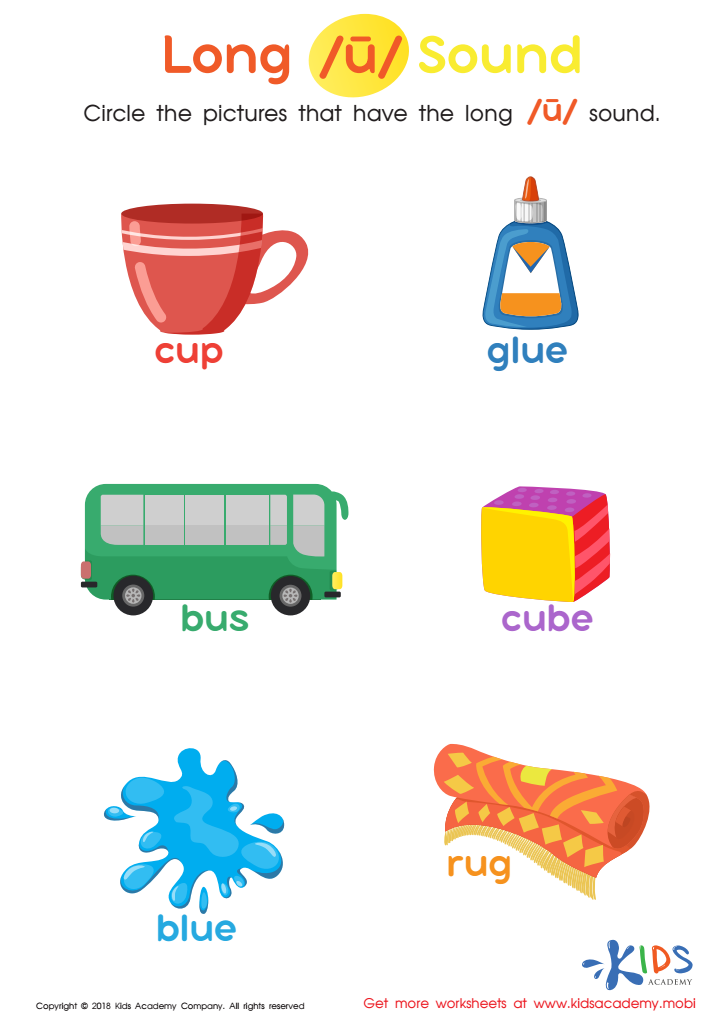
Long «u» Sound Worksheet



Spelling practice focusing on normal vowels and consonants is crucial for children aged 4-6 due to several developmental reasons. At this age, children are in a critical period for language acquisition and literacy development. Engaging in consistent spelling practice helps them grasp the basic building blocks of the English language, which are essential for reading and writing proficiency.
When children practice spelling, they strengthen their understanding of letter-sound correspondence. Recognizing how vowels and consonants combine to form words lays a strong foundation for phonemic awareness, an essential skill for decoding new words. This early exposure helps children become more confident readers, enabling them to progress smoothly as they encounter increasingly complex text.
Additionally, spelling practice supports memory retention and cognitive development. Memorizing spelling patterns and rules helps develop critical thinking and problem-solving skills. It also encourages fine motor skills through the physical act of writing, which assists in overall academic readiness.
Parents and teachers play a pivotal role in providing structured and engaging spelling activities. These practices should be fun yet educational, incorporating games, visual aids, and repetition to maintain a child’s interest. By prioritizing spelling practice with a focus on normal vowels and consonants, adults set the stage for a lifetime of successful literacy and learning.