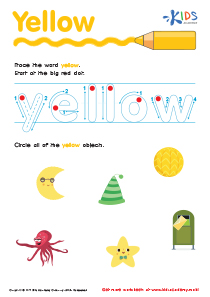
Motor skills development Normal English for Beginners Worksheets for Ages 4-6
3 filtered results
Difficulty Level
Grade
Age
-
From - To
Subject
Activity
Standards
Enhance your child's motor skills with our "Normal English for Beginners Worksheets for Ages 4-6." These engaging printable worksheets are designed to support early learners in developing fine motor skills alongside language basics. By tracing letters, shapes, and simple lines, kids will improve their hand-eye coordination, pencil control, and readiness for writing. Perfect for young English language learners, these activities also build foundational vocabulary and language comprehension. Download now to give your aspiring writers a head start in both motor skills and language development. Ideal for home or classroom use.
Favorites
With answer key
Interactive

Letter H Tracing Page
Trace the letter "H", then practice writing its lowercase form. Finally, choose your favorite form of transport and ride away! Get our worksheets to make learning fun and easy.
Letter H Tracing Page
Worksheet
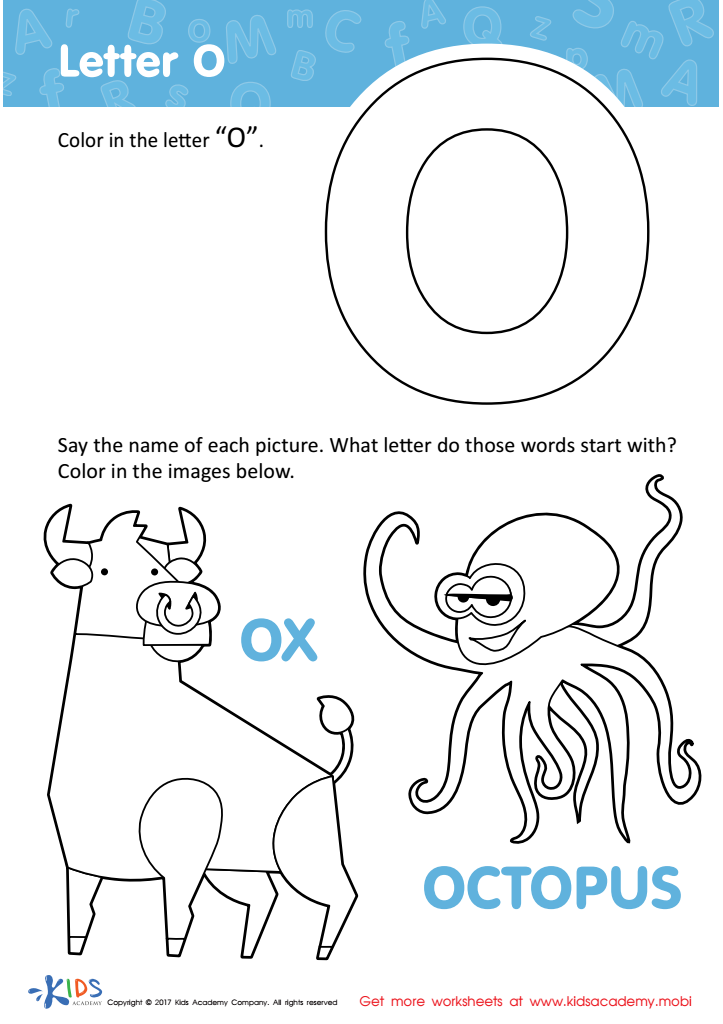
Letter O Coloring Sheet
Oh my! The letter "O" is so much fun. Coloring in the octopus and ox on this delightful letter "O" coloring page can help your child have fun while strengthening their recognition of the letter and sound.
Download (PDF)
 Assign to My Students
Assign to My Students
Letter O Coloring Sheet
Worksheet
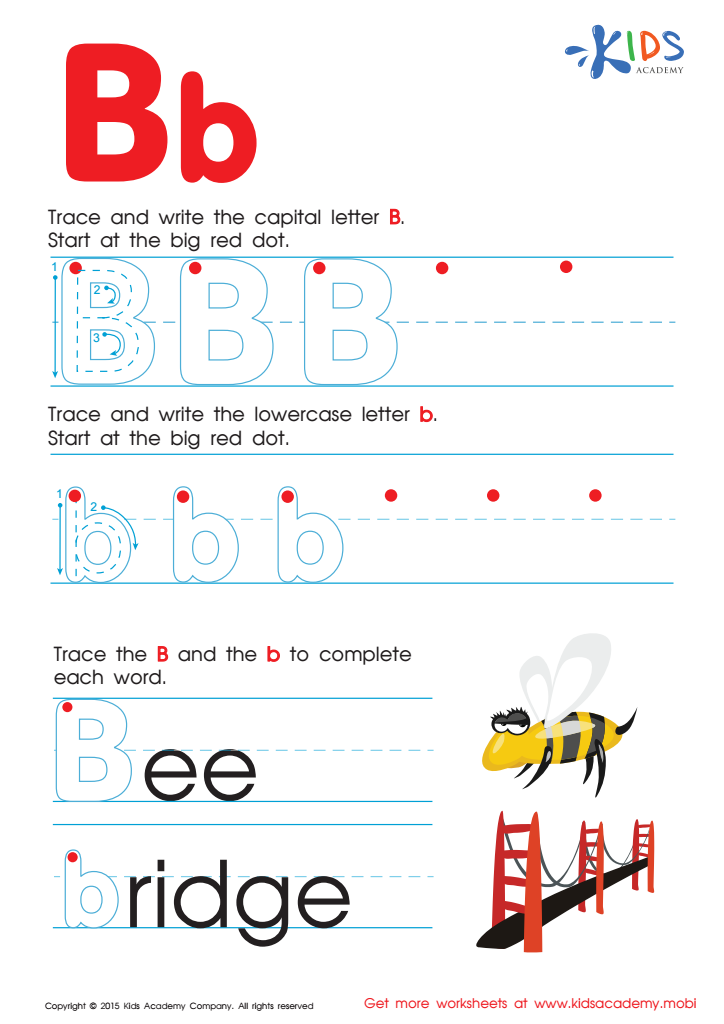
Letter B Tracing Page
Ready to learn the Alphabet? Put your pencil on the red dot and trace & write both capital & lowercase "B". Then have a look at the pictures. Catch the bee, cross the bridge & write the letters to complete the words. More ABC worksheets for kindergarten available!
Letter B Tracing Page
Worksheet
Join Kids Academy for Free
Who is primarily going to use this learning content?




Motor skills development is really important for young kids, from ages 4 to 6, and here's why. Good motor skills help children do everyday tasks easily, like buttoning their coat, holding a pencil to write, or even tying their shoes. These skills are divided into two types: fine motor skills (using small muscles, like those in the hands) and gross motor skills (using big muscles, like those in the legs and arms).
When parents and teachers pay attention to kids' motor skills, they're helping them become more independent. Imagine how confident a child feels after they proudly zip up their own jacket for the first time! Plus, developing these skills is not just about doing tasks, but also about brain development. Activities that involve movement help kids improve their balance, coordination, and problem-solving abilities.
Children use motor skills to explore the world around them. Playing with playdough develops hand muscles, while hopping on one foot builds balance and body control. If their motor skills are strong, they can better participate in play and learning activities, which is super important for making friends and learning new things.
So, helping kids with their motor skills builds a strong foundation for their future. They learn not only to move well but also to think and solve problems. This makes them ready for school and life ahead!