
Logical Reasoning Normal Reading Comprehension Worksheets for Ages 4-6
4 filtered results
Difficulty Level
Grade
Age
-
From - To
Subject
Activity
Standards
Discover our engaging "Logical Reasoning Normal Reading Comprehension Worksheets" tailored for children ages 4-6! Designed to enhance critical thinking and comprehension skills, these worksheets combine fun activities with vital reading exercises. Young learners will enjoy exciting stories accompanied by thoughtful questions encouraging them to analyze and interpret information. Fostering early literacy, our resource supports cognitive development while ensuring that education remains enjoyable. Whether used at home or in the classroom, our worksheets serve as an excellent tool for building a strong foundation in logical reasoning and reading comprehension. Dive in and watch your child's skills flourish with each activity!
Favorites
With answer key
Interactive
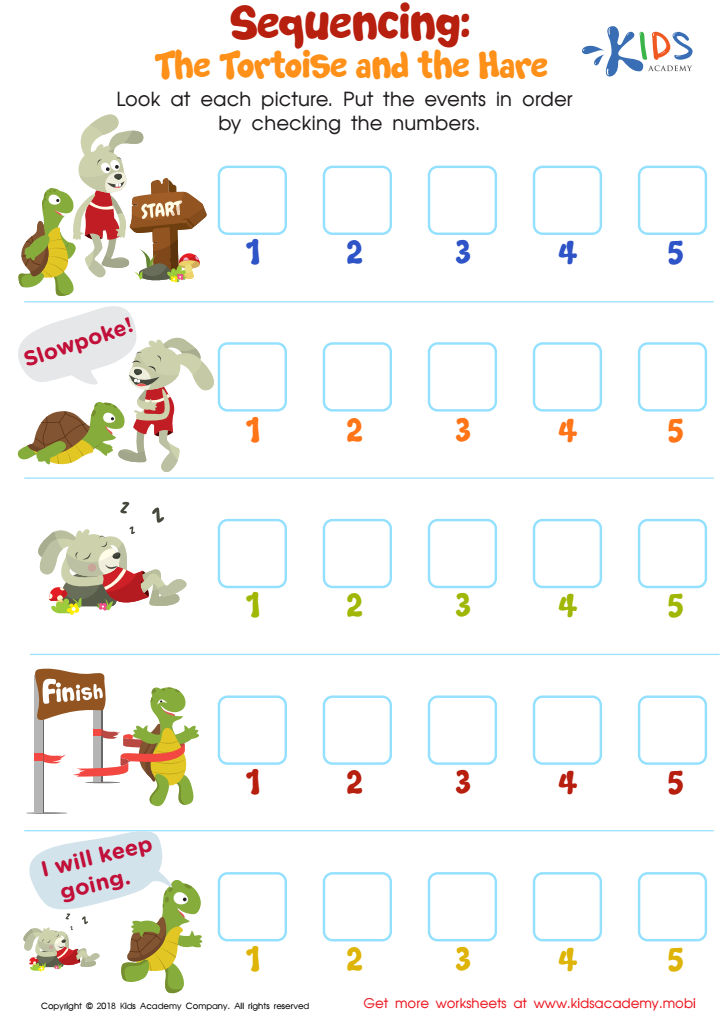
Sequencing: The Tortoise and the Hare Worksheet
Help your child become an independent reader and critical thinker with a sequencing worksheet from Kids Academy! Have them read the classic tale of the tortoise and the hare and use the accompanying worksheet to check their understanding of the story's sequence of events. Have kids identify the correct order of events by selecting the box next to the correct number for each image!
 Assign to My Students
Sequencing: The Tortoise and the Hare Worksheet
Worksheet
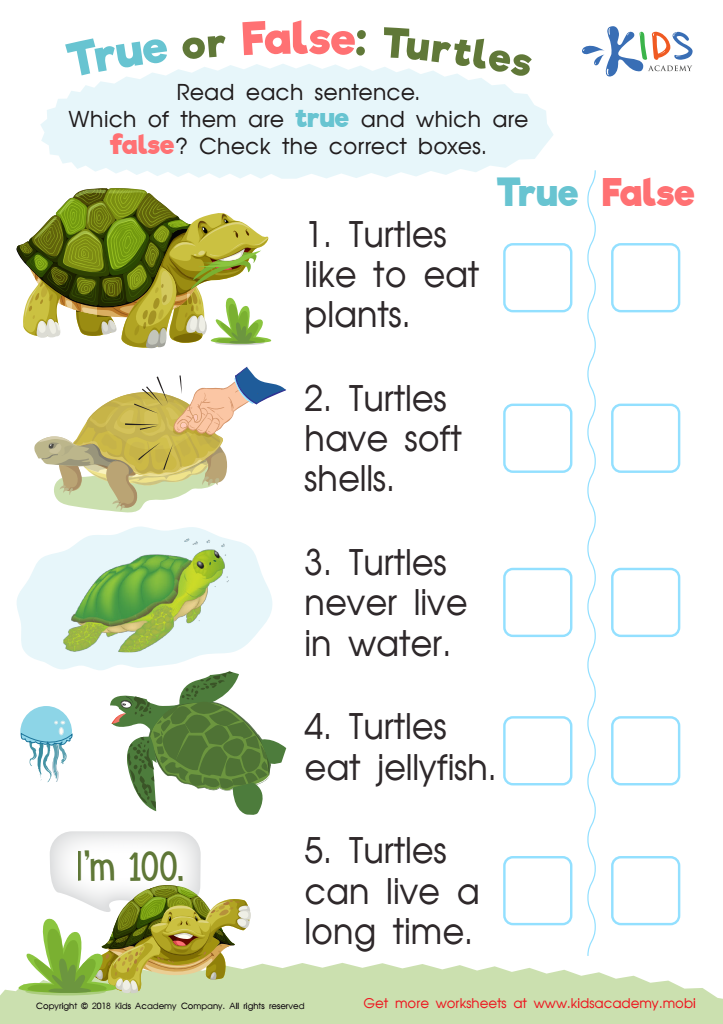
True or False: Turtles Worksheet
Print this free downloadable worksheet to strengthen your child's reading comprehension. Assist them to read each sentence and recall facts about turtles. Check true or false for each statement to verify their knowledge. Perfect for early learners!
True or False: Turtles Worksheet
Worksheet
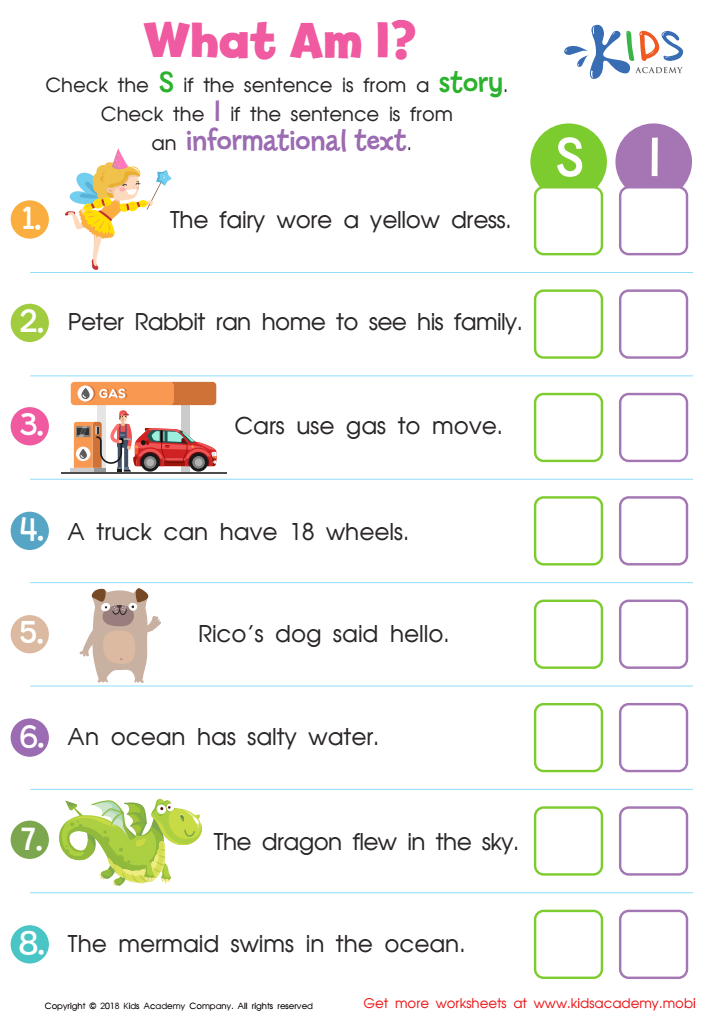
What Am I? Worksheet
This worksheet assesses students' ability to differentiate between stories and texts they read for facts. Students learn to distinguish between reading for pleasure and reading for information. It includes statements from both a story and an informational text, and students must decide what type of text it is.
What Am I? Worksheet
Worksheet
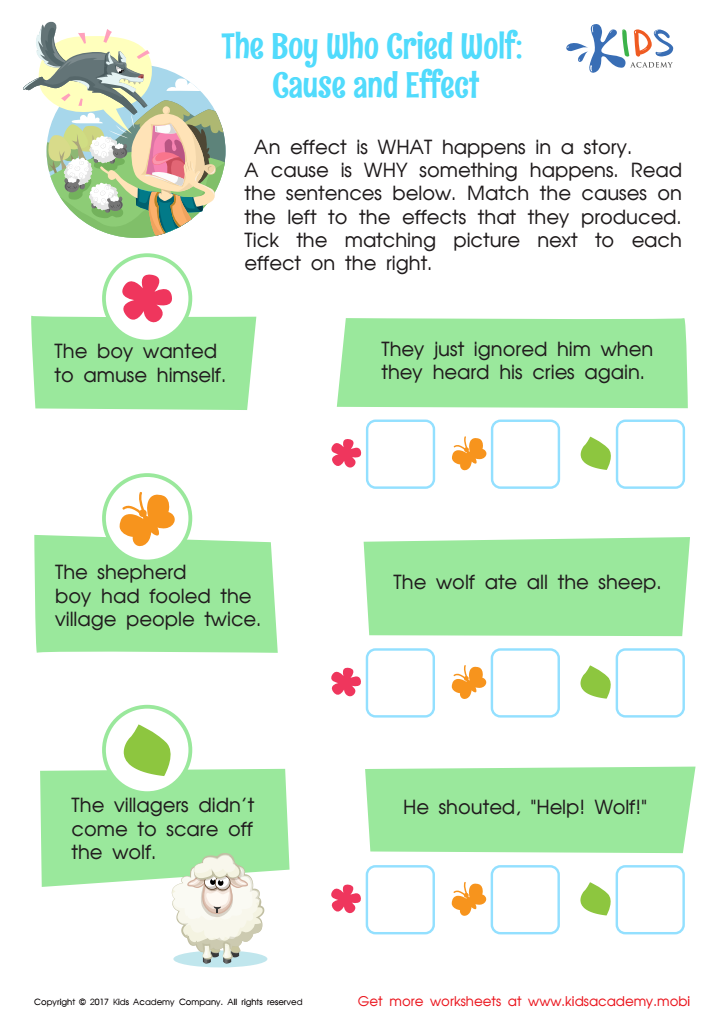
The Boy Who Cried Wolf: Cause and Effect Worksheet
With classic stories and fables, learning reading comprehension is easy - and fun!
The Boy Who Cried Wolf: Cause and Effect Worksheet
Worksheet
Join Kids Academy for Free
Who is primarily going to use this learning content?








Logical reasoning and reading comprehension are critical skills for children aged 4-6, laying the foundation for their educational journey. At this age, children are naturally curious, and developing their logical reasoning helps them enhance critical thinking abilities, problem-solving skills, and decision-making processes. Engaging in activities that promote logical reasoning allows children to analyze situations, discern patterns, and draw conclusions, fostering a love for learning.
Reading comprehension is equally vital as it enables young learners to make sense of stories and information around them. Teachers and parents who nurture this skill encourage children to grasp essential concepts, retell stories, and understand emotions and perspectives. This comprehension enhances vocabulary development, fluency, and cognitive growth, all essential for academic success in later years.
Moreover, both skills support social interactions by helping children understand narratives and reasoning behind their peers' behaviors. By emphasizing logical reasoning and reading comprehension, parents and teachers provide children with essential tools to navigate their world, promoting not only scholastic achievement but also emotional intelligence and resilience. Investing time in these areas cultivates confident learners prepared to face future challenges, making it crucial for adults in children's lives to actively support their development in these domains.








