
Knowledge application Normal Science Worksheets for Ages 4-6
3 filtered results
Difficulty Level
Grade
Age
-
From - To
Subject
Activity
Standards
Unlock curiosity and foundational knowledge with our Knowledge Application Normal Science Worksheets designed for ages 4-6. Our engaging, age-appropriate activities empower young learners to explore, observe, and understand the world around them through hands-on scientific discovery. From sorting and classifying objects to understanding basic life sciences, these worksheets are crafted to promote critical thinking and application of knowledge in various real-life situations. Foster a love for science and enhance early learning skills in a fun and interactive way. Perfect for both classroom use and additional practice at home, these worksheets ensure a solid start in science education.
Favorites
With answer key
Interactive
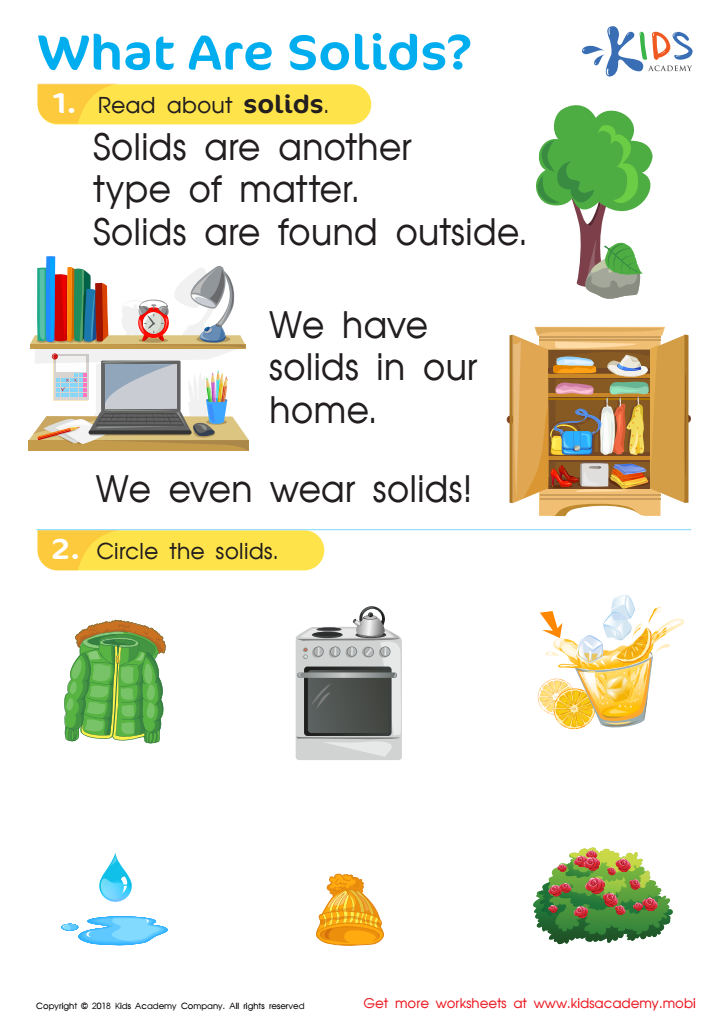
What Are Solids? Worksheet
Help your kids understand matter's three forms - solid, liquid, and gas - with examples. Ask them to give their own and where to find them. Then, read and discuss the worksheet's facts about solids. Afterward, have them circle the solids among the provided objects.
 Assign to My Students
What Are Solids? Worksheet
Worksheet
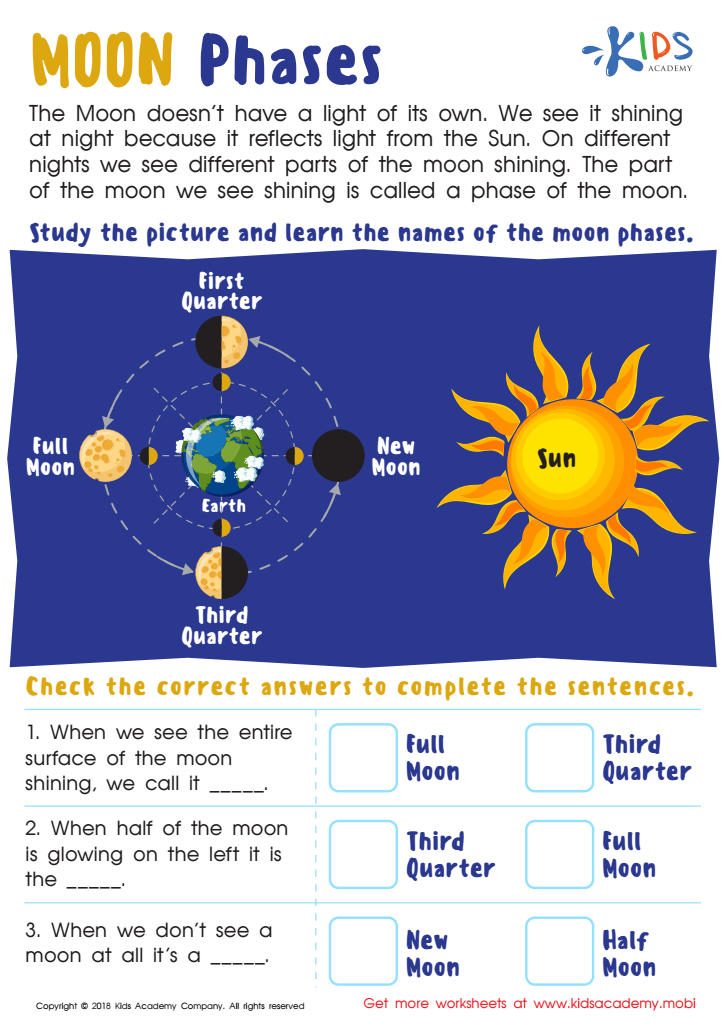
Moon Phases Worksheet
Gaze up at the night sky and the moon's appearance may change from night to night. Encourage your child to learn more about the sun, the moon, and space with this science worksheet. Have them read the text then study the picture. Finally, read the sentences and check the answers to identify the moon's phases.
Moon Phases Worksheet
Worksheet
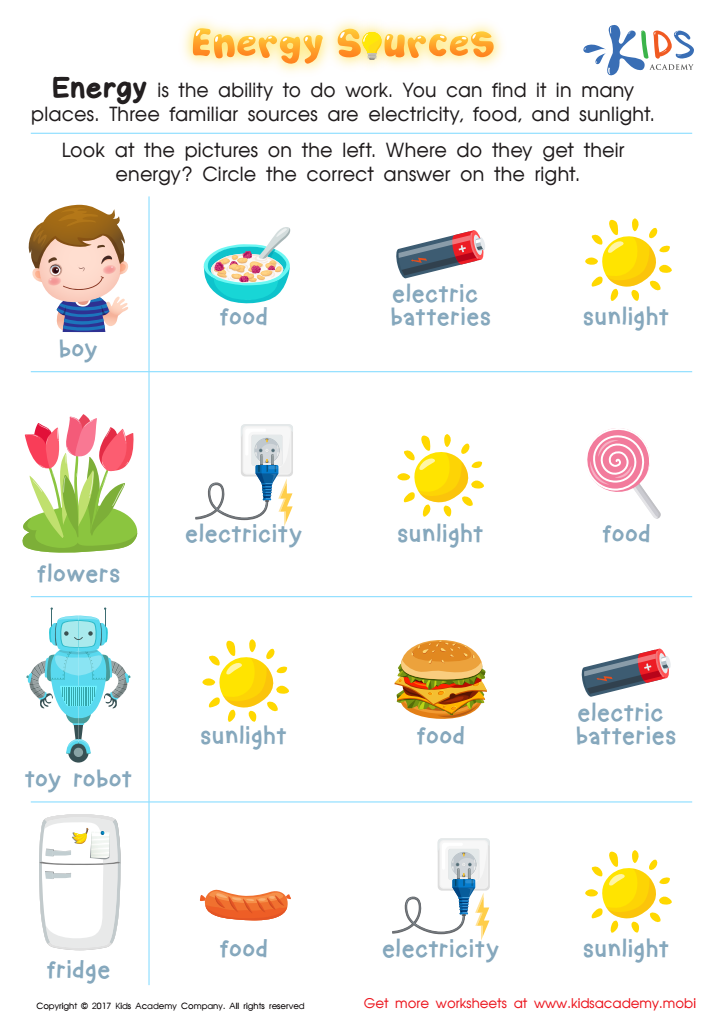
Energy Sources Printable
Introduce energy sources with this worksheet PDF — explore the sun, batteries, and more! Get your mini scientist excited about energy and power up their learning.
Energy Sources Printable
Worksheet
Join Kids Academy for Free
Who is primarily going to use this learning content?








Parents and teachers should care about the application of knowledge and normal science for children aged 4-6 because these formative years are critical for cognitive development, curiosity, and instilling a love for learning. At this age, children are naturally inquisitive and have a keen interest in exploring the world around them. Introducing concepts of basic science in a playful and engaging manner can ignite their interest in how things work, fostering early critical thinking and problem-solving skills.
Applying knowledge through hands-on activities and experiments makes learning tangible and relevant. For example, observing the growth of a plant or understanding the states of matter through water play helps young children see concepts come to life. These experiences build foundational understanding and encourage observational and analytical skills—essentials for future academic success.
Moreover, normal science blends seamlessly with literacy and numeracy, enhancing overall academic readiness. Discussing scientific observations strengthens vocabulary and language skills, while counting and measuring ingredients for a recipe integrates math.
Fostering a supportive and stimulating environment at an early age ensures that children develop a positive attitude towards education. By integrating science-themed activities, parents and teachers pave the way for a lifelong interest in learning and discovery, turning curious minds into eager learners.







