Understanding light sources Normal Science Worksheets for Ages 4-6
3 filtered results
-
From - To
Introduce your little ones to the fascinating world of light with our "Understanding Light Sources" worksheets designed for ages 4-6. These engaging and educational activities help young learners explore different light sources, including natural and artificial options. Through interactive exercises, kids will develop critical thinking and observation skills, laying a strong foundation for future scientific learning. Ideal for curious minds, our carefully crafted worksheets are perfect for both classroom and home use. Spark your child’s interest in science with fun and informative activities that make learning about light sources an illuminating experience!
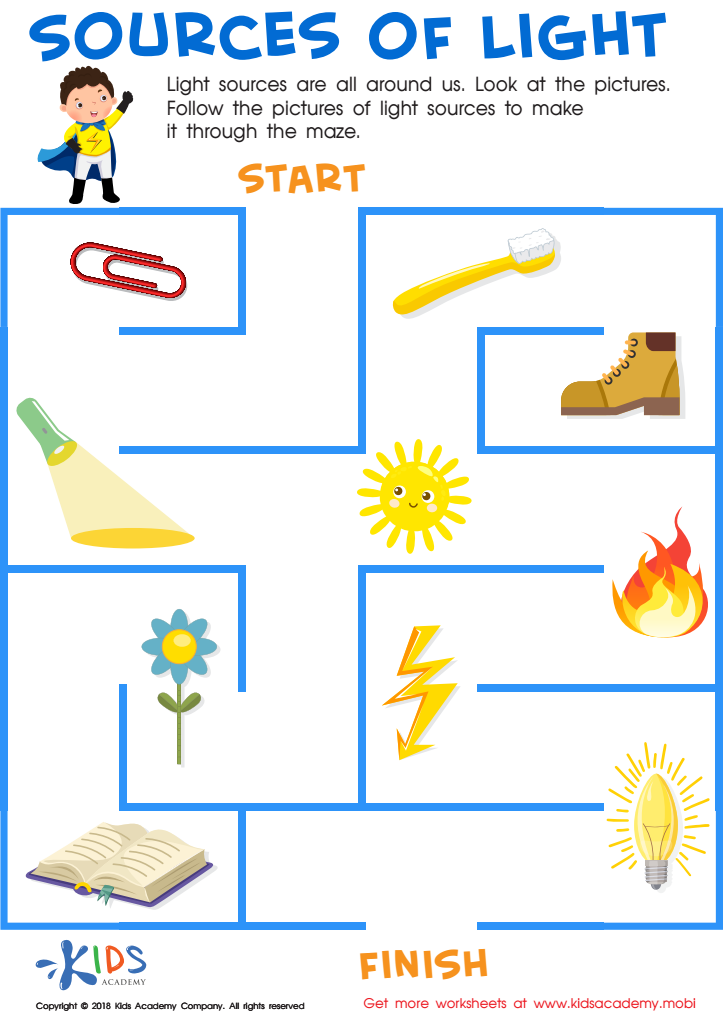
Sources of Light Worksheet
 Assign to My Students
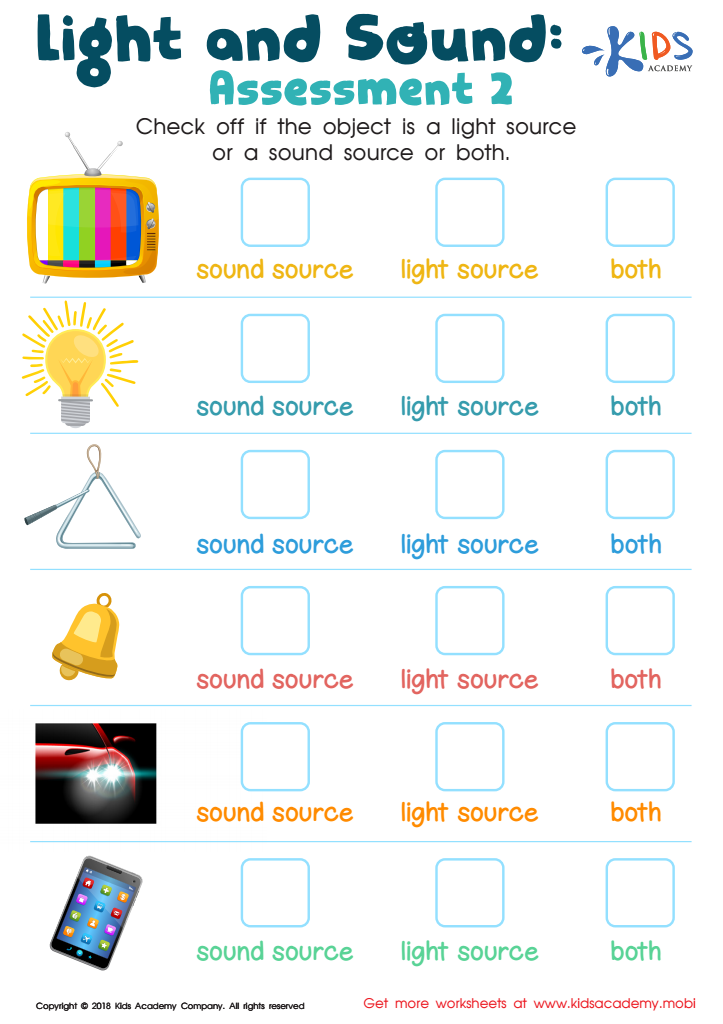
Light and Sound: Assessment 2 Worksheet
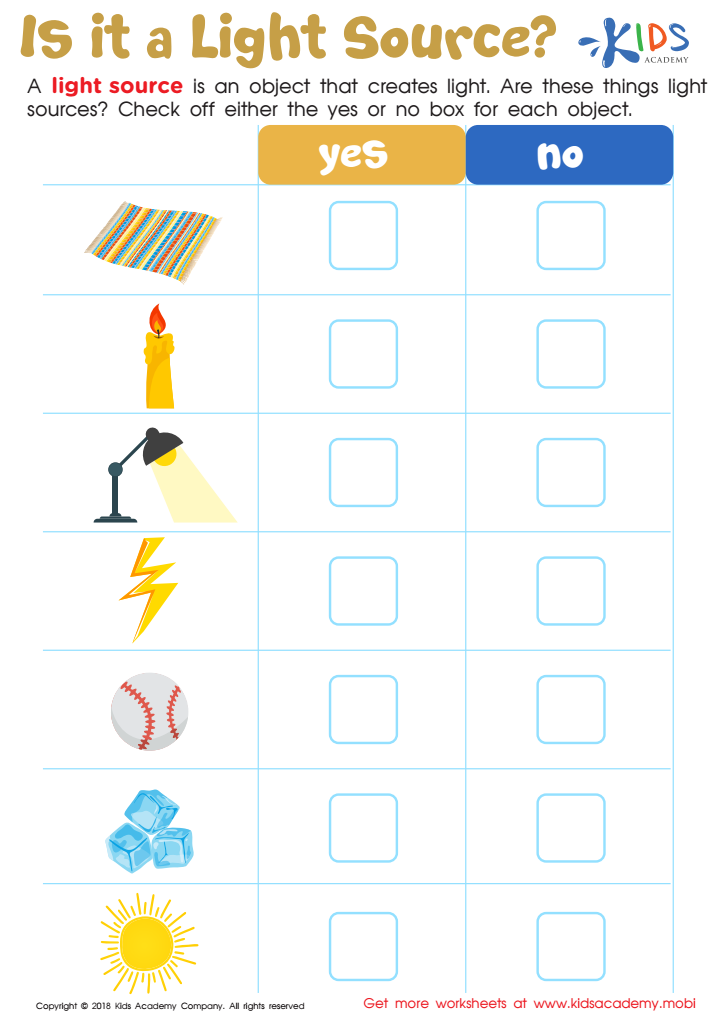
Is It a Light Source? Worksheet








Understanding light sources is essential for young children because it lays a foundation for curiosity and scientific thinking, crucial skills for their development. At ages 4-6, kids are naturally inquisitive and eager to make sense of the world around them. By exploring light sources, be it the sun, lamps, or even toys, they start to identify patterns and basic scientific concepts, such as cause and effect.
Moreover, distinguishing between natural and artificial light can foster a broader understanding of nature and the environment. For instance, kids learn about the importance of sunlight for plants and animals, and in extension, how it affects human daily activities. Integrating these concepts early on can promote better environmental awareness and appreciation.
Additionally, understanding light sources enhances safety awareness. Kids learn practical safety tips, like why they shouldn’t stare directly at the sun, or the workings of traffic lights and signals. It improves their spatial awareness in navigating spaces safely if they can grasp the importance of light and visibility.
In teaching about light sources, parents and teachers aren't just imparting knowledge; they are cultivating skills in observation, reasoning, and critical thinking. These skills are fundamental to a child's lifelong learning journey, helping them become adept at problem-solving and understanding the world logically and scientifically.







