Understanding seasons Normal Science Worksheets for Ages 4-6
4 filtered results
-
From - To
Explore the captivating world of seasons with our "Understanding Seasons Normal Science Worksheets for Ages 4-6." These printable resources are designed to make learning fun and engaging for young minds. Featuring vibrant illustrations and age-appropriate activities, each worksheet helps children grasp the concepts of different seasons, weather changes, and natural cycles. Perfect for early learners, these worksheets support crucial developmental skills and foster a love for science. Ideal for use at home or in the classroom, these tools pave the way for foundational understanding in an interactive and enjoyable manner. Start your child's seasonal science journey today!
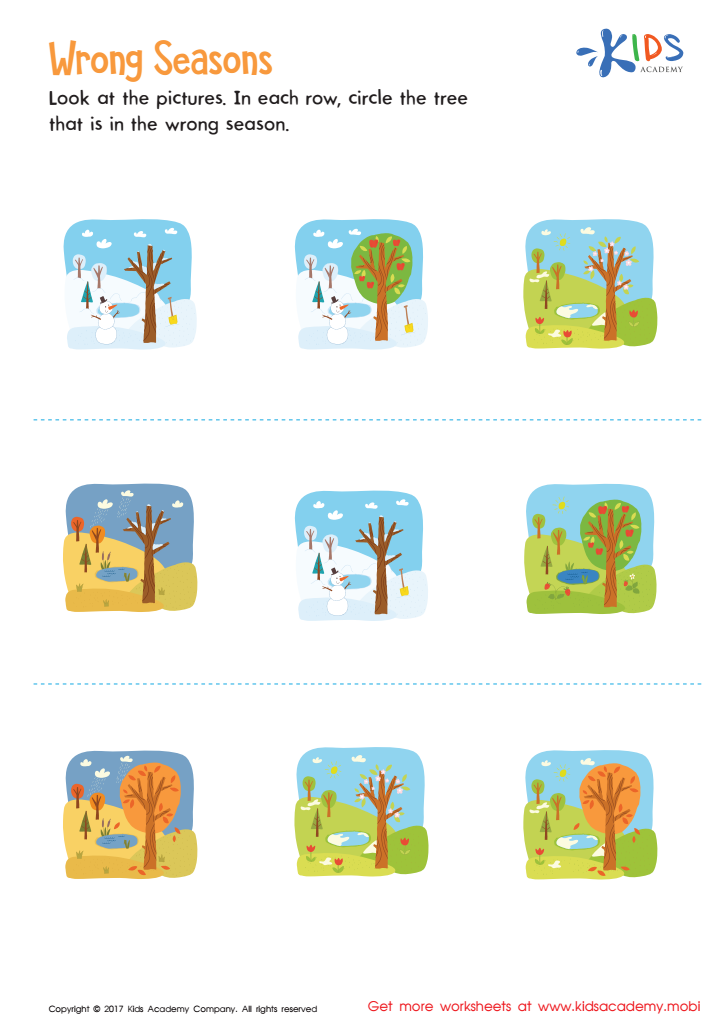
Wrong Seasons Worksheet
 Assign to My Students
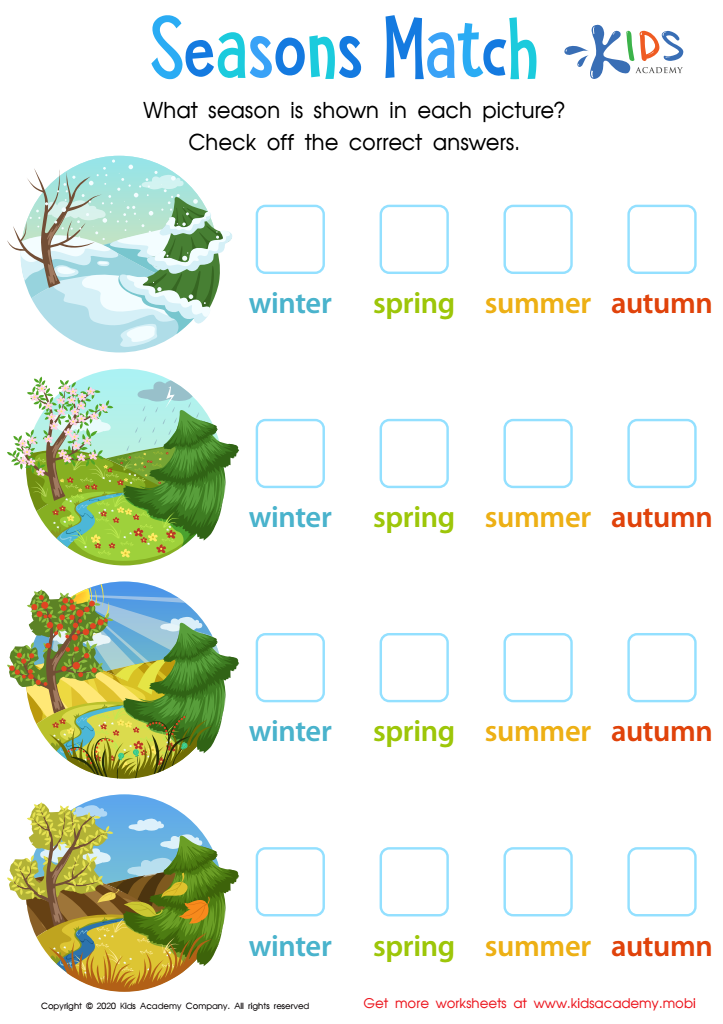
Seasons Match Worksheet
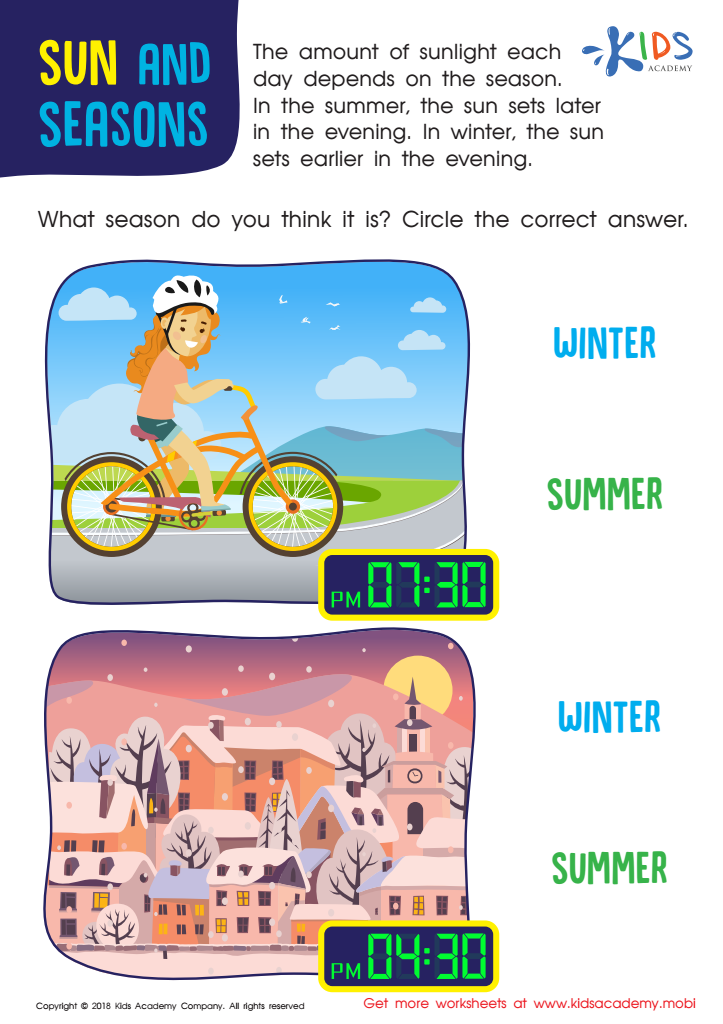
Sun and Seasons Worksheet
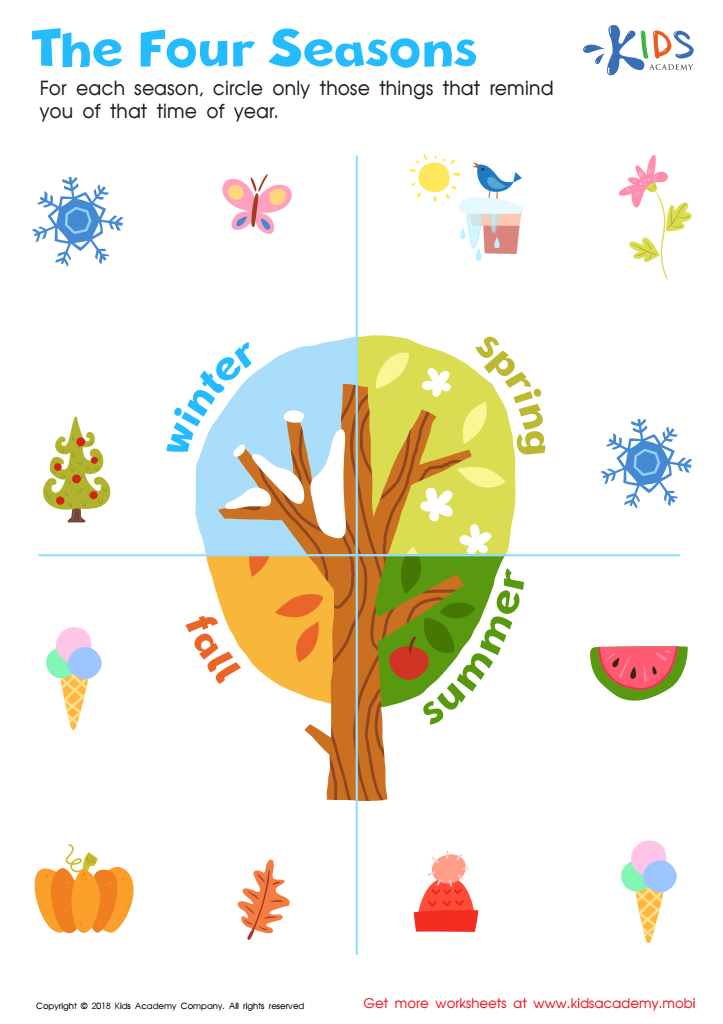
The Four Seasons Worksheet







Understanding seasons is a fundamental aspect of early science education for children aged 4-6. At this formative stage, kids are naturally curious about the world around them, and learning about seasons helps satisfy this curiosity in a structured way. For parents and teachers, fostering this knowledge is important for several key reasons.
Firstly, learning about seasons helps children make sense of the changes they observe in their environment, such as the difference in weather, daylight, plant life, and even clothing choices. This promotes observational skills and critical thinking, as children become more aware of and able to describe these changes.
Secondly, understanding seasons supports the development of time management skills and a sense of routine. For instance, activities like planting seeds in spring or preparing for colder weather in winter teach children about planning and anticipating changes.
Furthermore, the concept of seasons opens the door to broader scientific discussions, such as the Earth’s tilt, orbit around the sun, and basic meteorology. Introducing these topics at an early age lays the groundwork for more complex scientific understanding in later years.
Lastly, integrating lessons on seasons can make learning interactive and fun, involving activities like creating seasonal crafts, reading books themed around the seasons, and classroom experiments. This keeps children engaged and excited about learning, making it a vital part of their early education.







