
Letter recognition Normal Beginning Sounds Worksheets for Ages 4-7
3 filtered results
Difficulty Level
Grade
Age
-
From - To
Subject
Activity
Standards
Our "Letter Recognition Normal Beginning Sounds Worksheets for Ages 4-7" are expertly designed to enhance early literacy skills in young learners. These fun and educational printables help children identify and recognize letters while mastering the initial sounds in words. Perfect for preschool and early elementary students, the worksheets employ engaging activities and colorful visuals to make learning enjoyable. This foundational skill set strengthens reading readiness and promotes confident, young readers. Boost your child's letter recognition and phonemic awareness with our exceptional resources, tailored specifically for developmental milestones in kids aged 4-7. Let the journey to reading success begin here!
Favorites
With answer key
Interactive
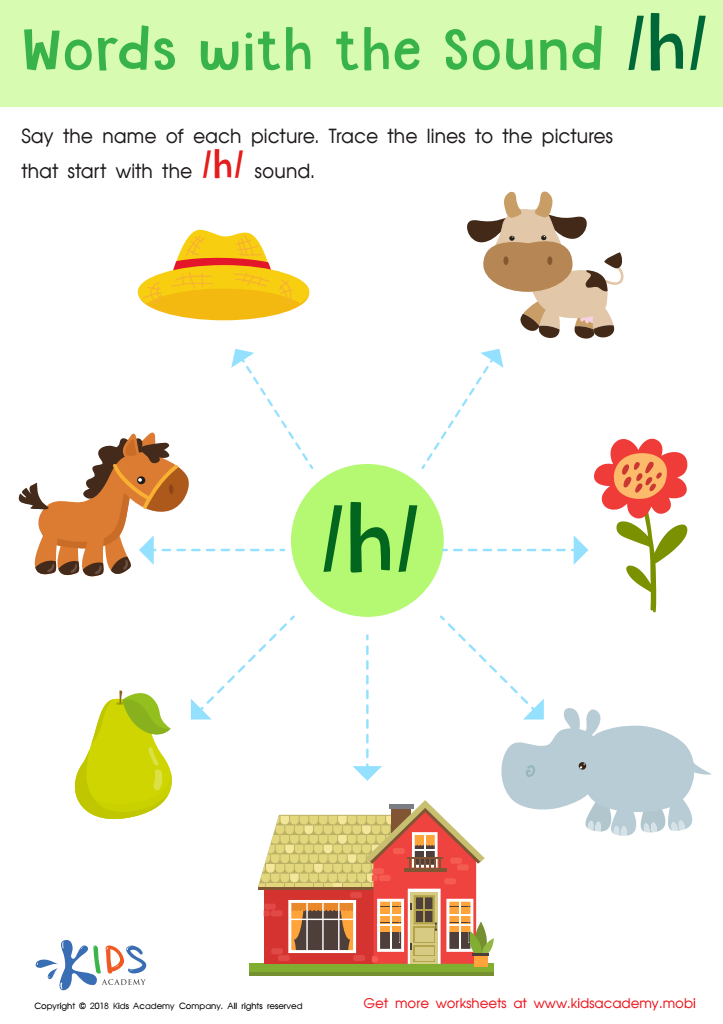
Words with sound h Reading Worksheet
The letter H can often be heard in words! Check your child's knowledge with an engaging worksheet from Kids Academy. Ask them to go around a circle and name each image aloud. Listen for the starting sound and trace the line from the middle letter to the images with the sound. This is a great way to practice phonics!
 Assign to My Students
Words with sound h Reading Worksheet
Worksheet
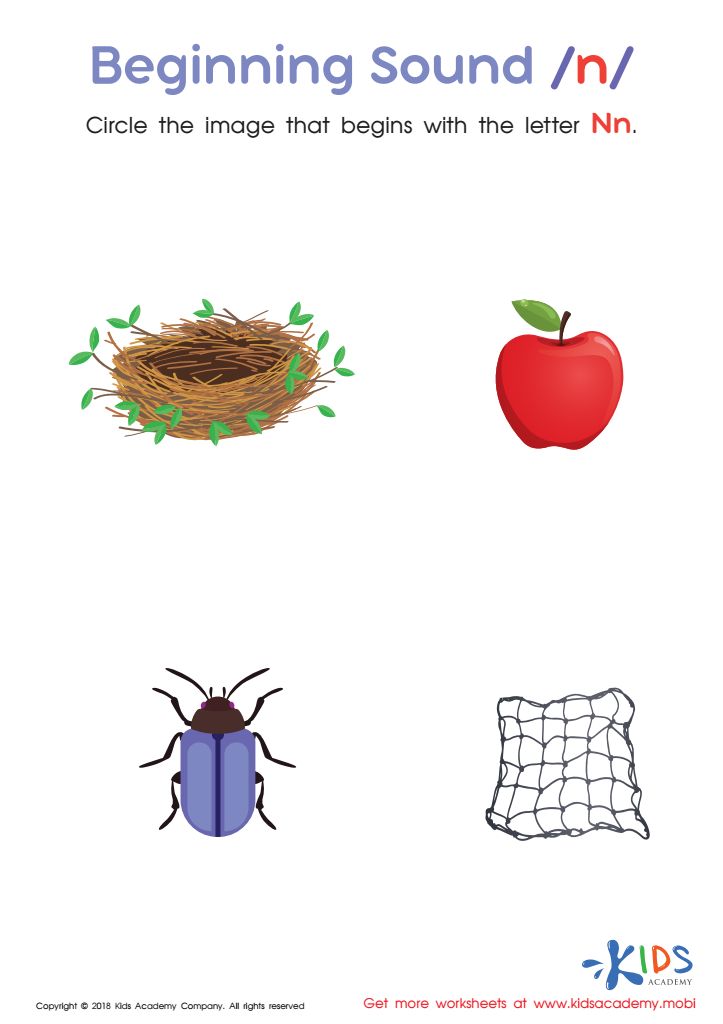
Beginning Sound «n» Worksheet
Help your emerging reader learn the initial «n» sound with this free PDF worksheet! Strengthen fine motor skills by tracing circles around words beginning with «n». Pictures are clear and engaging, giving beginning Phonics learners the right amount of practice and the confidence to succeed.
Beginning Sound «n» Worksheet
Worksheet
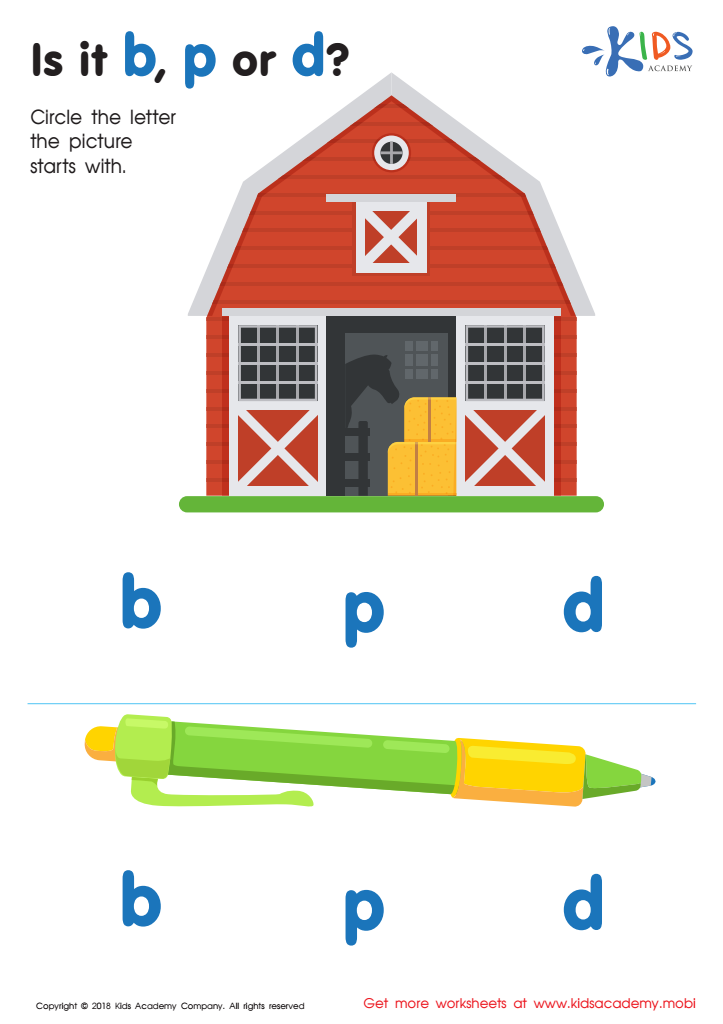
Is it b, p or d? Worksheet
Test your child's identification skills with this worksheet. They must identify the image and then circle the letter it begins with: 'b', 'p', or 'd' (e.g. an image of the sun would mean they circle 's').
Is it b, p or d? Worksheet
Worksheet
Join Kids Academy for Free
Who is primarily going to use this learning content?








Parents and teachers should prioritize letter recognition and the understanding of beginning sounds for children ages 4-7 because these foundational skills are critical for developing strong literacy skills. At this crucial stage, young learners are in the prime phase for language acquisition, and being able to identify letters and their corresponding sounds sets the stage for successful reading and writing.
Letter recognition is the first step in understanding that written text corresponds to spoken language. When children recognize letters, they begin to comprehend that each letter has a specific shape and sound, which is essential for decoding words and fluent reading. This skill also supports vocabulary development, as children start to make connections between the spoken language they already know and the words they see in print.
Understanding beginning sounds accelerates phonemic awareness, the ability to hear, identify, and manipulate individual sounds in spoken words. This awareness is crucial for spelling and reading success. It helps children break down words into smaller parts, making unfamiliar words easier to decode and enabling fluid reading and comprehension.
Overall, mastering letter recognition and beginning sounds plays a fundamental role in a child's academic journey. Investing time in these early literacy skills results in confident, proficient readers and sets children up for long-term educational success.







