Vocabulary expansion Normal Beginning Sounds Worksheets for Ages 4-7
5 filtered results
-
From - To
Enhance your child's vocabulary with our engaging Normal Beginning Sounds Worksheets, designed specifically for ages 4-7! These worksheets focus on familiarizing young learners with the sounds at the start of words, fostering phonemic awareness and language development. Each activity encourages playful learning as children identify and practice beginning sounds through fun illustrations and interactive tasks. Perfect for classroom use or home practice, our worksheets are printable and easy to use. Support your child's literacy journey with these resources that lay a strong foundation for reading and speaking. Explore a world of words and sounds to boost your child's confidence and communication skills!
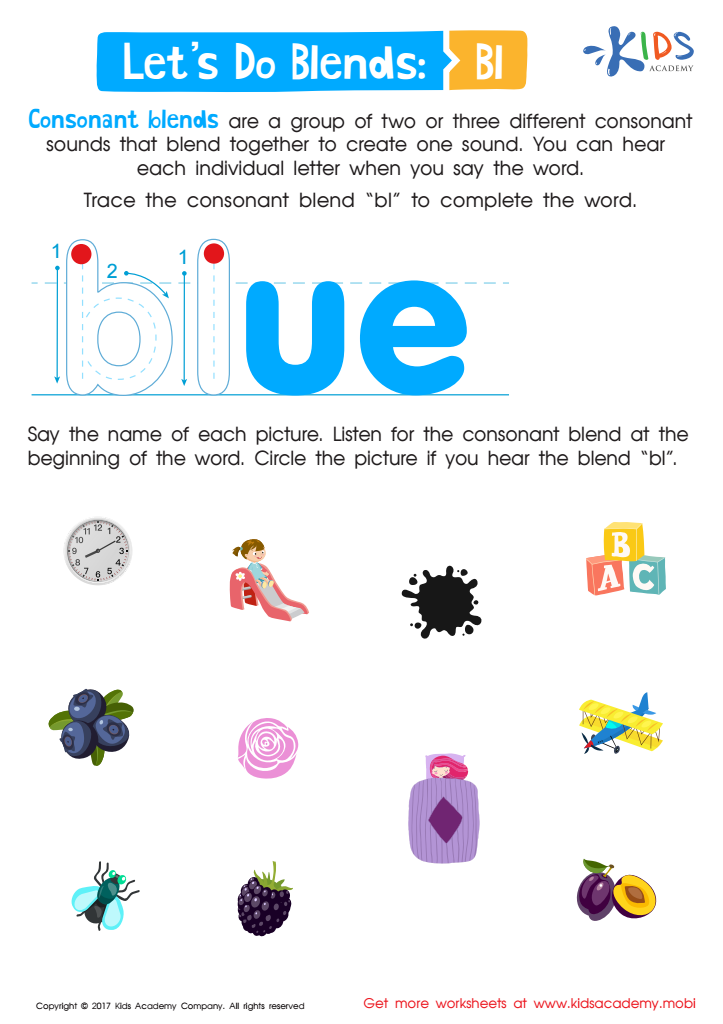
Beginning Blends: "Bl" Words Worksheet
 Assign to My Students
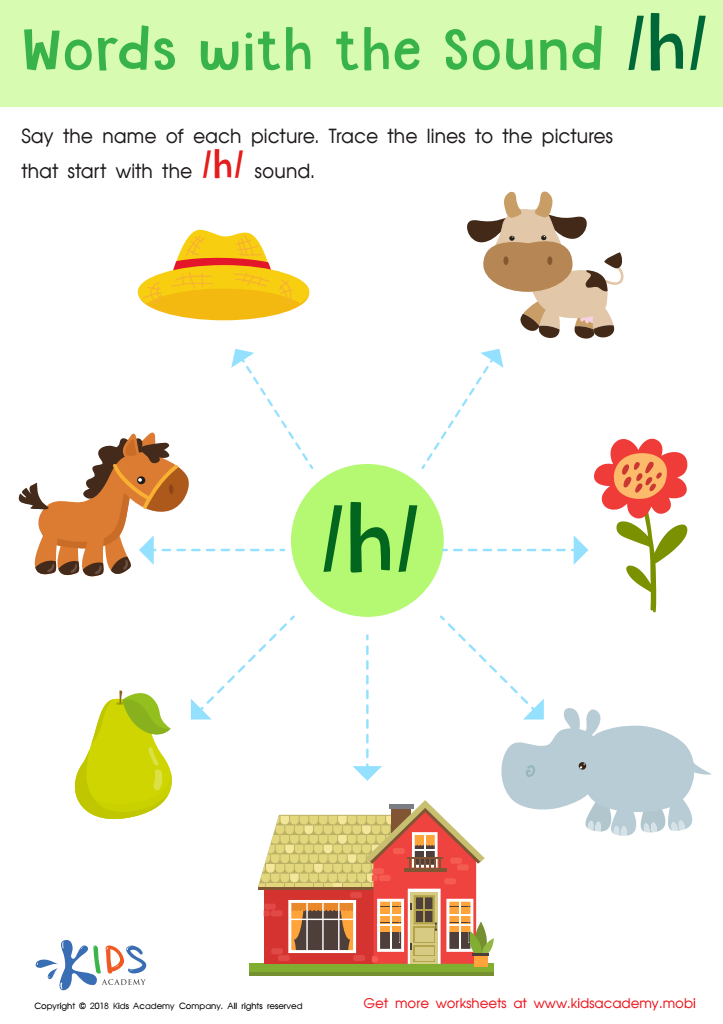
Words with sound h Reading Worksheet
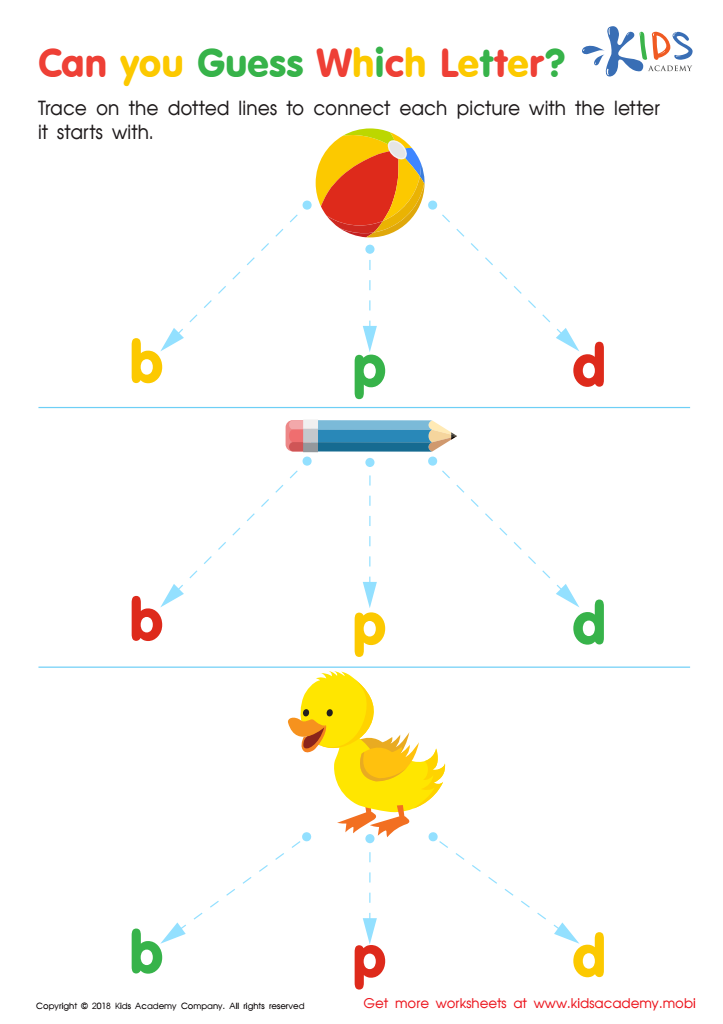
Can you Guess Which Letter? Worksheet
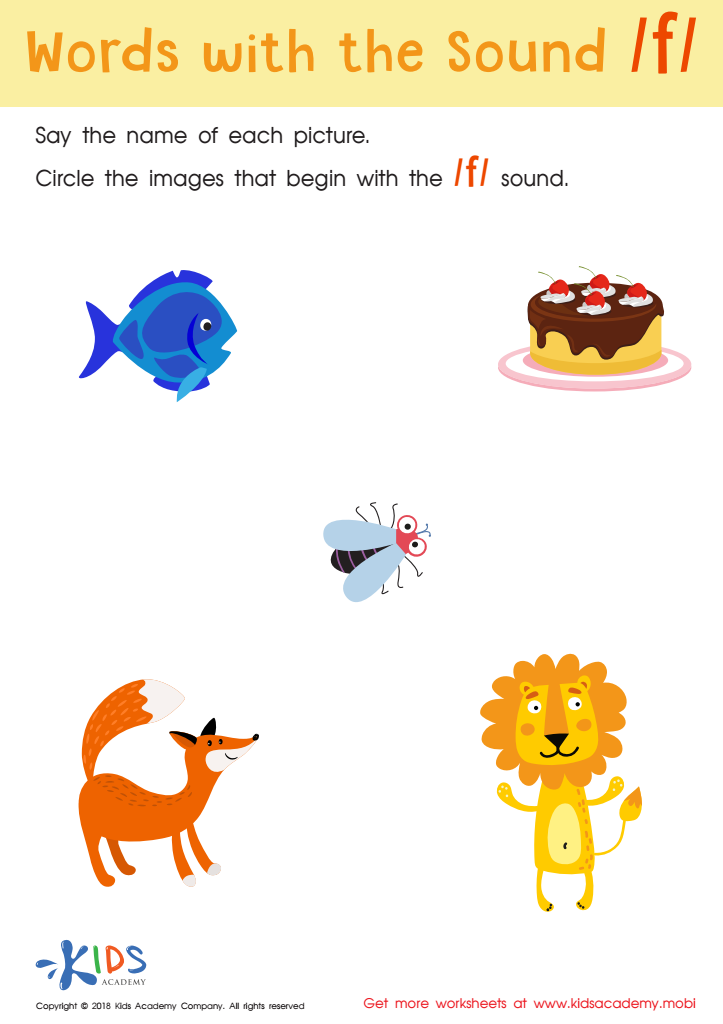
Words with sound f Reading Worksheet
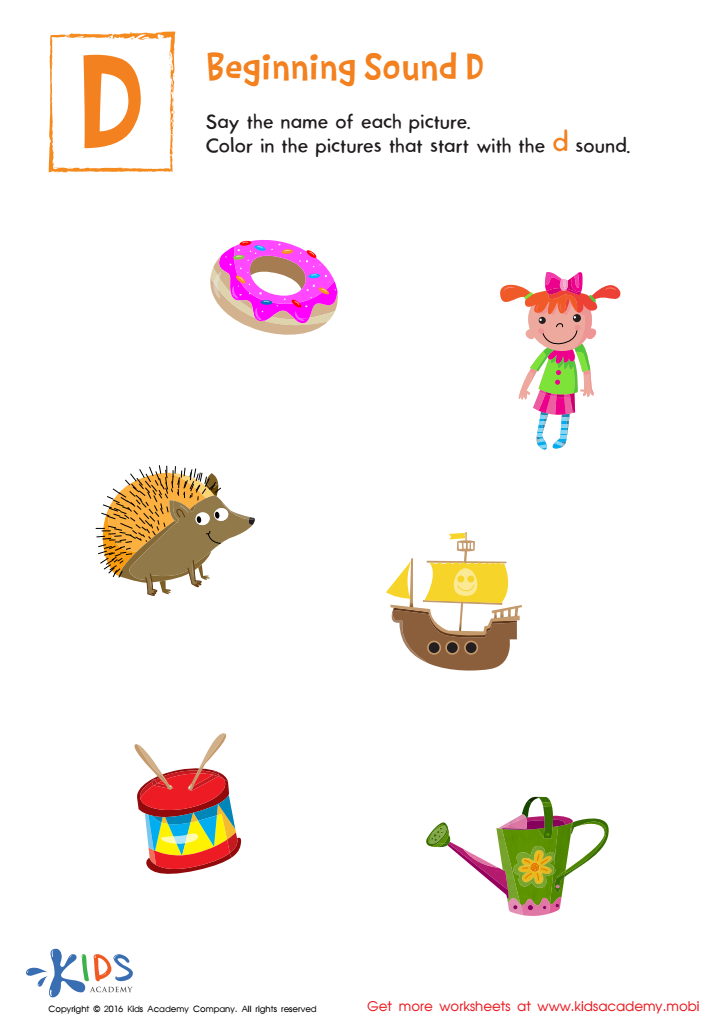
Beginning Sound D Worksheet








Vocabulary expansion, particularly for normal beginning sounds, plays a crucial role in early childhood education for children aged 4-7. At this age, children are at a pivotal stage in their language development. Understanding and recognizing initial sounds helps them construct words, improve pronunciation, and enhance their communication skills. This foundational knowledge is essential for literacy, as children who grasp beginning sounds tend to excel in reading and writing.
Parents and teachers should care about vocabulary expansion for several reasons. Firstly, it fosters phonemic awareness, which is a key predictor of later reading success. When children can identify and manipulate sounds, they become more adept at decoding words. Secondly, an enriched vocabulary supports cognitive development, as it allows children to express ideas and understand concepts more clearly.
Moreover, participating in activities that promote sound recognition, such as rhyming games, storytime, and engaging conversations, strengthens the parent-child or teacher-student bond. This collaborative learning process not only boosts linguistic skills but also instills a love for language and books. Ultimately, by prioritizing vocabulary expansion focused on normal beginning sounds, parents and teachers are setting the stage for lasting academic success and effective communication.







