
Alphabet Learning Normal Alphabet Worksheets for Ages 4-7
4 filtered results
Difficulty Level
Grade
Age
-
From - To
Subject
Activity
Standards
Discover engaging Alphabet Learning Normal Alphabet worksheets designed specifically for children aged 4-7! Our vibrant, printable resources help young learners familiarize themselves with letters, phonics, and writing skills in a fun and interactive way. Each worksheet features age-appropriate activities that promote letter recognition, sequencing, and vocabulary development, ensuring kids build a strong foundation in reading and literacy. Ideal for classrooms, homeschooling, or extra practice at home, these worksheets encourage creativity and confidence in young learners. Explore the joys of learning together with our exciting Alphabet Learning resources and watch your child's language skills flourish! Ideal for teaching and enhancing essential literacy skills.
Favorites
With answer key
Interactive
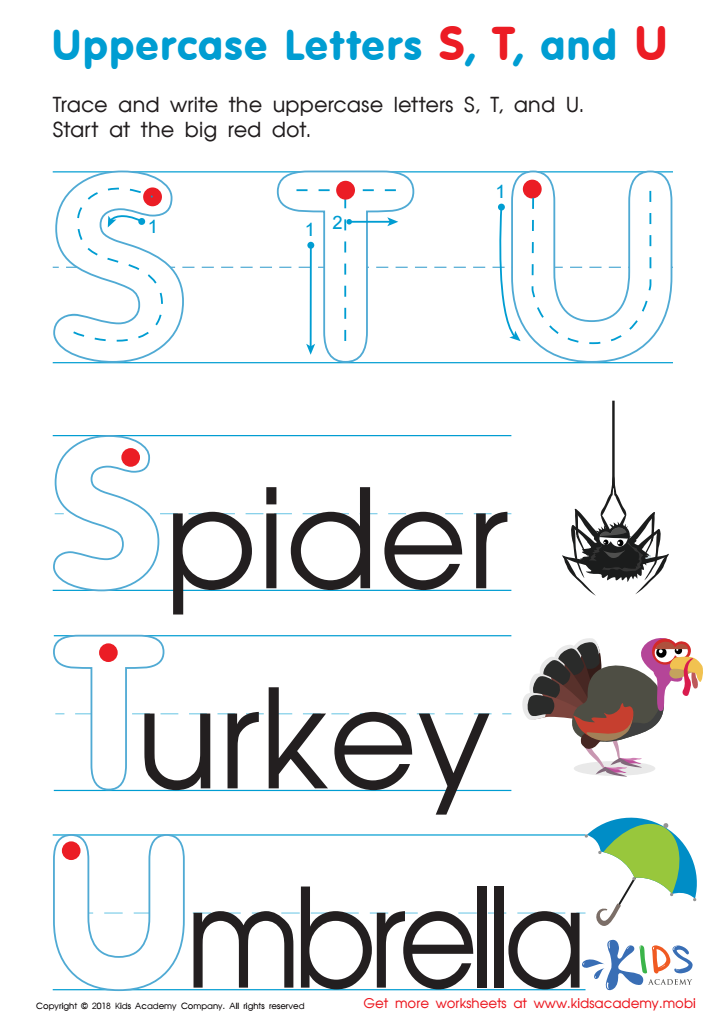
Uppercase Letters S, T, and U Worksheet
Help your kids learn to write upper-case letters with this fun tracing sheet. Start at the big red dot for each letter: S, T, and U. Show them the pictures and ask what letter each word starts with. Guide their hand and watch them learn!
 Assign to My Students
Uppercase Letters S, T, and U Worksheet
Worksheet
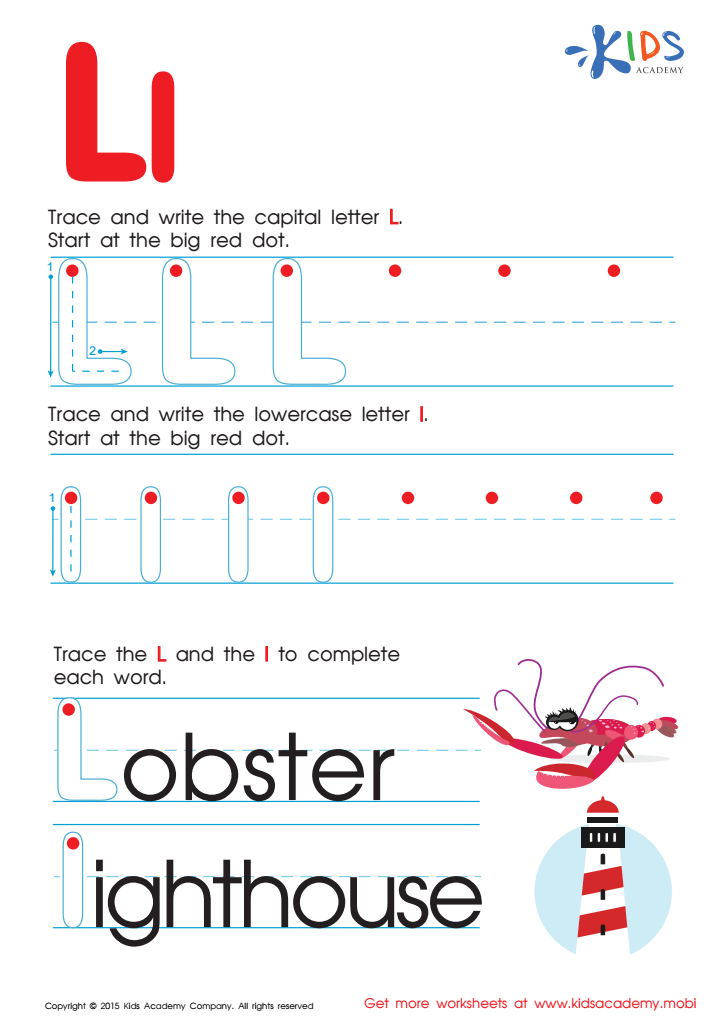
Letter L Tracing Page
Trace uppercase and lowercase letters to practice writing. Pay attention to the lowercase letters, like the "L", that are not as tall as an uppercase "I" or as short as a lowercase "i". Words like "lobster" and "lighthouse" are waiting to be completed. Enjoy!
Letter L Tracing Page
Worksheet
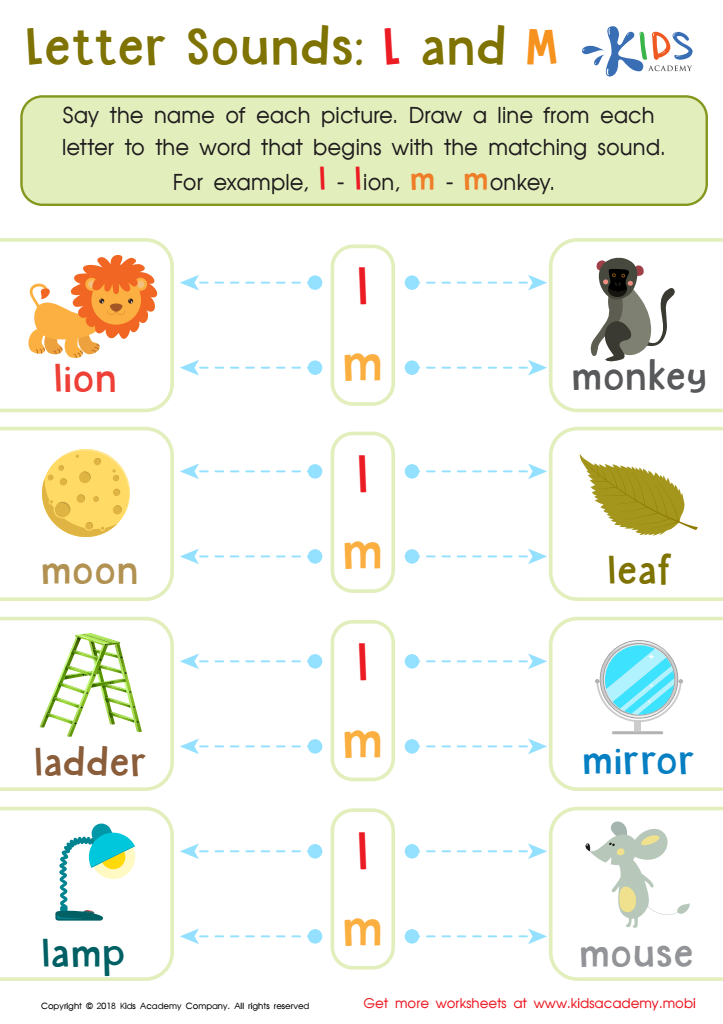
Letter l and M Sounds Worksheet
Our Kids Academy phonics practice pages give clear instructions and captivating pictures to pique children's interest. This fun worksheet helps kids identify a picture, then match its beginning sound. Listen and say each word - does it start with "L" or "M"? Trace the dotted line from the letter to the correct match and listen closely to the sound it makes.
Letter l and M Sounds Worksheet
Worksheet
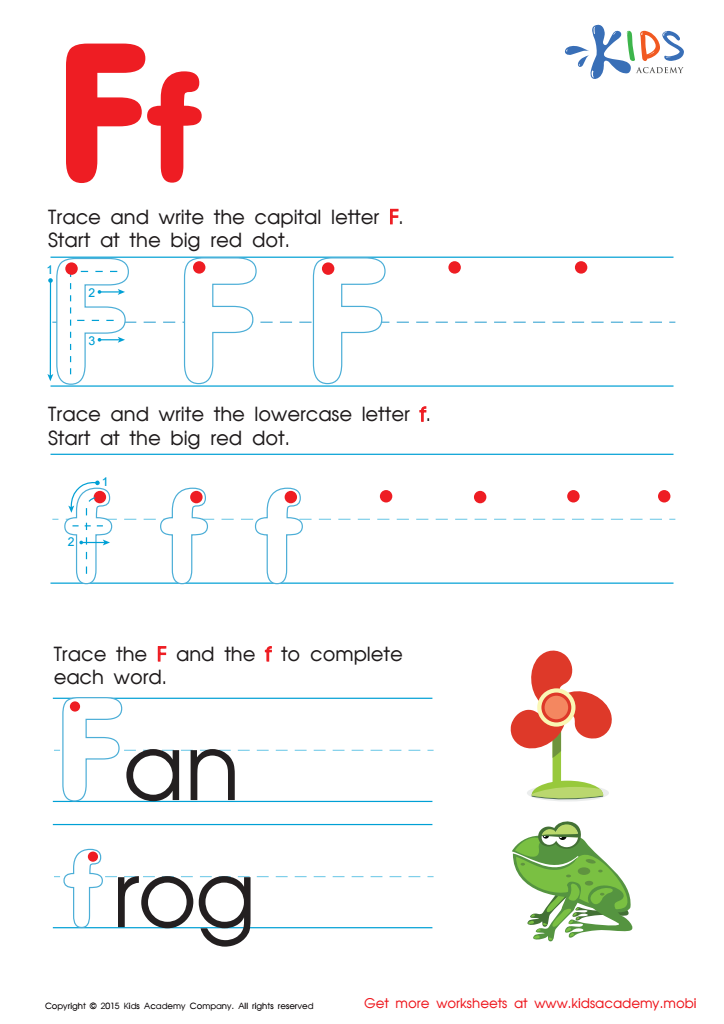
Letter F Tracing Page
Trace "F" with your pencil! Start at the red dot and draw lines — it's fun! Check it out — it looks great! Keep practicing to make it even better. Then, try completing words. Help out the broken fan and funny frog! Get free alphabet worksheets and activities for your kids. Come see our new tracing pages!
Letter F Tracing Page
Worksheet
Join Kids Academy for Free
Who is primarily going to use this learning content?








Alphabet learning is a foundational skill for children aged 4-7, critical for their academic development and future success. During these formative years, children are introduced to letters and their related sounds, crucial for literacy. Competence in recognizing both uppercase and lowercase letters sets the stage for reading and writing abilities, enabling kids to decode words and express themselves.
Moreover, understanding the normal alphabet nurtures children’s cognitive skills, including memory and attention, by requiring them to link letters with sounds and meanings. This foundational knowledge also promotes phonemic awareness, enhancing their ability to manipulate sounds, which directly correlates with proficient reading skills later on.
Parents and teachers play a vital role in creating engaging learning environments that support alphabet mastery. By introducing fun, interactive activities—like singing alphabet songs, playing letter games, and incorporating reading materials—important skills can be honed in enjoyable ways.
Additionally, strong early literacy skills instill confidence in children, fostering a love for reading and learning throughout their lives. As such, parental and teacher involvement in alphabet learning not only enhances educational outcomes but also lays a supportive groundwork for lifelong literacy and academic achievement.







