Phonics improvement Normal Alphabet Worksheets for Ages 4-7
3 filtered results
-
From - To
Unlock your child's reading potential with our Phonics Improvement Normal Alphabet Worksheets for ages 4-7! Designed to enhance phonetic understanding, these engaging worksheets provide essential practice in letter recognition, sound association, and word formation. Each worksheet is tailored to make learning fun and interactive, helping young learners build confidence in their reading skills. With a variety of activities and appealing visuals, your child will enjoy exploring the world of letters and sounds. Whether at home or in the classroom, these worksheets are perfect for fostering early literacy skills. Start your child's phonics journey today! Explore our collection now!
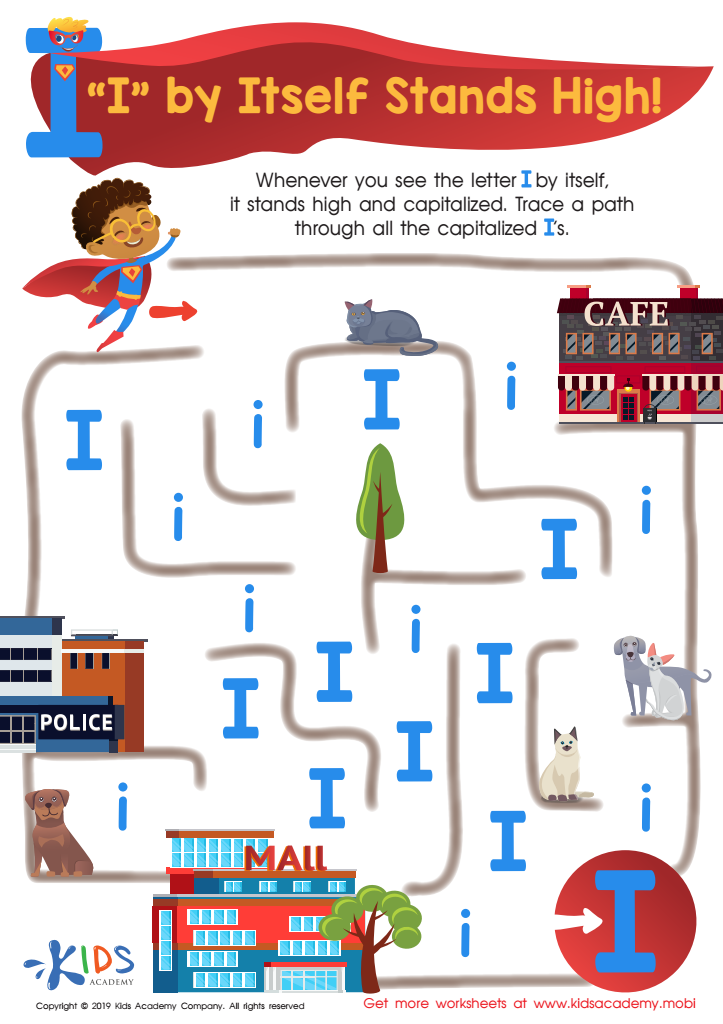
I Stands High Worksheet
 Assign to My Students
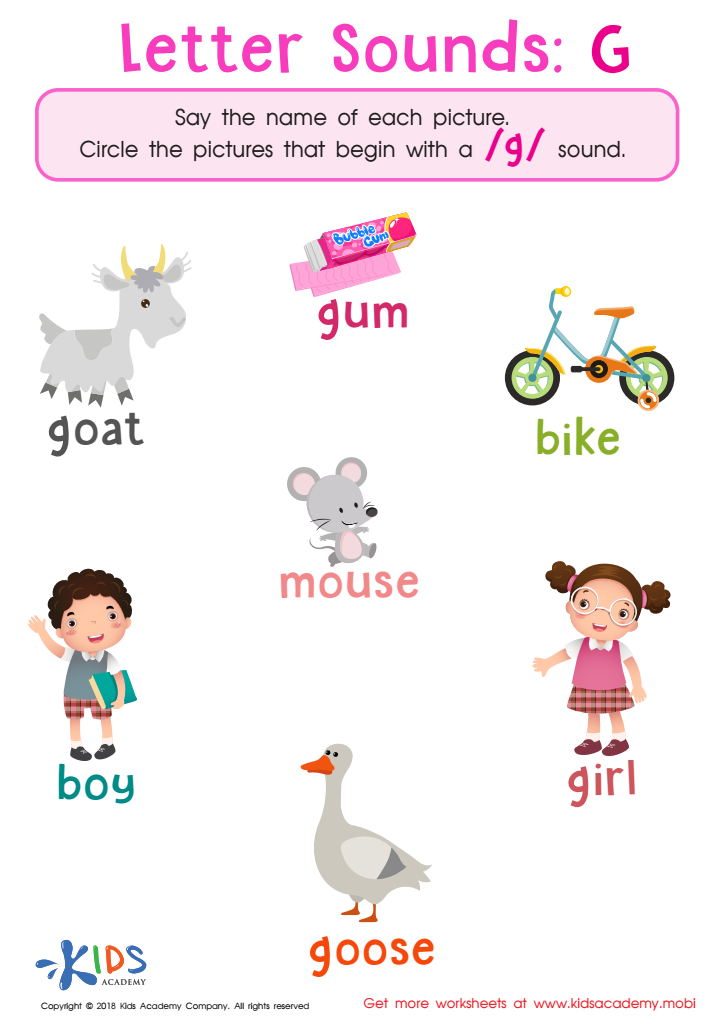
Letter G Sounds Worksheet







Phonics is a foundational skill crucial for reading development, especially in children ages 4-7. During these formative years, children begin to connect sounds with letters, enabling them to decode words effectively. Parents and teachers should prioritize phonics improvement because it sets the stage for lifelong reading proficiency and literacy skills.
When children grasp phonics, they enhance their ability to read fluently and comprehend texts, making them more confident and enthusiastic readers. This skill also supports vocabulary acquisition, spelling, and writing as they learn to manipulate sounds in different contexts. Moreover, solid phonics instruction can identify and address reading difficulties early, preventing potential academic challenges later on.
Furthermore, engaging parents in phonics activities at home can strengthen their child’s learning. Whether through phonics games, storytime that emphasizes sound-letter relationships, or interactive reading, parents play a key role in reinforcing these essential skills.
Ultimately, a strong phonics foundation enriches a child’s educational experience, fosters critical thinking, and opens doors to creativity and imagination as they explore the world through reading. Raising awareness about phonics can empower a new generation of proficient readers prepared for academic success.







