Uppercase identification Normal Alphabet Worksheets for Ages 4-7
5 filtered results
-
From - To
Discover our Uppercase Identification Normal Alphabet Worksheets, designed specifically for children aged 4-7. These engaging, printable worksheets help young learners recognize and identify uppercase letters while enhancing their fine motor skills. Each activity is thoughtfully crafted to be both fun and educational, ensuring that kids remain motivated as they learn. With colorful visuals and interactive exercises, your child will build their confidence in letter recognition and strengthen their foundational literacy skills. Perfect for homeschooling, classroom use, or everyday learning, these worksheets are a valuable resource to support your child's early education journey. Start building a strong alphabet foundation today!
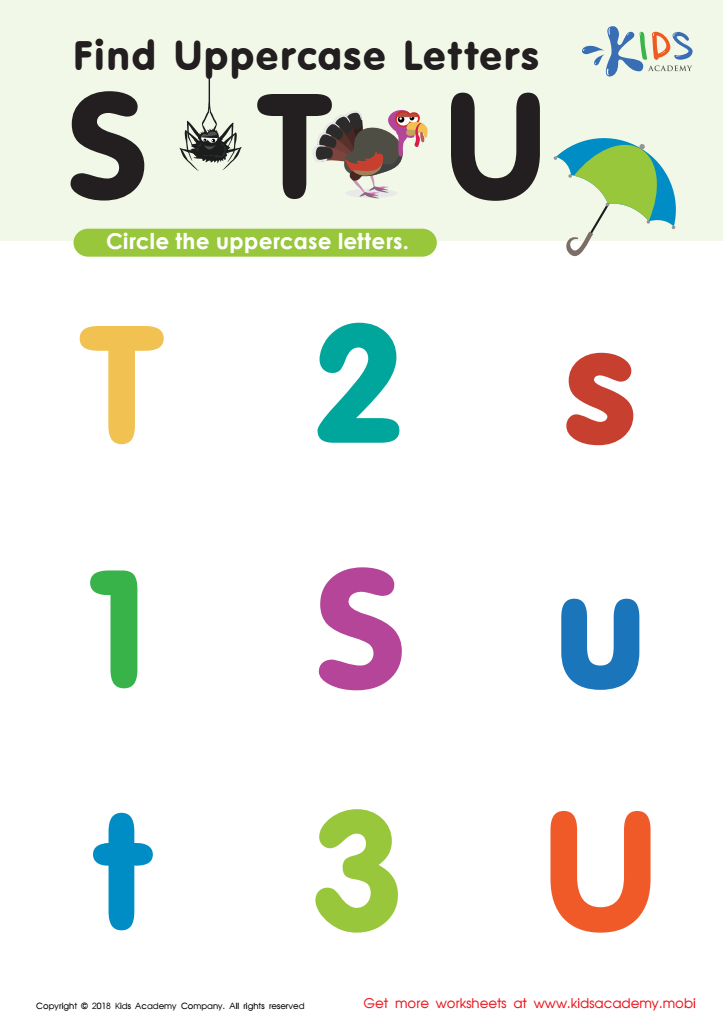
Find Uppercase Letters Worksheet
 Assign to My Students
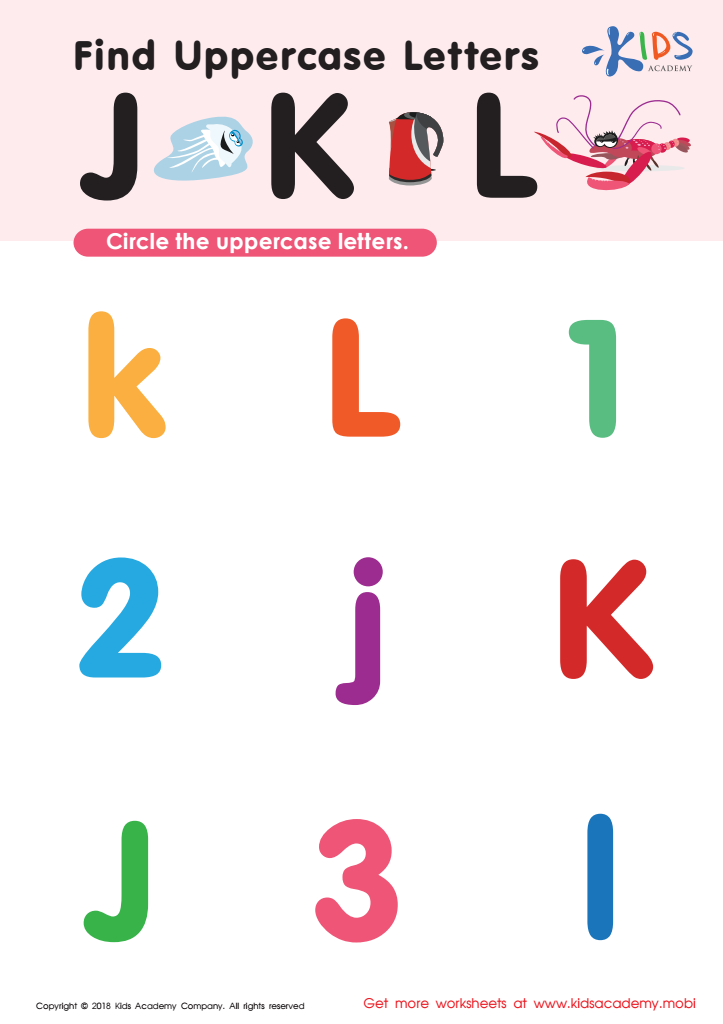
Find Uppercase Letters J, K, and L Worksheet
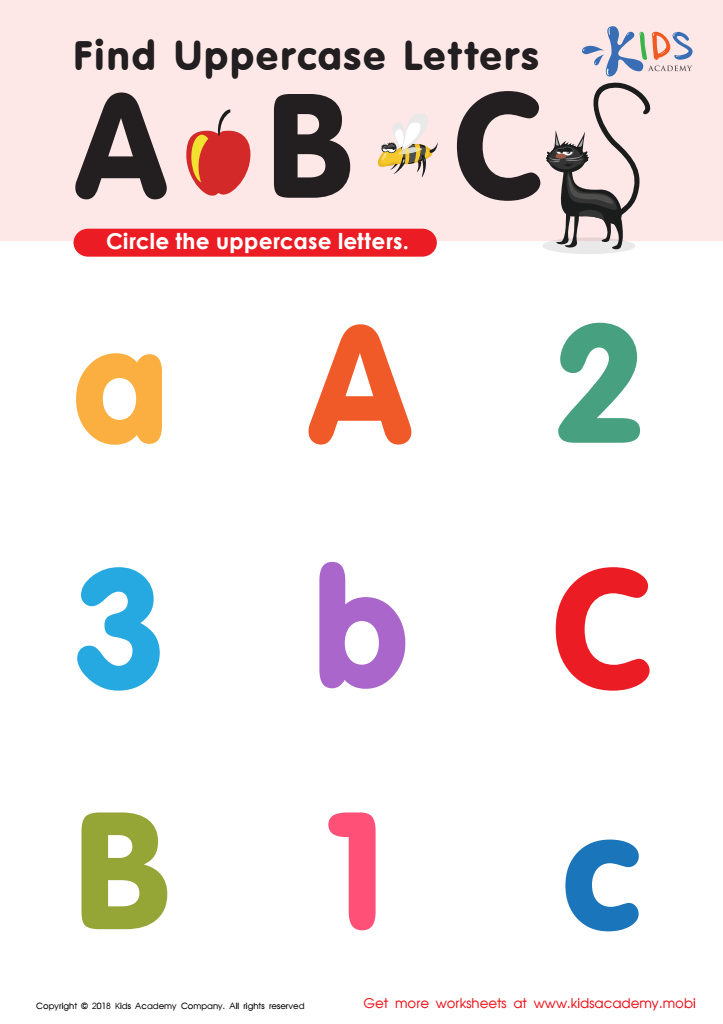
Find Uppercase Letters A, B, and C Worksheet
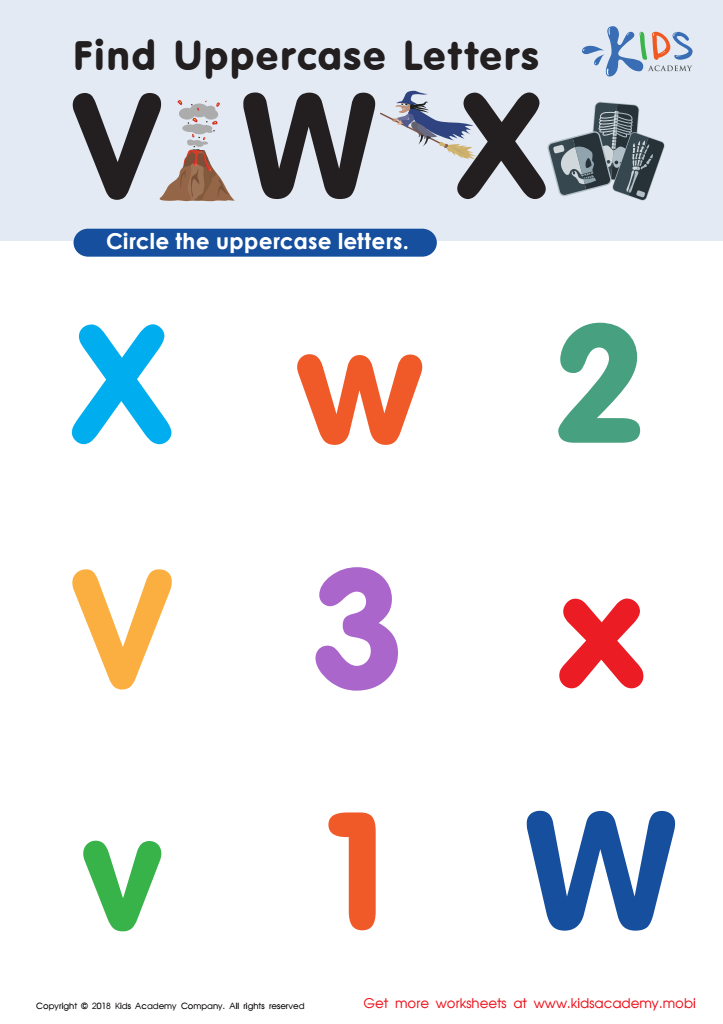
Find Uppercase Letters V, W, X Worksheet
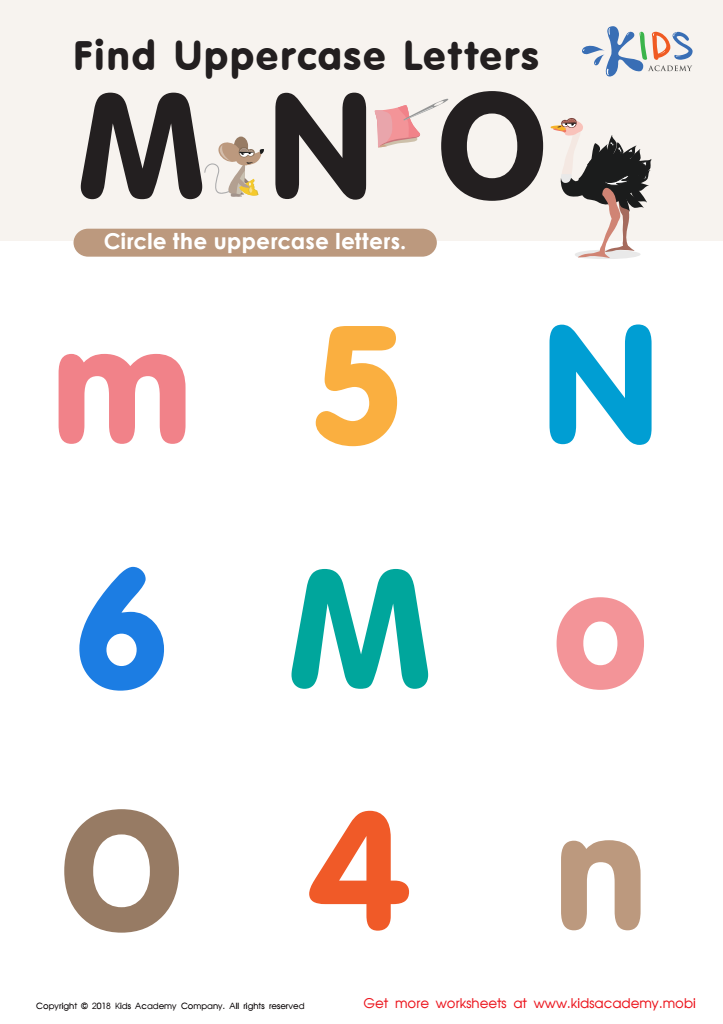
Find Uppercase Letters M, N, and O Worksheet






Uppercase letter identification is a vital skill for children ages 4-7, forming the foundation for literacy development. Recognizing uppercase letters is crucial as they often serve as the starting point for words, names, and sentences, making reading and writing a more approachable task. Understanding the shapes and sounds of uppercase letters helps young learners connect phonemes to written language, fostering early reading skills.
Moreover, mastering uppercase letters contributes significantly to children’s confidence in their literacy abilities. When children can effortlessly recognize these letters, they are more likely to engage with books, explore reading materials, and enjoy the learning process. This engagement is essential for developing a lifelong love for reading alongside the acquisition of spelling and writing skills.
Additionally, recognizing uppercase letters assists with important tasks such as following written instructions, understanding classroom routines, and crafting their written expressions. Parents and teachers play a vital role in cultivating this skill through interactive activities such as games, storytelling, and guided reading sessions. Fostering uppercase identification not only aids in their immediate learning but also sets the groundwork for future academic success, making it critical for everyone involved in a child’s education to prioritize this area of development.







