Fine motor skills development Normal Letter Recognition Worksheets for Ages 4-7
3 filtered results
-
From - To
Boost your child's fine motor skills and letter recognition with our expertly designed worksheets for ages 4-7. These engaging worksheets from Kids Academy feature a variety of fun activities tailored to help young learners master the alphabet while honing their hand-eye coordination and dexterity. Perfect for early grade teachers and parents alike, these printable resources offer a blend of tracing, coloring, and letter matching exercises. Each activity is crafted to facilitate progressive learning, ensuring kids build a strong foundation for reading and writing. Equip your little ones with essential skills through enjoyable and effective practice.
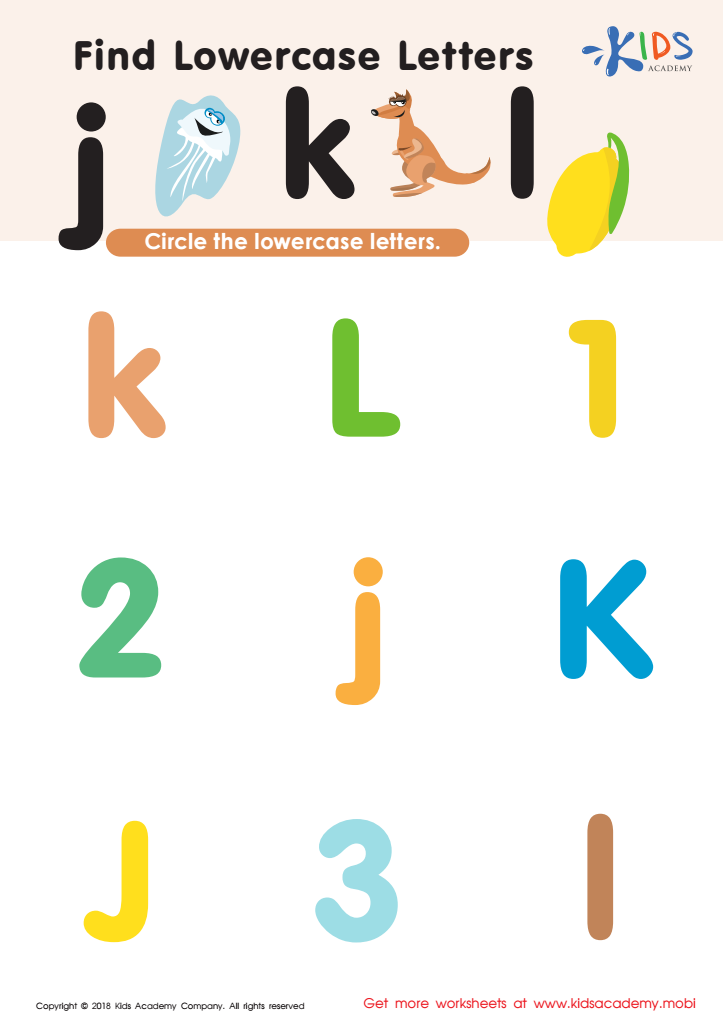
Find Lowercase Letters j k l Worksheet
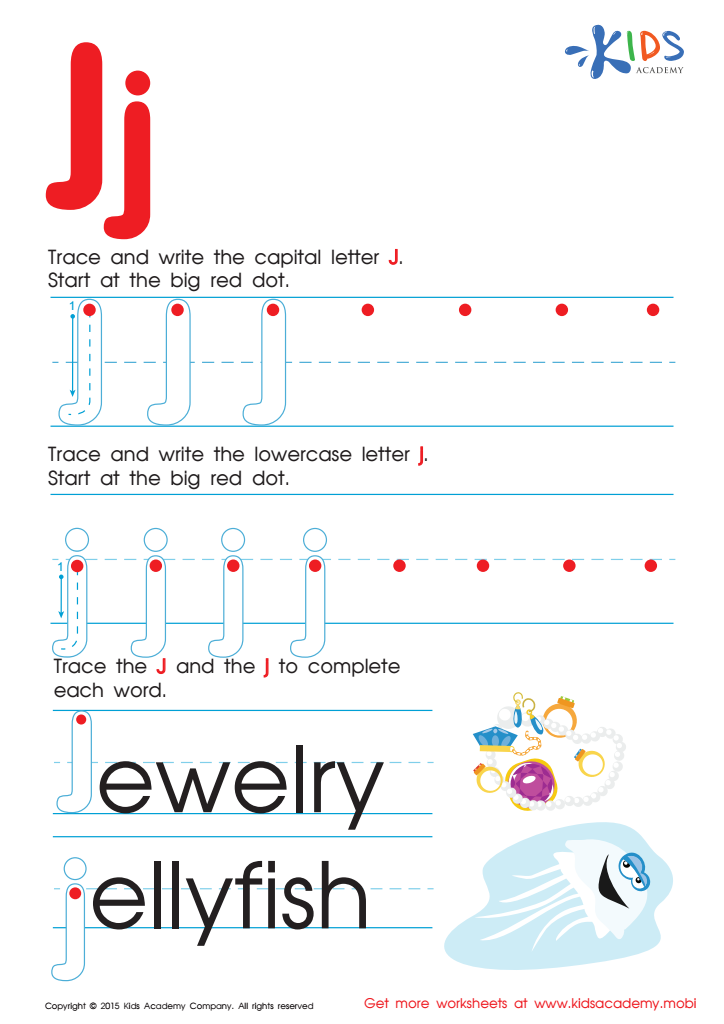
Letter J Tracing Page
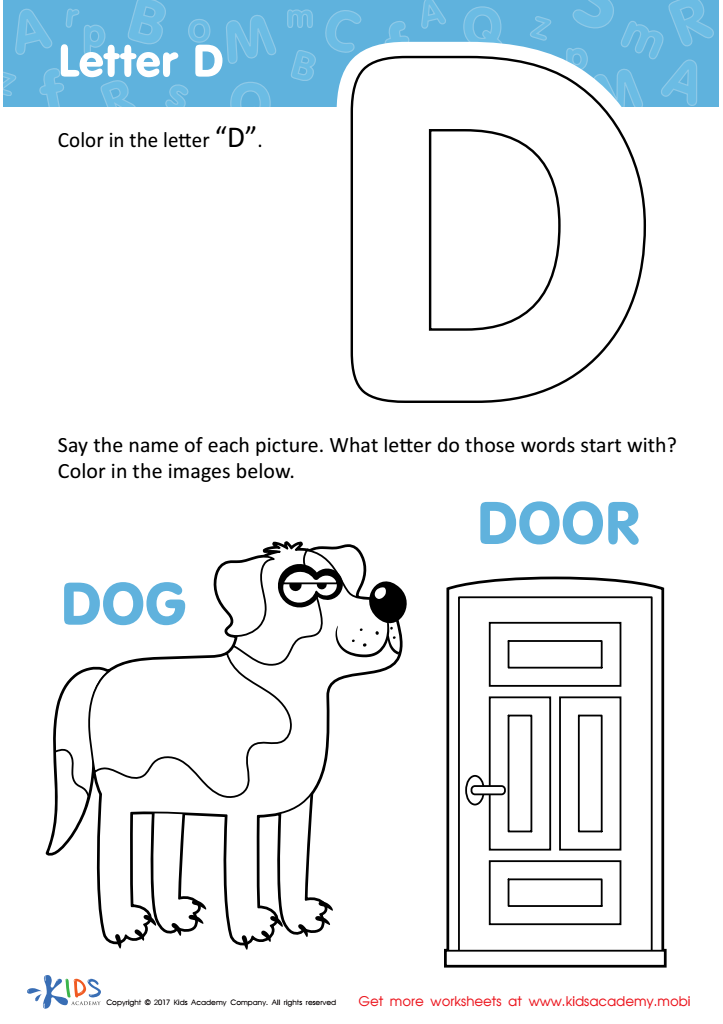
Letter D Coloring Sheet
 Assign to My Students








Parents and teachers should prioritize the development of fine motor skills and normal letter recognition in children aged 4-7 because these foundational abilities are pivotal for academic success and daily life efficiency. Fine motor skills involve the coordination of small muscles in the hands and fingers, which are essential for tasks like writing, cutting, and buttoning clothes. As children engage in activities that enhance these skills, they not only improve their hand-eye coordination and dexterity but also prepare for more complex tasks in the future, such as typing on a keyboard or playing musical instruments.
Similarly, letter recognition is a fundamental step toward literacy. Recognizing letters accurately and understanding their corresponding sounds are critical milestones that pave the way for reading and writing proficiency. Mastery of these skills at an early age influences a child's ability to decode words, understand text, and communicate effectively through writing. For instance, young learners who easily recognize letters are more likely to become confident readers and, as a result, perform better across various subjects.
Investing time and resources in nurturing these abilities creates a robust educational foundation, decreases future academic struggles, and boosts self-esteem, ultimately fostering a lifelong love for learning. Thus, caregivers' and educators' efforts in supporting fine motor skills and letter recognition have enduring benefits.








