Vowel Recognition Normal Letter Recognition Worksheets for Ages 4-7
4 filtered results
-
From - To
Explore our engaging Vowel Recognition Normal Letter Recognition Worksheets designed specifically for children ages 4-7. These fun, interactive worksheets help young learners identify and differentiate vowels in an enjoyable way. Through vibrant illustrations and age-appropriate activities, children will enhance their phonemic awareness, making reading and writing foundational skills more accessible. Each worksheet encourages practice through tracing, matching, and coloring exercises, ensuring a comprehensive grasp of vowel sounds. Perfect for classroom use or at-home learning, our resources provide educators and parents with effective tools to foster early literacy skills. Unlock your child’s love for learning and boost their confidence with our vowel recognition activities!
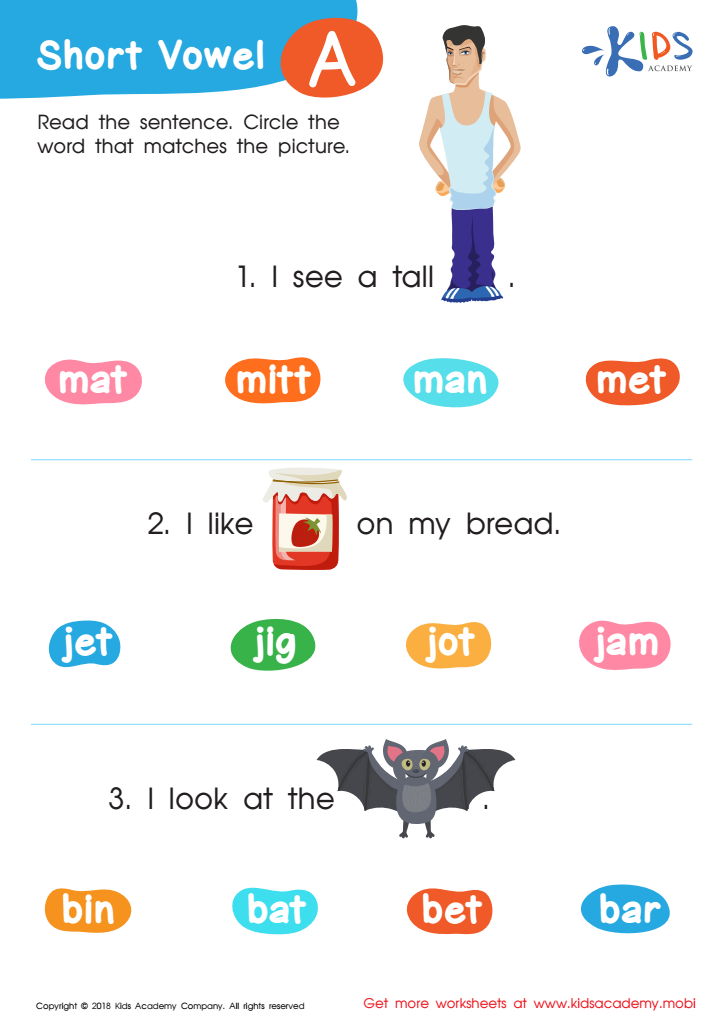
Short Vowel /a/ Worksheet
 Assign to My Students
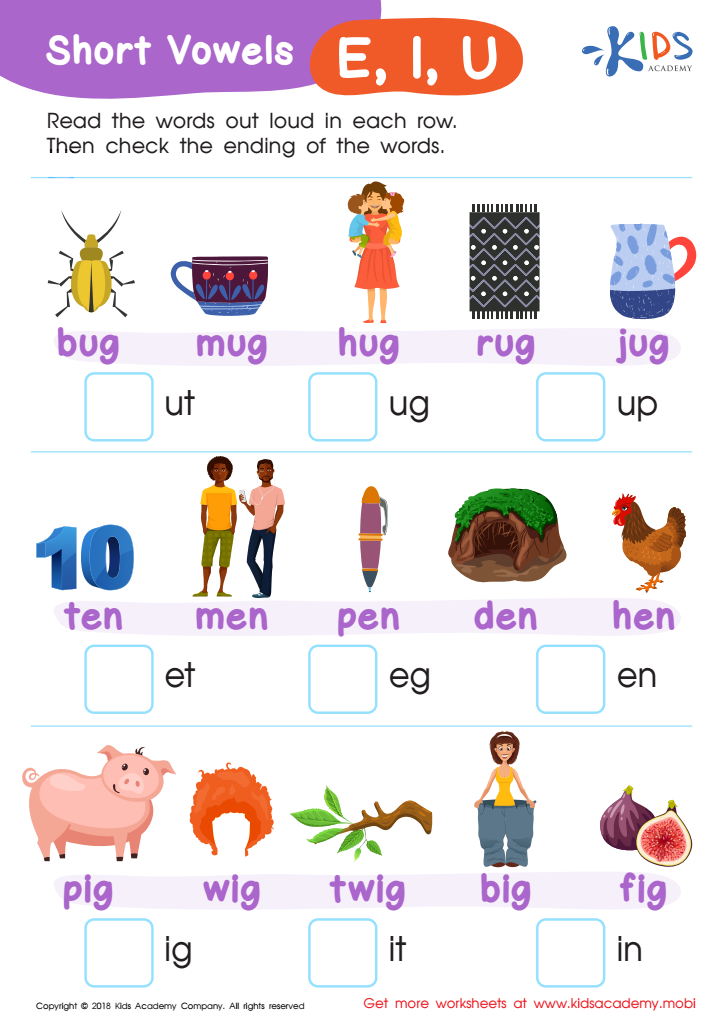
Short Vowels /e/, /i/, and /u/ Worksheet
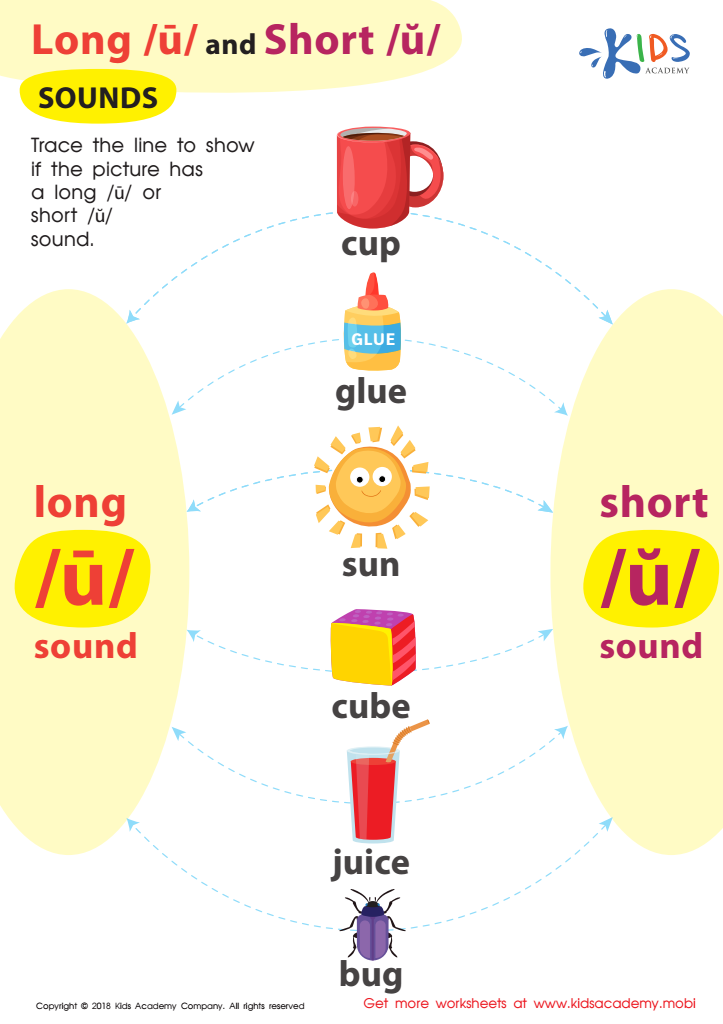
Reading: Long U and Short U Sounds Worksheet
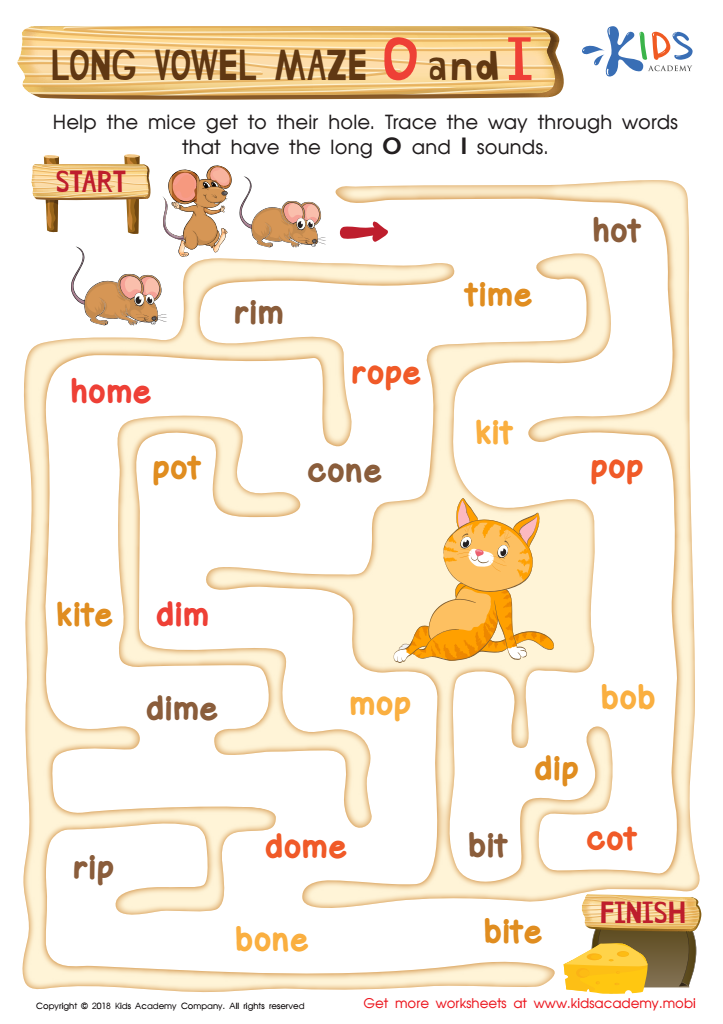
Long Vowel Maze /o/ and /i/ Worksheet








Vowel recognition and normal letter recognition are critical foundational skills for children aged 4-7, playing a key role in their literacy development. At this age, children are transitioning from recognizing letters to understanding their sounds, which is vital for reading and writing. Vowels are particularly important since they form the core of syllables and words, helping children decode and spell.
When parents and teachers prioritize vowel and letter recognition, they foster early phonemic awareness, enabling children to segment and blend sounds, essential skills for reading fluency. This early focus also helps in boosting children's confidence in language, enhancing their vocabulary and comprehension skills over time.
Moreover, strong letter and vowel recognition positively impacts children's overall academic success, as literacy is foundational for all subjects. Engaging children in playful and interactive activities centered around letters and vowels can stimulate their interest in reading and learning.
Thus, by nurturing these skills at an early age, parents and teachers can significantly influence children's educational trajectories, ensuring they develop the competencies necessary for future academic achievements and lifelong learning. As children build a solid literacy base, they are more likely to become proficient readers and communicators, empowering them in all aspects of their lives.








