Phonics recognition Normal Letter Sounds Worksheets for Ages 4-7
5 filtered results
-
From - To
At Kids Academy, we offer engaging Phonics Recognition Normal Letter Sounds Worksheets tailored for children aged 4-7. These fun and interactive worksheets are designed to help young learners identify and pronounce letter sounds accurately. Perfect for early readers, our phonics worksheets reinforce foundational literacy skills, promoting confidence and fluency in reading. Each activity is crafted to captivate young minds, combining vibrant visuals with easy-to-follow exercises. As children progress through the worksheets, they develop essential phonemic awareness, setting a strong groundwork for future academic success. Explore our comprehensive collection and watch your child flourish in their phonics journey!
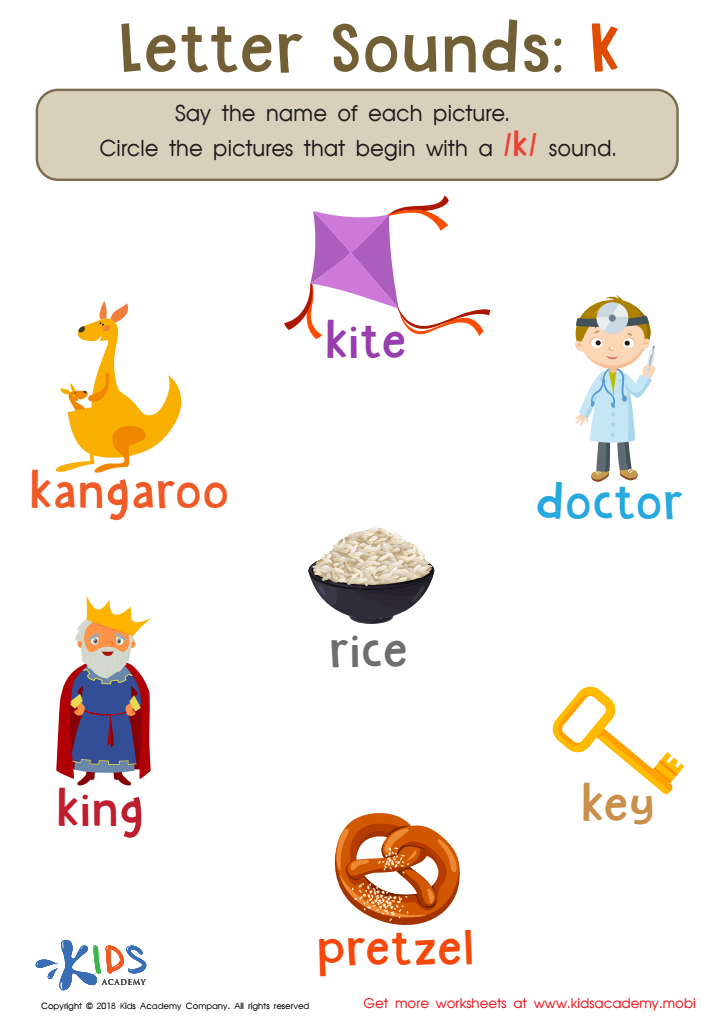
Letter K Sounds Worksheet
 Assign to My Students
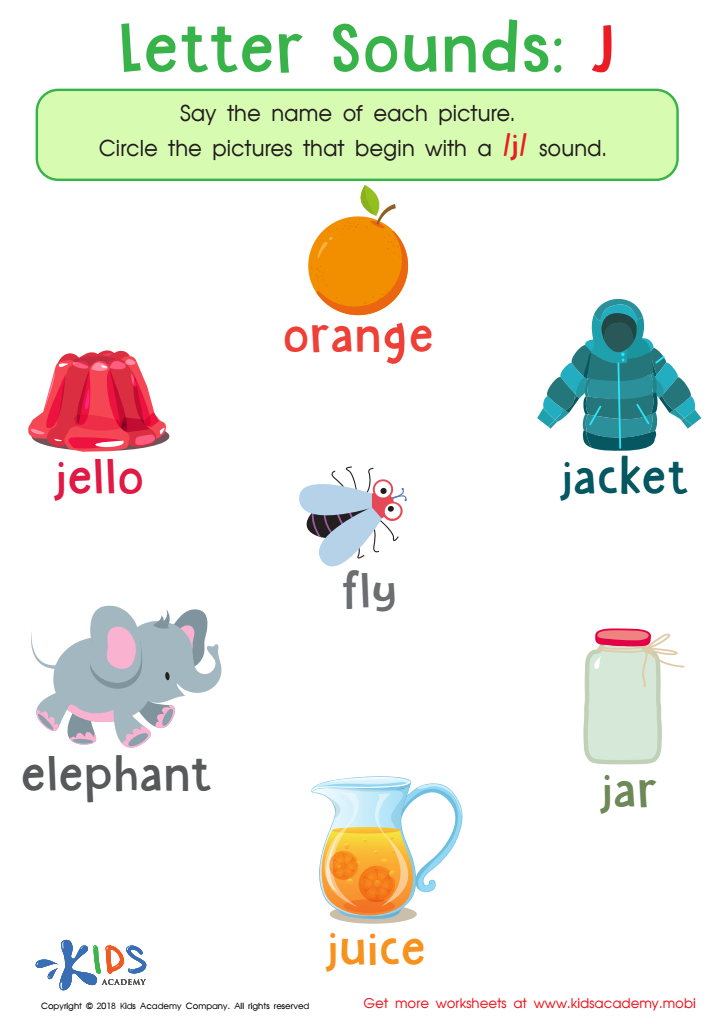
Letter Sounds: J Printable Worksheet
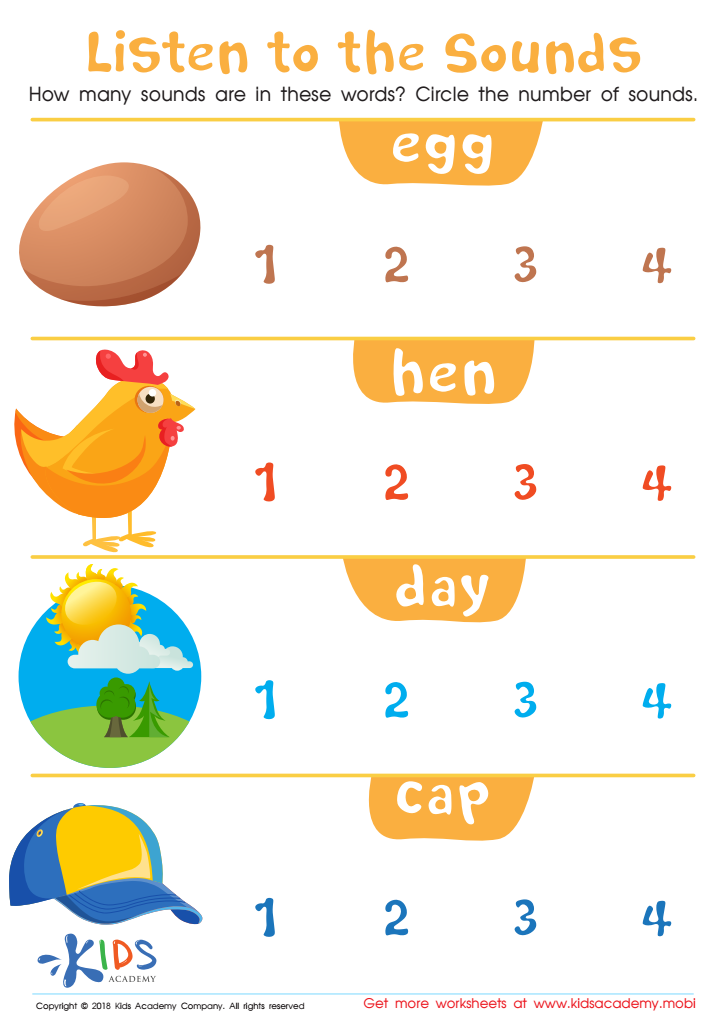
Listen to the Sounds Worksheet
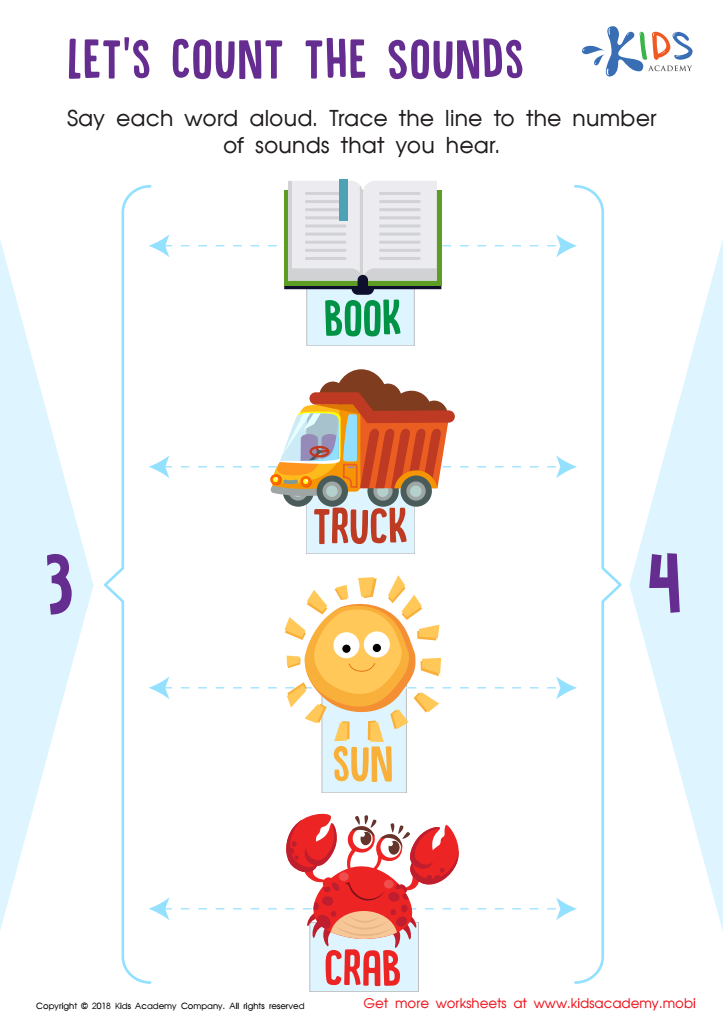
Let's Count the Sounds Worksheet
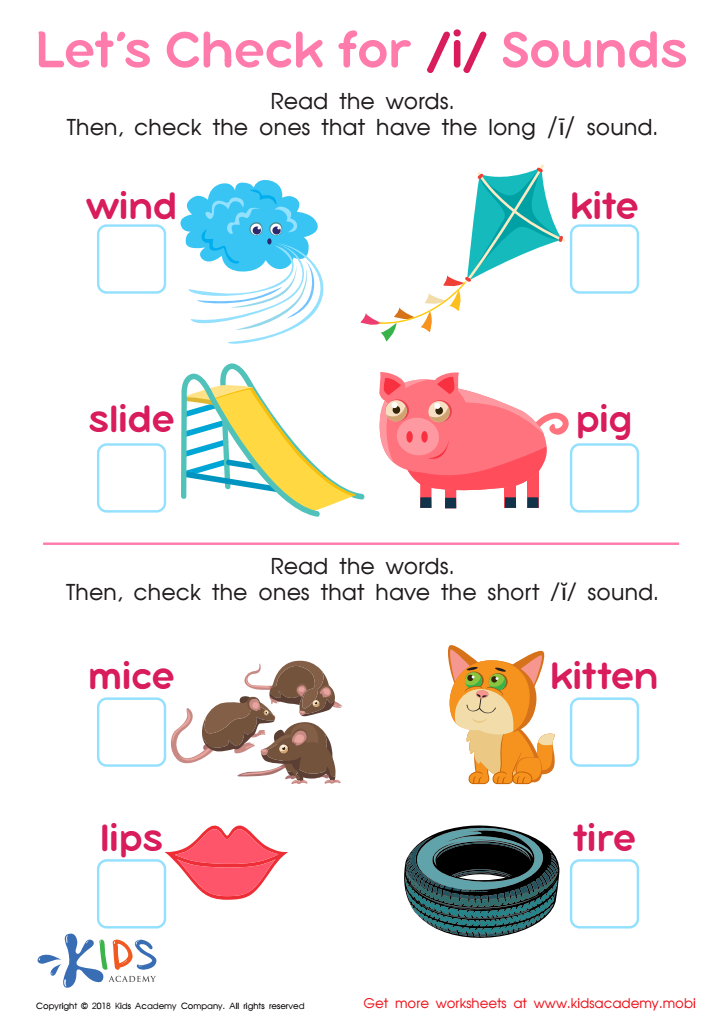
Let's Check for «i» Sounds Worksheet








Phonics recognition and normal letter sounds are fundamental skills for children aged 4-7, acting as the building blocks of reading and literacy. First, phonics teach children the relationship between letters and their corresponding sounds, facilitating the ability to decode written words. This skill is crucial for early reading success, which has long-term impacts on academic achievements across all subject areas.
Early mastery of phonics improves spelling since children learn to associate sounds with their written representations. It also enhances vocabulary and comprehension; as children become proficient readers, they are better able to understand and absorb new information. Each success in reading reinforces a child’s willingness to engage with texts, fostering enthusiasm for learning.
Moreover, phonics instruction supports the development of phonemic awareness, the understanding that words consist of individual sounds that can be segmented and blended. Phonemic awareness is an essential precursor to effective word recognition and literacy.
Parents and teachers need to collaborate to offer consistent and supportive phonics education at both home and school. Engaging activities like reading aloud, games, and audio resources can make learning enjoyable. Ignoring or undervaluing phonics might lead to literacy challenges that can affect a child’s confidence and academic trajectory. Therefore, a strong foundation in phonics is essential for young learners.






