Letter Tracing Practice Normal Tracing Letters Worksheets for Ages 4-7
3 filtered results
-
From - To
Enhance letter recognition and handwriting skills with our "Letter Tracing Practice" worksheets, designed for ages 4-7. These engaging activities from Kids Academy provide a fun and interactive way to practice tracing both uppercase and lowercase letters. Our printable worksheets help young learners develop fine motor skills, hand-eye coordination, and confidence in writing. Perfect for preschoolers and early elementary students, each sheet offers ample practice with clear directions. Boost your child's early literacy journey with these effective and enjoyable tools. Download now for a hands-on learning experience tailored for young minds.
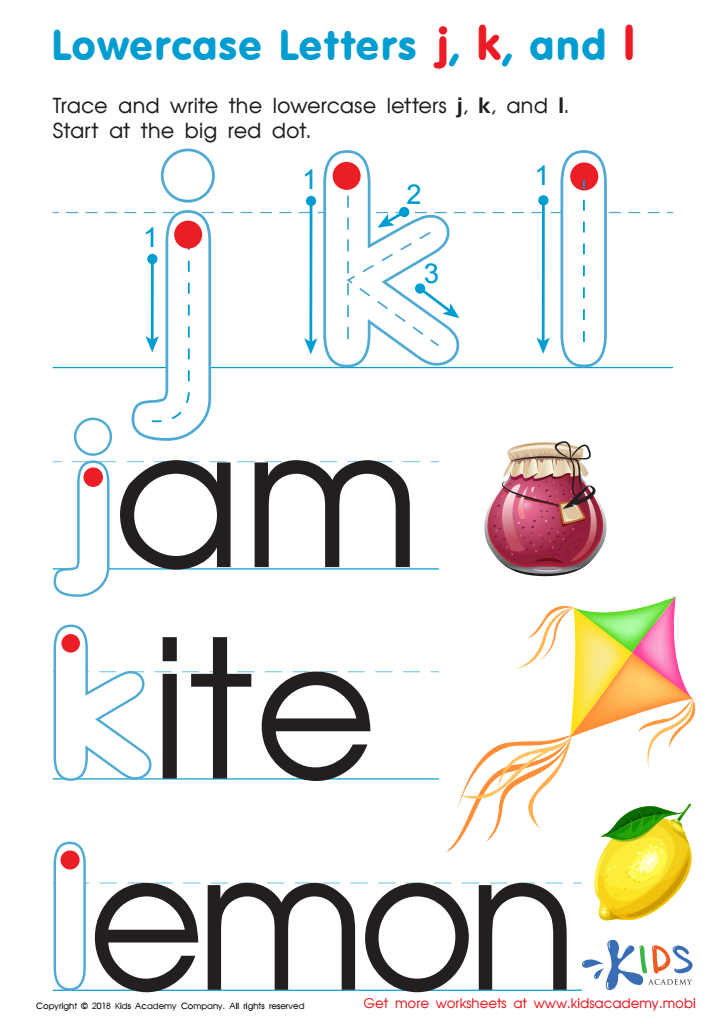
Lowercase Letters j k l Worksheet
 Assign to My Students
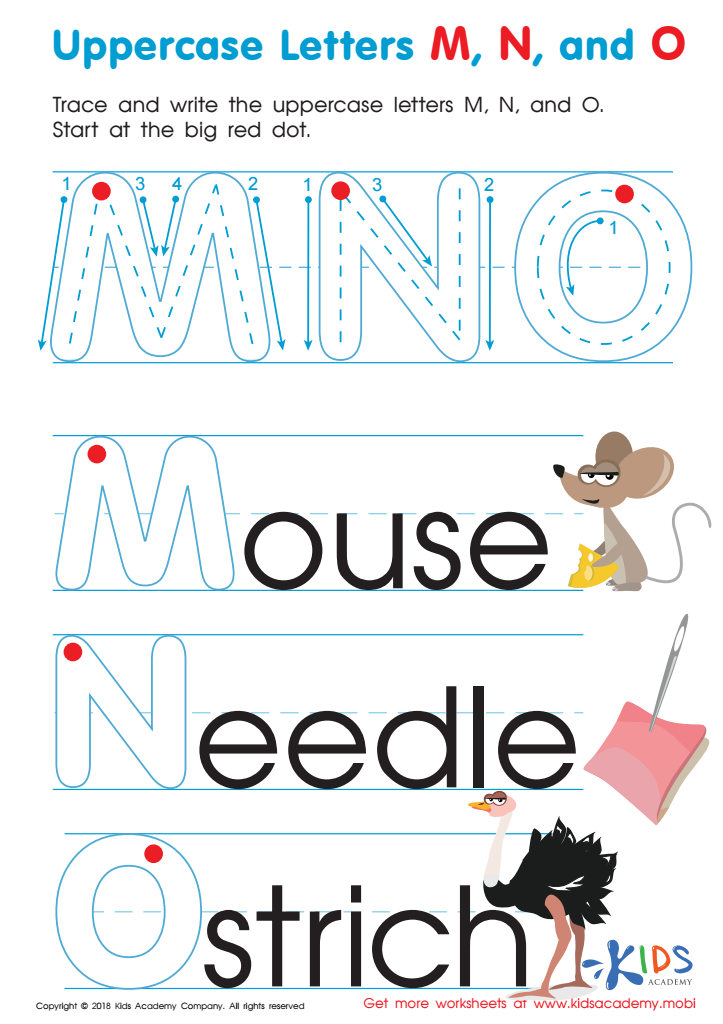
Uppercase Letters M, N, and O Worksheet
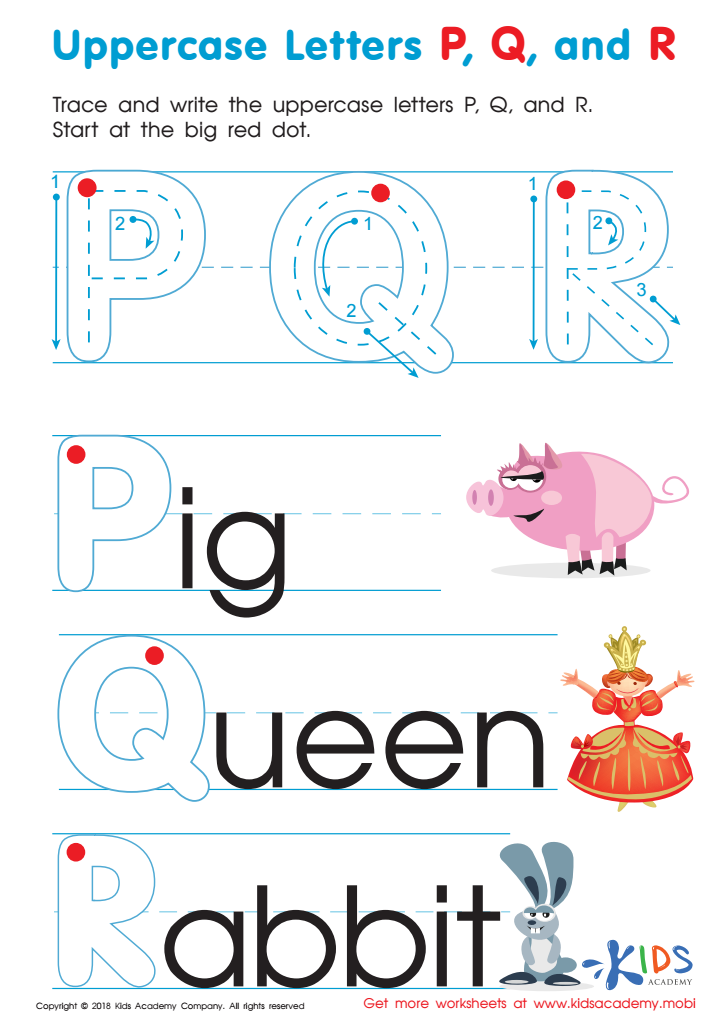
Uppercase Letters P, Q, and R Worksheet








Parents and teachers should prioritize Letter Tracing Practice for children aged 4-7 because it lays a strong foundation for literacy. This formative period is critical for developing fine motor skills essential for writing. Tracing helps young learners gain confidence in forming letters correctly, which facilitates better handwriting as they progress academically.
The practice of tracing letters allows children to understand the shape and structure of each letter, improving their visual and muscle memory. This repetition is crucial for children to recognize and recall letters quickly, bolstering their reading and writing fluency. By mastering basic letter formation, children can focus more on the content of their writing rather than the mechanics, supporting cognitive development in other areas like expressing ideas and storytelling.
Furthermore, engaging in letter tracing boosts hand-eye coordination and concentration. Children often feel a sense of accomplishment when they see well-formed letters they’ve created, fostering a positive attitude towards learning. Early exposure to tracing can help mitigate potential struggles with writing as they grow older.
In summary, Letter Tracing Practice is more than just a handwriting exercise; it is a valuable educational tool that supports holistic development in young learners, equipping them with essential skills for their academic journey ahead.








