Letter Tracing Practice Normal Upper & Lowercase Letters Worksheets for Ages 4-7
3 filtered results
-
From - To
Boost your child's letter recognition and handwriting skills with our Letter Tracing Practice for Normal Upper & Lowercase Letters worksheets! Perfect for ages 4-7, these engaging, educational printables provide essential practice for young learners. Each worksheet features clear, guided tracing paths that help children master the formation of uppercase and lowercase letters, enhancing their fine motor skills and confidence. Fun illustrations and activities ensure learning remains exciting and enjoyable. Cultivate early lifelong learning skills! Download our Letter Tracing Practice worksheets today and watch your young writer flourish.
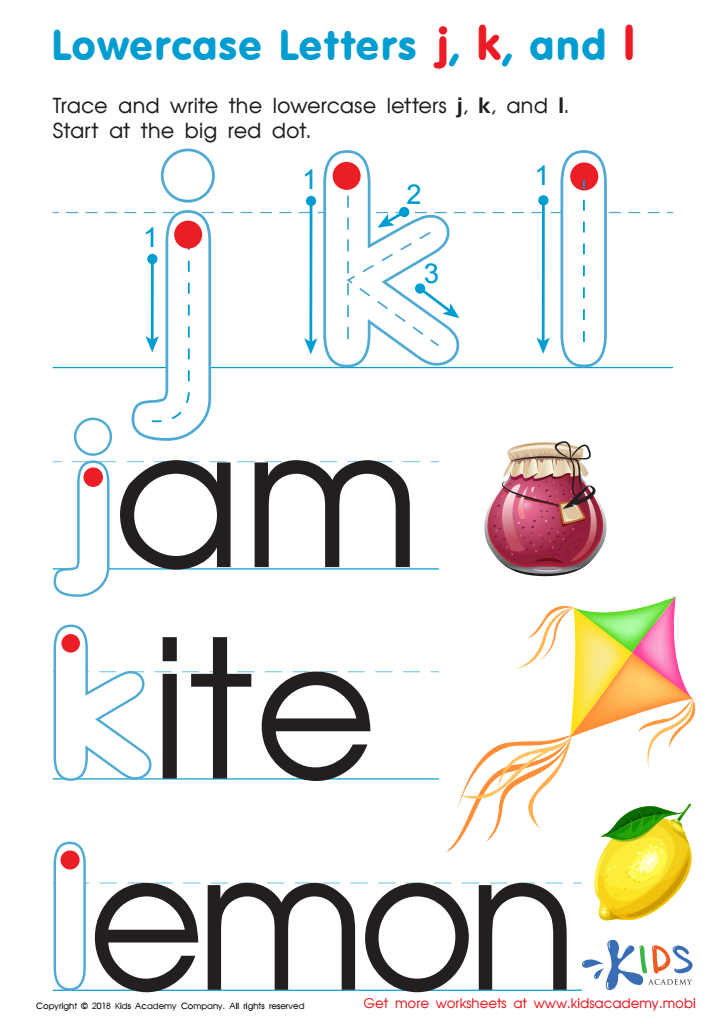
Lowercase Letters j k l Worksheet
 Assign to My Students



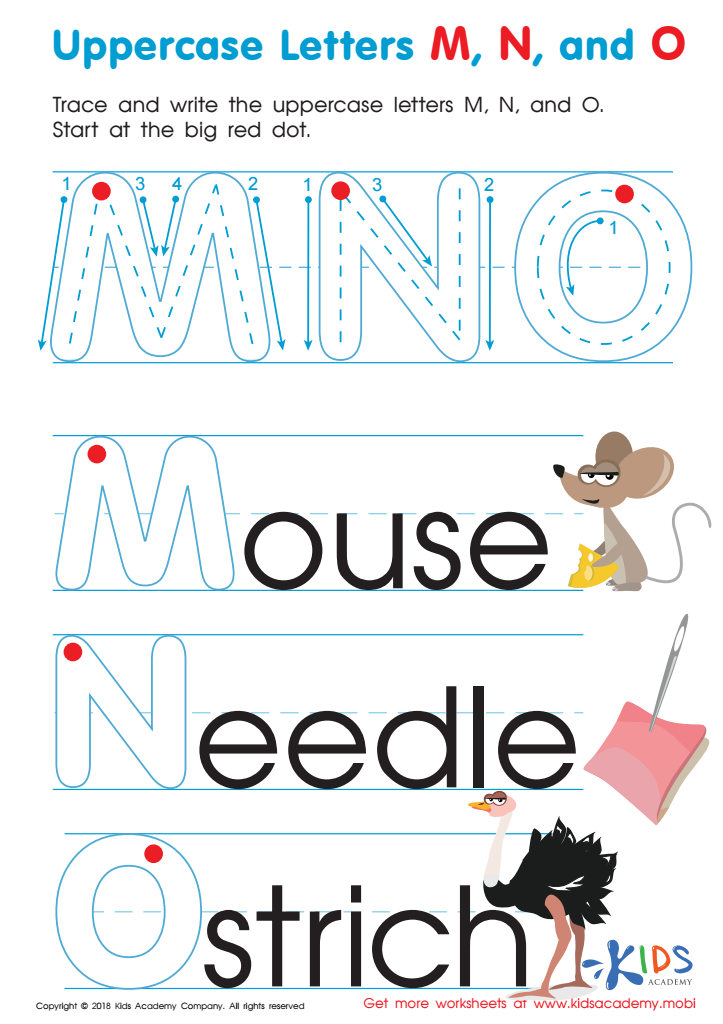
Uppercase Letters M, N, and O Worksheet
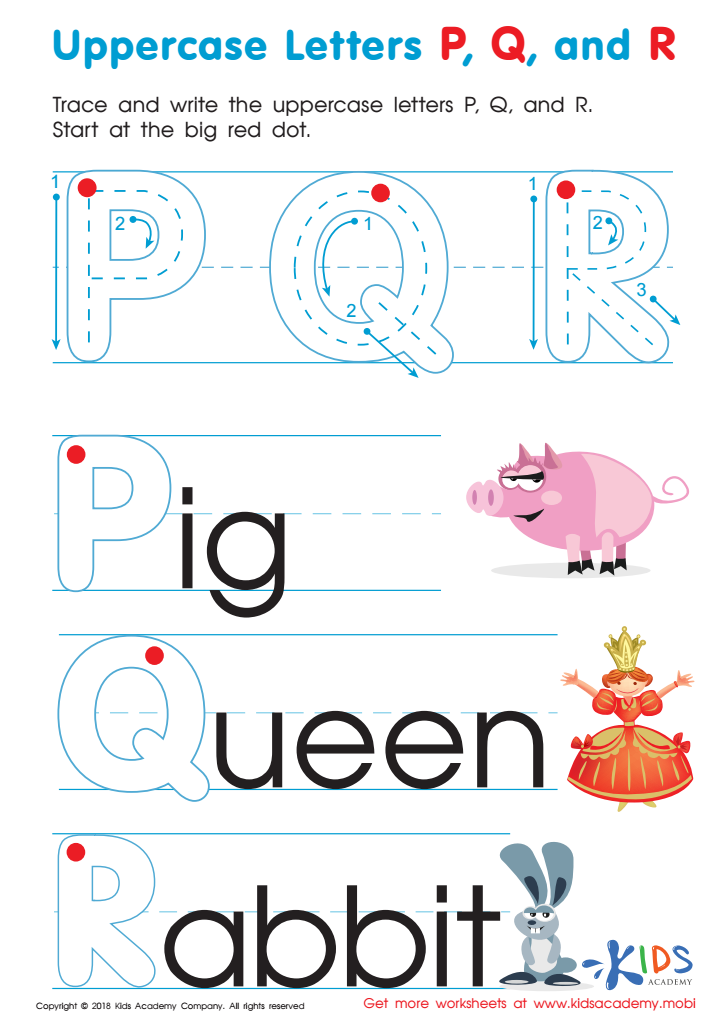
Uppercase Letters P, Q, and R Worksheet






Parents and teachers caring about letter tracing practice for children aged 4-7 is essential because it lays the foundational skills crucial for literacy development. At this age, children's fine motor skills are still burgeoning, and letter tracing helps refine their ability to control small movements needed for writing. By practicing both uppercase and lowercase letters, children not only learn to recognize and differentiate between them but also understand their proper usage in writing sentences.
Moreover, the repetitive nature of letter tracing reinforces memory, aiding in the quicker and more accurate recall of letters when reading and writing. Tracing also enhances hand-eye coordination and helps children understand the directional norms of writing, such as left-to-right progression. Teachers can integrate these activities into playful and engaging sessions, making learning enjoyable and less of a chore for young minds, thus fostering a positive attitude towards education.
Letter tracing can boost confidence as children visibly see their progress, motivating them to tackle more complex literacy tasks in the future. Early proficiency in writing also sets the stage for improved communication skills, higher academic performance, and a smoother transition to more advanced stages of learning. From phonics to sentence structure, the benefits of early letter tracing practice are invaluable for comprehensive educational development.







