Uppercase identification Normal Upper & Lowercase Letters Worksheets for Ages 4-7
5 filtered results
-
From - To
Discover our Uppercase Identification Normal Upper & Lowercase Letters Worksheets for ages 4-7 at Kids Academy. Engaging and educational, these worksheets help your child easily learn to identify and differentiate between upper and lowercase letters. Designed with fun activities that captivate young minds, our resources assist in enhancing fine motor skills, letter recognition, and early literacy. Tailored for pre-K to 1st grade, these printable worksheets make learning interactive and enjoyable while laying a strong foundation for reading and writing success. Visit our site to access these essential tools for your child's development today!
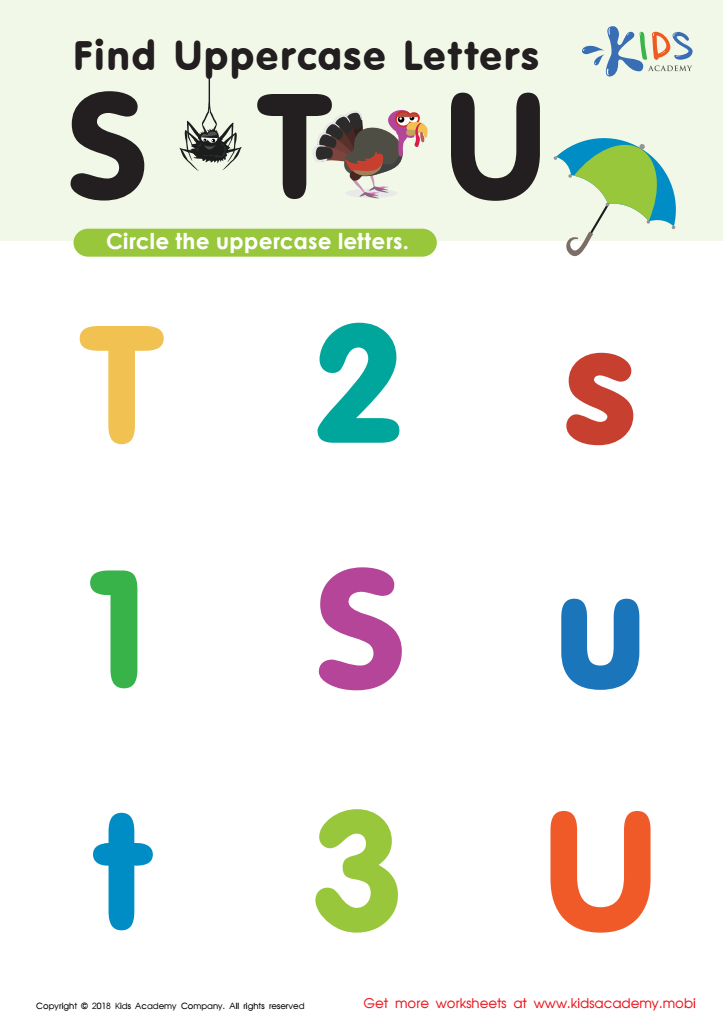
Find Uppercase Letters Worksheet
 Assign to My Students
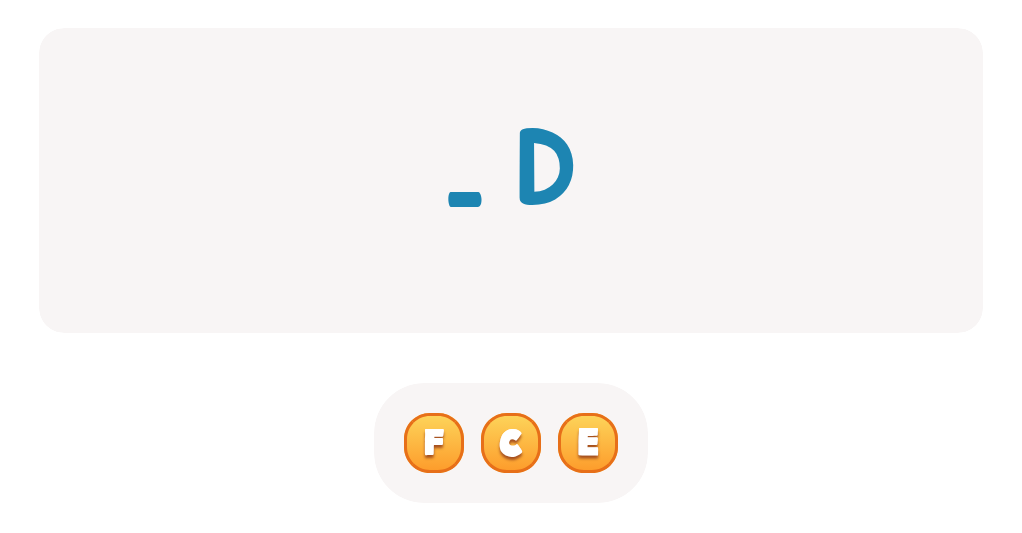

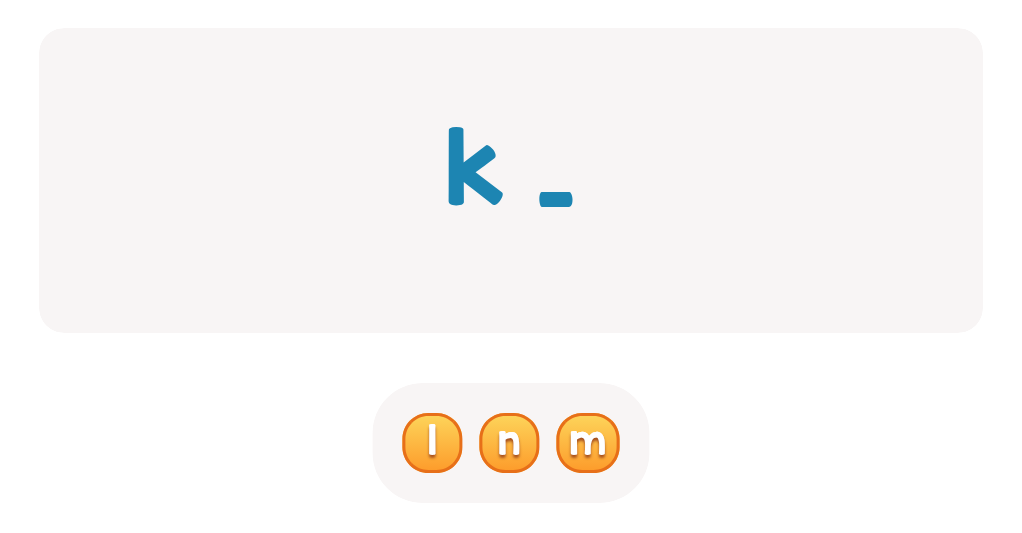
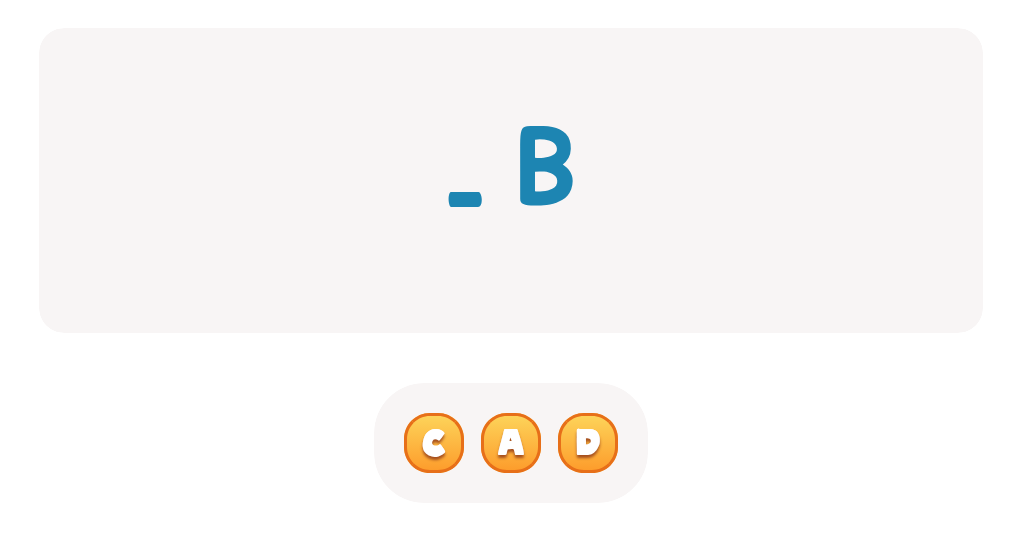

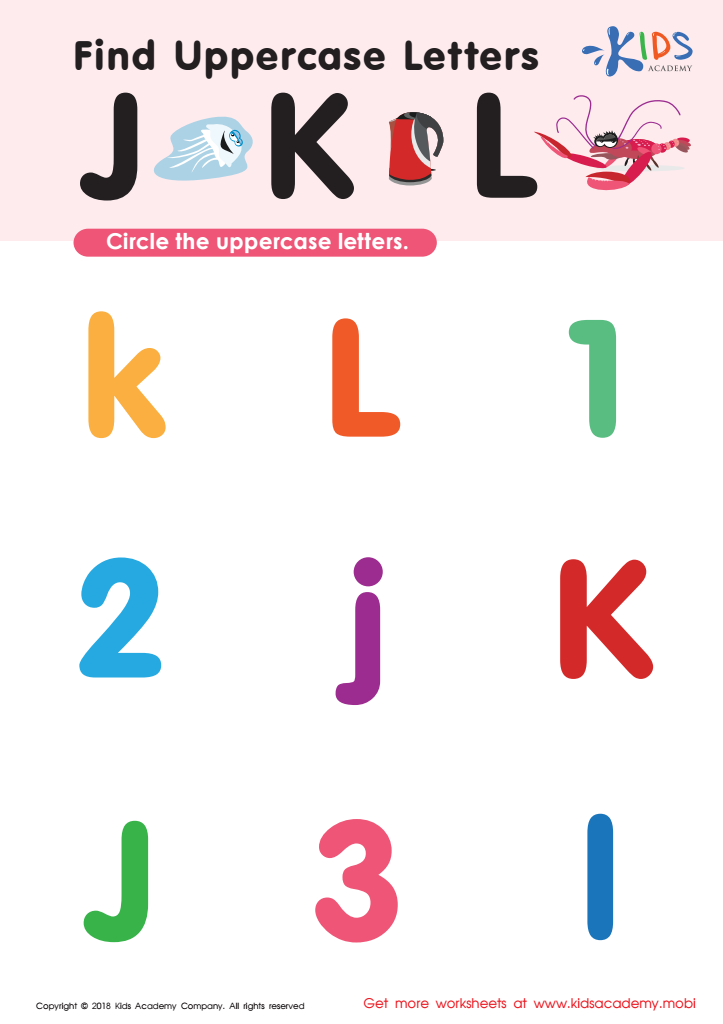
Find Uppercase Letters J, K, and L Worksheet

Find Uppercase Letters A, B, and C Worksheet
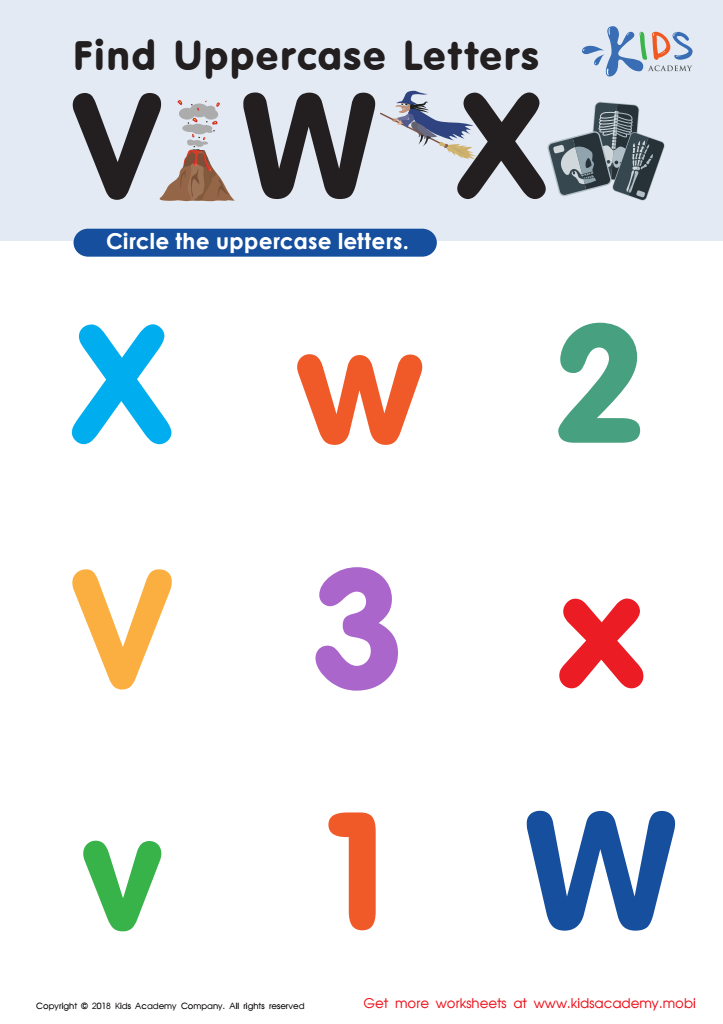
Find Uppercase Letters V, W, X Worksheet
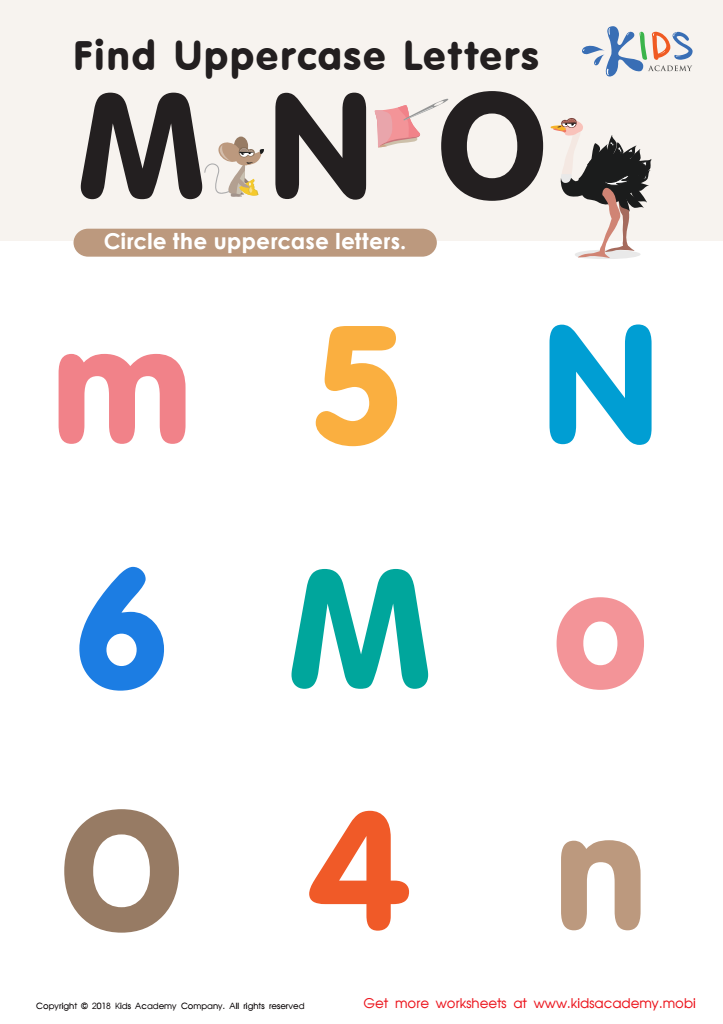
Find Uppercase Letters M, N, and O Worksheet






Uppercase and lowercase letter identification is foundational to early literacy skills, especially for children ages 4-7. Mastery in recognizing and understanding both forms enhances reading readiness, which is critical for overall academic success. Here’s why parents and teachers should care:
-
Reading Skills: Distinguishing between uppercase and lowercase letters is essential for recognizing words. English texts predominantly use lowercase letters, but uppercase letters are found at the beginning of sentences and in proper nouns. Familiarity with both helps children decode and comprehend text more successfully.
-
Writing Readability: Correct usage of uppercase and lowercase letters improves the legibility and professionalism of a child's writing. Knowing when to capitalize demonstrates an understanding of sentence structure and grammar rules, essential for effective communication.
-
Cognitive Development: Learning to differentiate between upper and lowercase letters engages a child's visual and memory skills. It encourages pattern recognition, a cognitive skill that’s useful far beyond reading and writing.
-
Confidence: Proficiency in letter identification builds confidence. When children can recognize and name letters correctly, they feel more confident in their ability to learn and are more likely to actively participate in classroom activities.
-
Standardized Benchmarks: Early literacy skills, including letter recognition, are often key components of school readiness assessments.







