
Handwriting practice Normal Building Vocabulary Worksheets for Ages 4-7
4 filtered results
Difficulty Level
Grade
Age
-
From - To
Subject
Activity
Standards
Explore our engaging Handwriting Practice and Vocabulary Building Worksheets tailored for ages 4-7! Designed to develop essential reading and writing skills, these worksheets make learning fun and effective. Each activity focuses on building vocabulary while providing ample handwriting practice, ensuring young learners improve their fine motor skills, letter recognition, and word comprehension. Our expertly crafted materials align with educational standards and are perfect for both classroom and home use. Help your child blossom into a confident reader and writer with these stimulating and interactive worksheets from Kids Academy. Check them out now and ignite your child’s love for learning!
Favorites
With answer key
Interactive
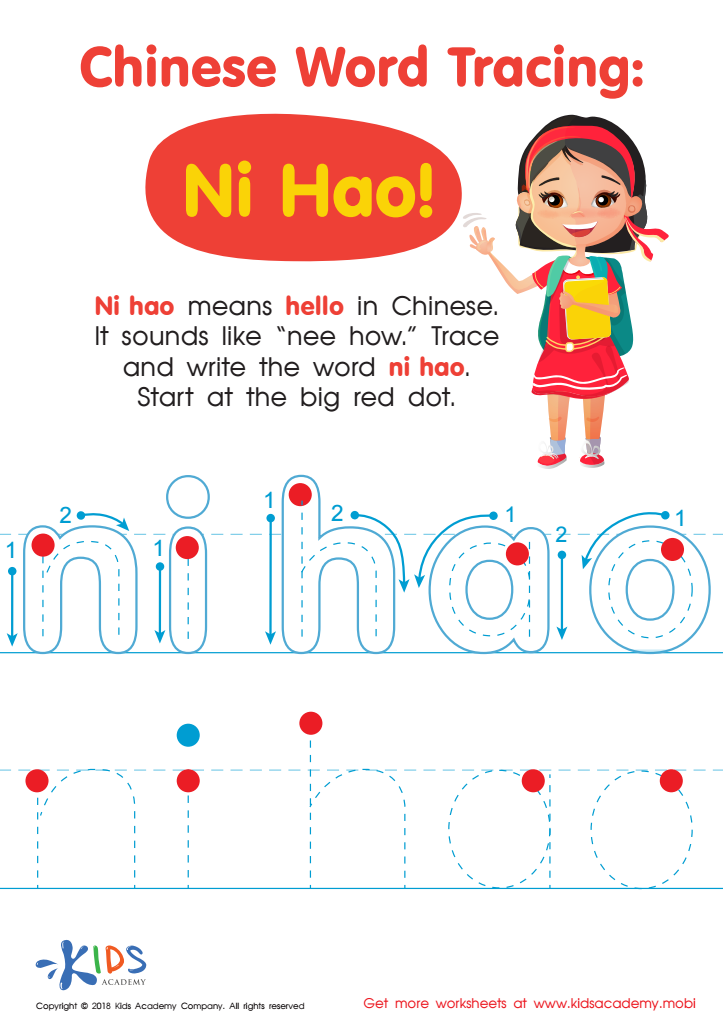
Chinese Word Tracing: Ni Hao Worksheet
Kids can learn to say "Ni hao" with this fun tracing worksheet. The free PDF helps kids write and say the Chinese greeting while also developing fine-motor, handwriting and reading skills. With red guide dots and traceable lines, kids will learn top-to-bottom and left-to-right patterning for fluent reading.
 Assign to My Students
Chinese Word Tracing: Ni Hao Worksheet
Worksheet











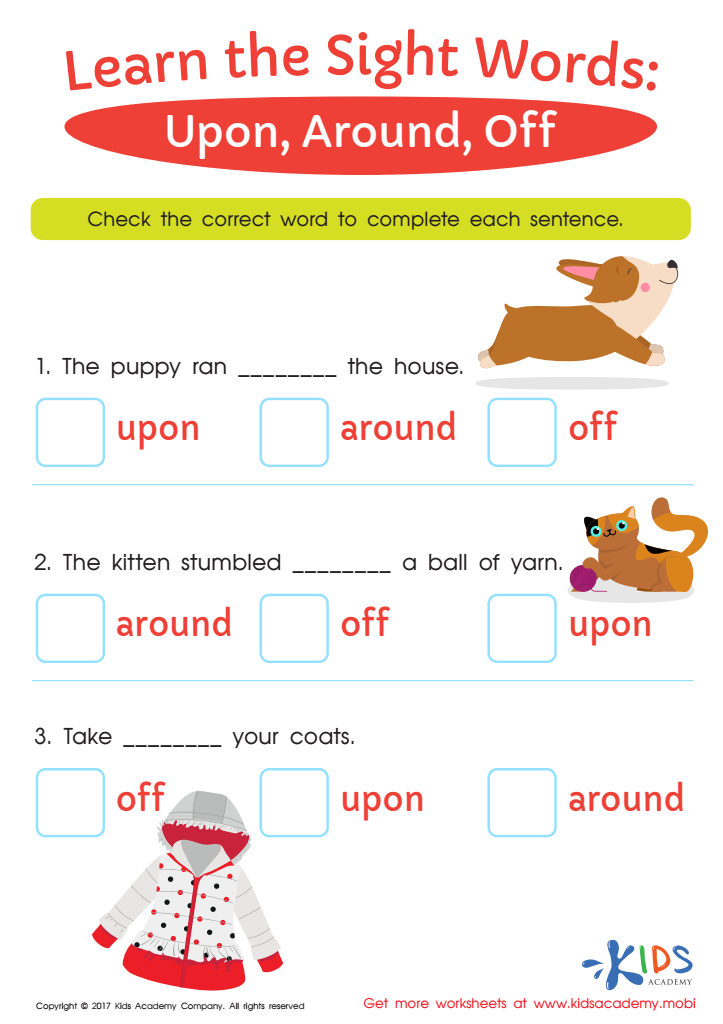
Upon, Around, Off Sight Words Worksheet
Assist your child in mastering prepositions by printing off this worksheet featuring three sight words: upon, around, off. Read the sentences aloud and use the illustrations to demonstrate the meaning of each. Your kid will soon master these words quickly.
Upon, Around, Off Sight Words Worksheet
Worksheet
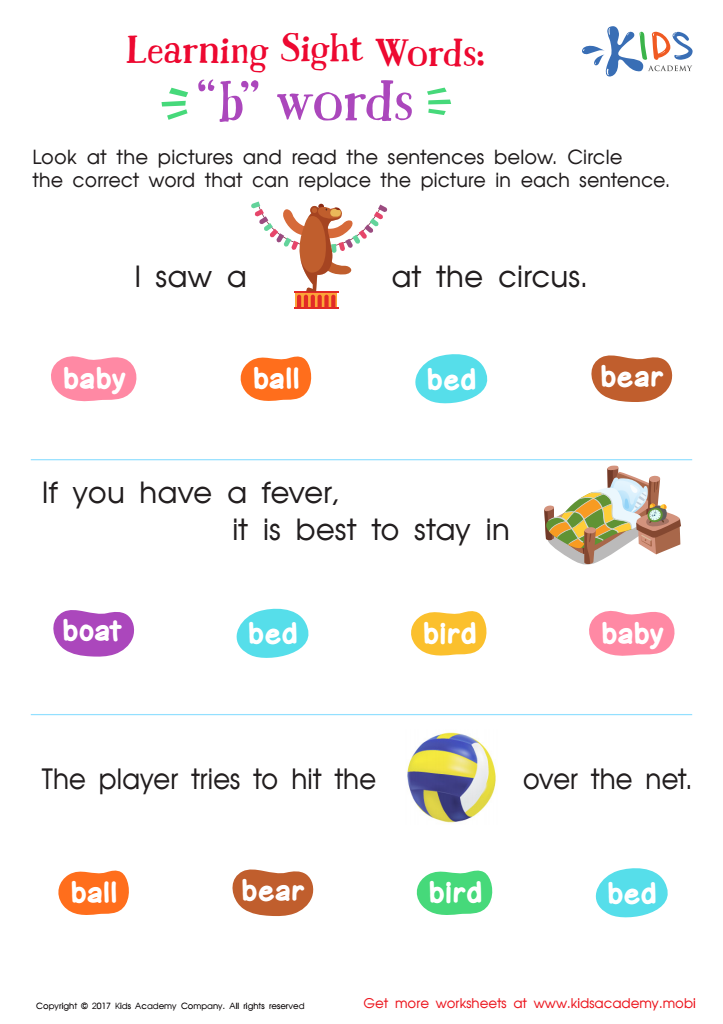
"B" Words Printable Sight Words Worksheet
Kids will learn sight words quickly with this fun worksheet! "B" Words offers guided practice with simple sentences and pictures. Build your child's reading confidence with this helpful worksheet and watch them become a master!
"B" Words Printable Sight Words Worksheet
Worksheet
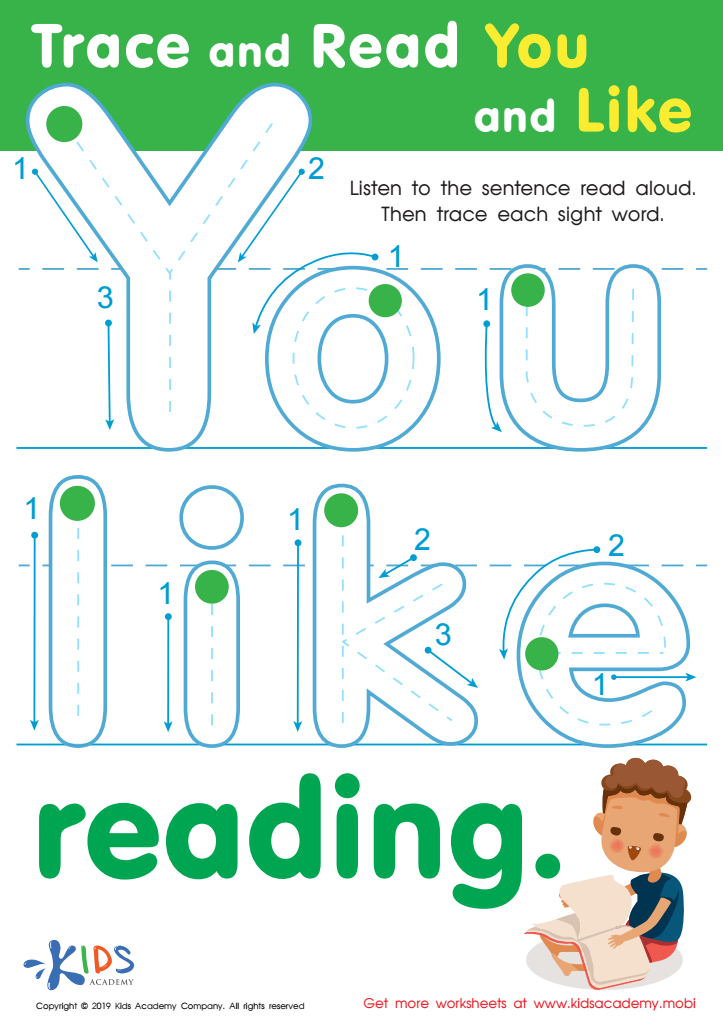
Trace Read You Like Worksheet
Sight words help children become confident and fluent readers. This free worksheet encourages success with basic 'you' and 'like' words. Writing them with traceable lines and green dots shows motion and builds sight word vocabulary. Help your child master the basics and boost their reading progress!
Trace Read You Like Worksheet
Worksheet
Join Kids Academy for Free
Who is primarily going to use this learning content?



.jpg)




Handwriting practice and building vocabulary at an early age are fundamental elements of childhood education and development. For children between the ages of 4-7, these skills lay the groundwork for successful communication and academic performance.
Handwriting practice is essential because it develops fine motor skills, which are crucial for tasks like buttoning a shirt or tying shoes. Forming letters and numbers strengthens a child's hand muscles and improves coordination, which in turn enhances their ability to use tools effectively. Additionally, legible handwriting fosters a child's confidence, encouraging them to write more frequently and expressively.
Vocabulary building is equally important. During the ages of 4-7, a child's brain is incredibly receptive to new information. Introducing a rich and varied vocabulary helps children understand and describe their world better, boosts their ability to follow complex instructions, and enhances reading comprehension skills. A robust vocabulary is linked to better academic performance, as it aids in understanding lesson materials and developing critical thinking skills.
In summary, handwriting practice and vocabulary building during these formative years provide children with essential tools for effective learning. They are the foundation for literacy and numeracy, fostering communication, cognitive development, and academic success. Parents and teachers play a crucial role in nurturing these skills, setting children on a path toward lifelong education and achievement.








