
Phonics practice Normal Building Vocabulary Worksheets for Ages 4-7
5 filtered results
Difficulty Level
Grade
Age
-
From - To
Subject
Activity
Standards
Boost your child's reading skills with our "Phonics Practice Normal Building Vocabulary Worksheets for Ages 4-7." Our expertly designed worksheets make mastering phonics fun and engaging. Perfect for young learners, these resources focus on essential phonics rules, letter sounds, and blending techniques, facilitating strong foundational skills. Create an interactive learning experience that aligns with early education standards. Ideal for both classroom and home use, these worksheets guide children through colorful exercises and expanding vocabulary. Turn reading practice into an enjoyable journey of discovery and achieve significant progress! Enhance your child's literacy with systematic, play-based phonics practice today!
Favorites
With answer key
Interactive
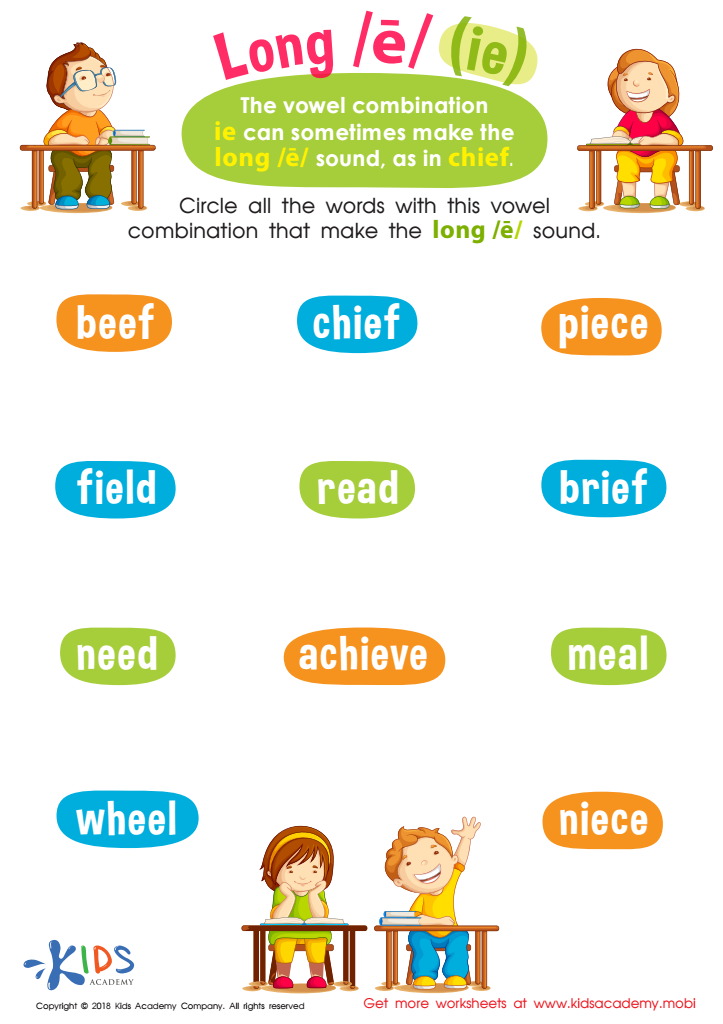
Reading: Long E and IE Worksheet
Ask your child to name some words with the long /e/ sound they hear every day. Then, read aloud all the words in the worksheet with them. Ask them to circle the words containing ie that make this sound.
 Assign to My Students
Reading: Long E and IE Worksheet
Worksheet











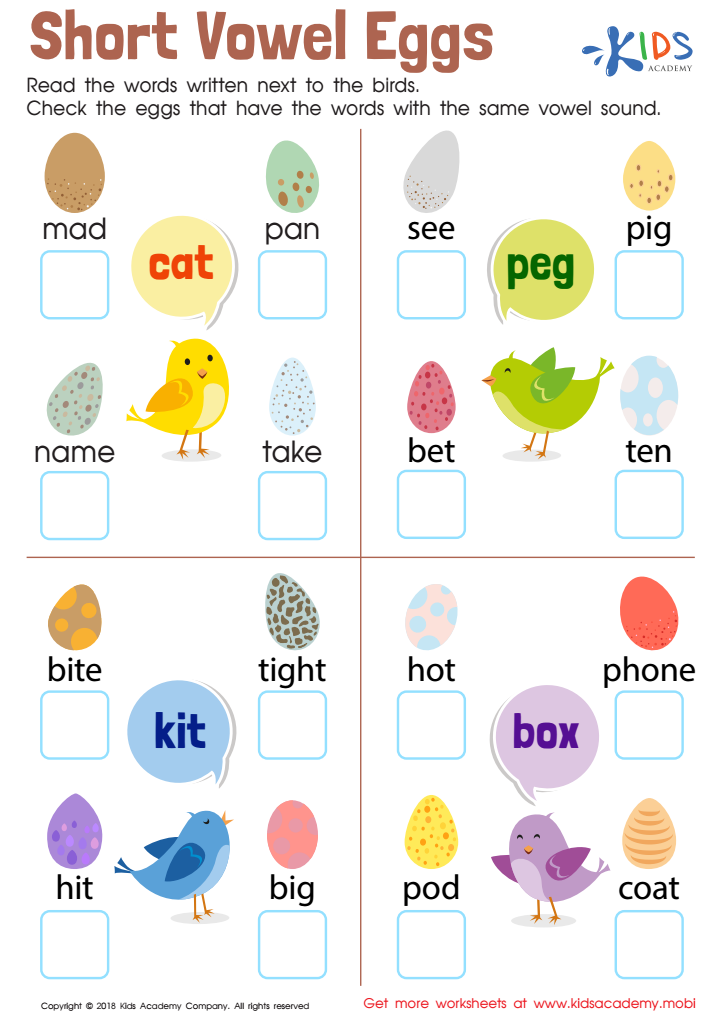
Short Vowel Eggs Worksheet
Your students will love helping these birdies pick the short vowel eggs! Have them read the words in the thought bubbles, then check off the boxes with the same short vowel sounds. The bright colors of this free Worksheet will draw them in and get them practicing their vowels!
Short Vowel Eggs Worksheet
Worksheet
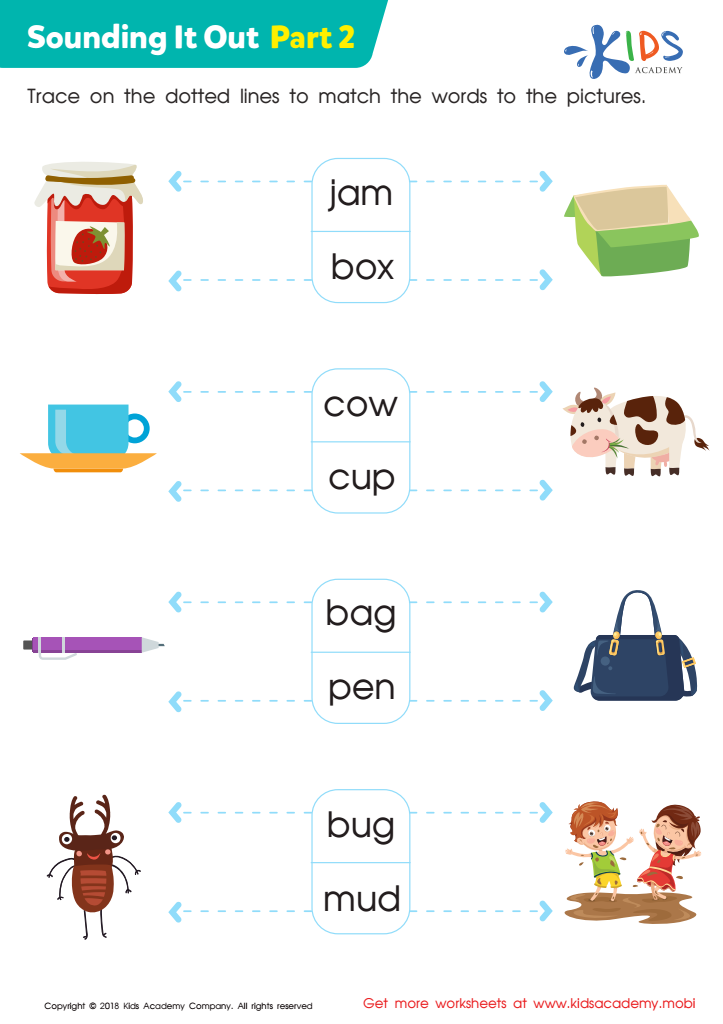
Sounding it Out: Part 2 Worksheet
Mastering phonics is key for kids to learn to read! This free worksheet uses fun pictures to help them sound out words. Ask them to name the images, then use the hints to say each word. Kids will become accomplished readers in no time!
Sounding it Out: Part 2 Worksheet
Worksheet
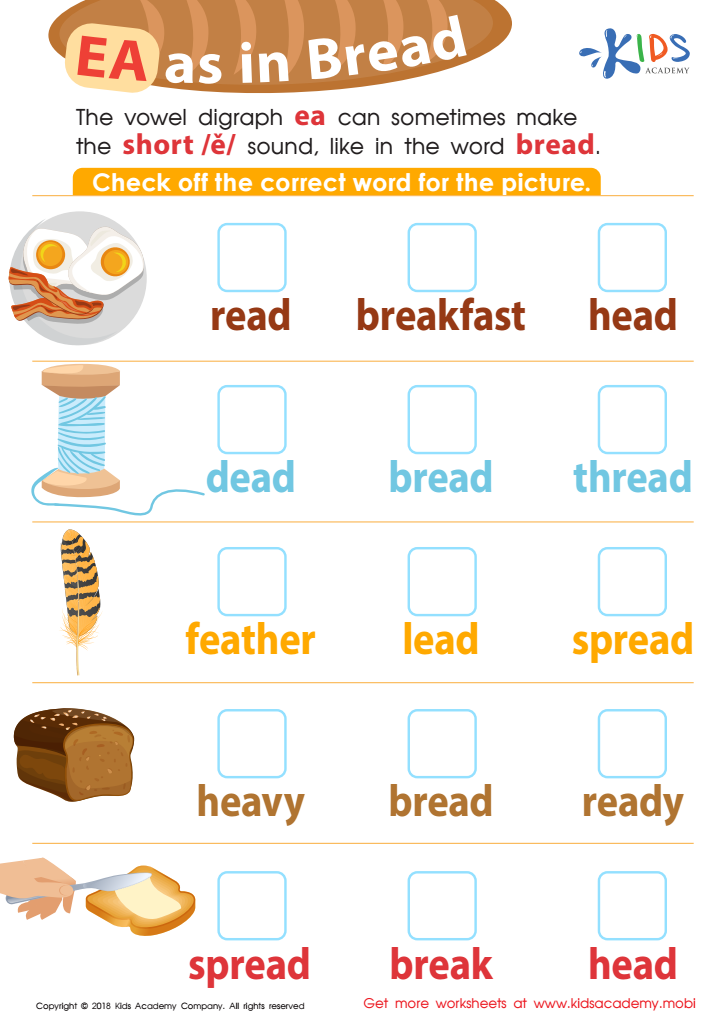
Reading: EA as in Bread Worksheet
The vowel digraph ea can be read in two ways. Examples of the long sound are "read" and "lead"; examples of the short sound are "bread" and "head". Ask your kids to give you more examples and then have them check off the correct word for the pictures on this worksheet. This will help them understand the ea sound.
Reading: EA as in Bread Worksheet
Worksheet
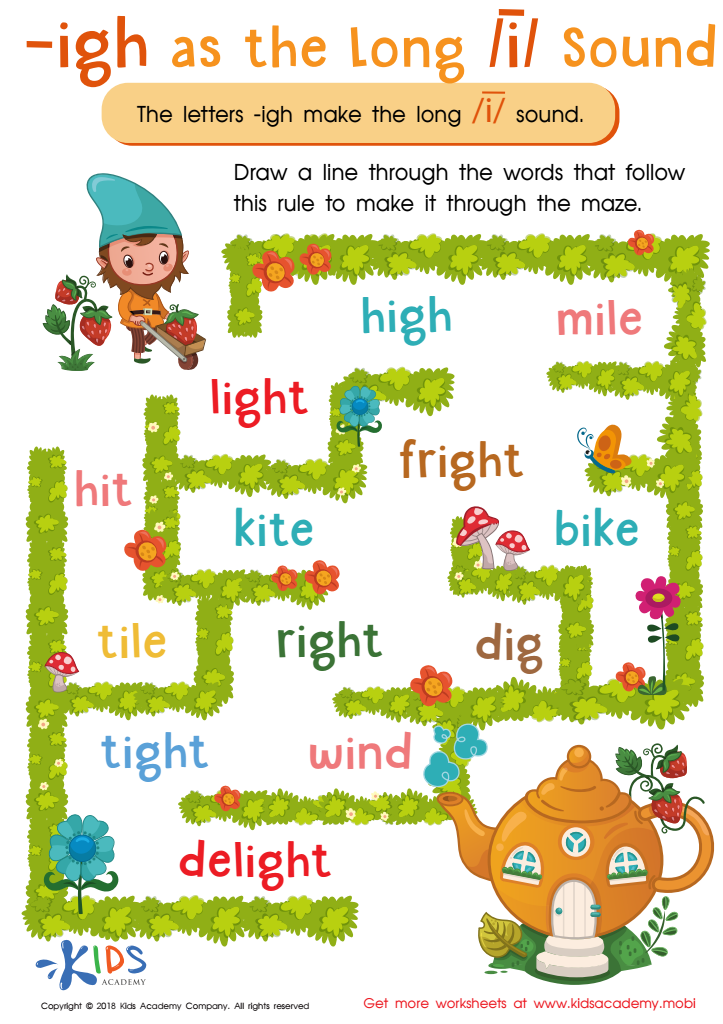
Reading: IGH as Long I Worksheet
Kids can have fun and learn with this maze! They'll look for and read words with the 'long I' sound spelled 'igh'. Most words ending with 'T' have this spelling. Decode words while learning about long vowel sounds and their spellings.
Reading: IGH as Long I Worksheet
Worksheet
Join Kids Academy for Free
Who is primarily going to use this learning content?




.jpg)



Parents and teachers should recognize the essential role of phonics practice and vocabulary-building for young children aged 4-7 because these foundational skills are pivotal for literacy development and overall academic success. Phonics teaches children the relationships between letters and sounds, enabling them to decode words efficiently. As young learners become adept at sounding out words, their reading fluency increases, allowing for better comprehension and a more enjoyable reading experience.
Building a robust vocabulary is equally important. Familiarity with a wide array of words enhances children’s ability to express themselves, understand instructions, and engage with more complex texts over time. Moreover, a strong vocabulary is closely linked to reading comprehension; children with limited vocabulary often struggle to grasp the meaning of what they read.
Both phonics practice and vocabulary enrichment are crucial during the early years because this is when the brain is most receptive to language acquisition. These skills form the bedrock upon which all future learning is built. Without a solid foundation in phonics and vocabulary, children may face difficulties in all areas of schooling, leading to potential learning gaps and reduced confidence. Therefore, investing time and resources in these areas during the critical ages of 4-7 can set children on a path to lifelong success in reading and learning.








