
Phonics Skills Normal Building Vocabulary Worksheets for Ages 4-7
5 filtered results
Difficulty Level
Grade
Age
-
From - To
Subject
Activity
Standards
Boost your child's reading journey with our "Phonics Skills Normal Building Vocabulary Worksheets" designed for ages 4-7. These engaging and educational worksheets from Kids Academy focus on core phonics skills, helping young learners develop strong reading foundations. Each activity combines fun illustrations with interactive exercises, ensuring kids stay motivated while building vocabulary and reading proficiency. Perfect for both classroom and home use, our meticulously crafted worksheets support phonemic awareness, letter recognition, and word-building skills. Encourage your child's love for reading and set them up for academic success with Kids Academy's expertly designed phonics worksheets!
Favorites
With answer key
Interactive
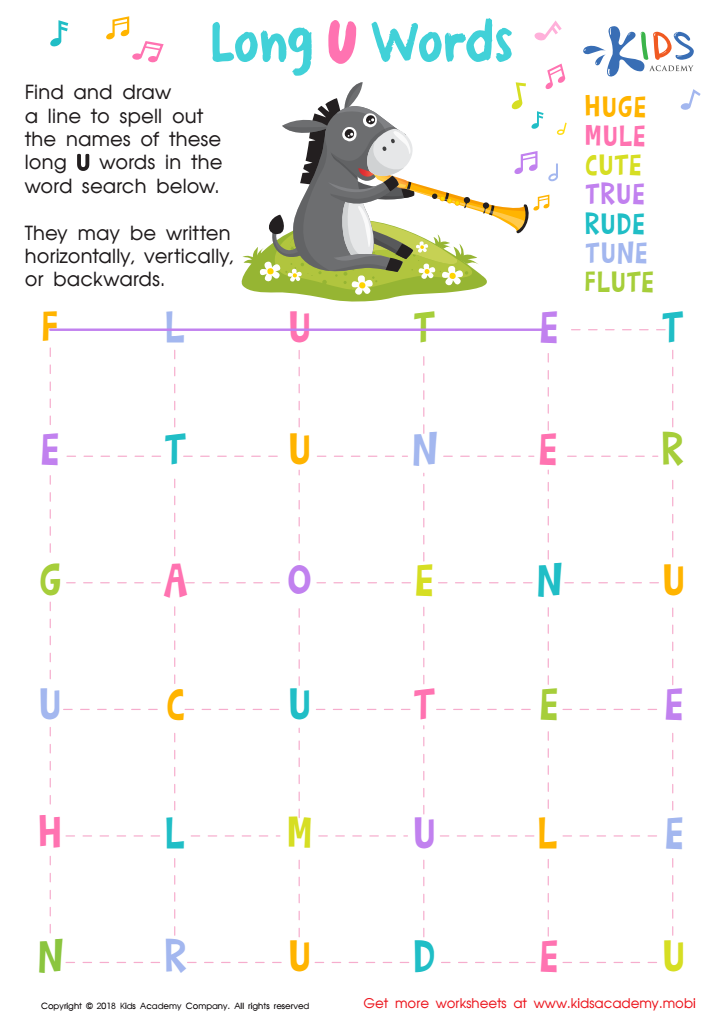
Long /u/ Words Worksheet
Your child needs to learn phonetics to enunciate and differentiate words. This fun worksheet encourages them to find and draw lines connecting the long 'U' words in the word search. Help them read the words on the right side of the picture, then look for them in the word search (horizontally, backwards or vertically).
 Assign to My Students
Long /u/ Words Worksheet
Worksheet











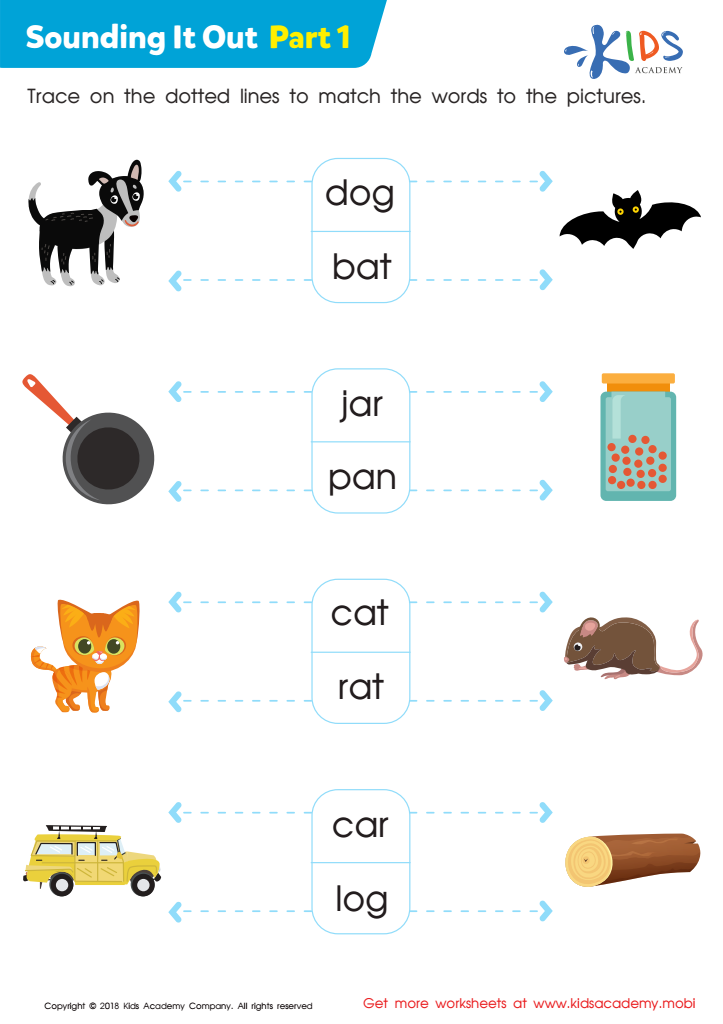
Sounding it Out: Part 1 Worksheet
Help kids learn to read with this fun worksheet! Kids use picture clues to sound out words and trace the dotted lines to match each word to its corresponding image. Stimulating and interactive, this printable is a great way for little learners to practice phonics.
Sounding it Out: Part 1 Worksheet
Worksheet
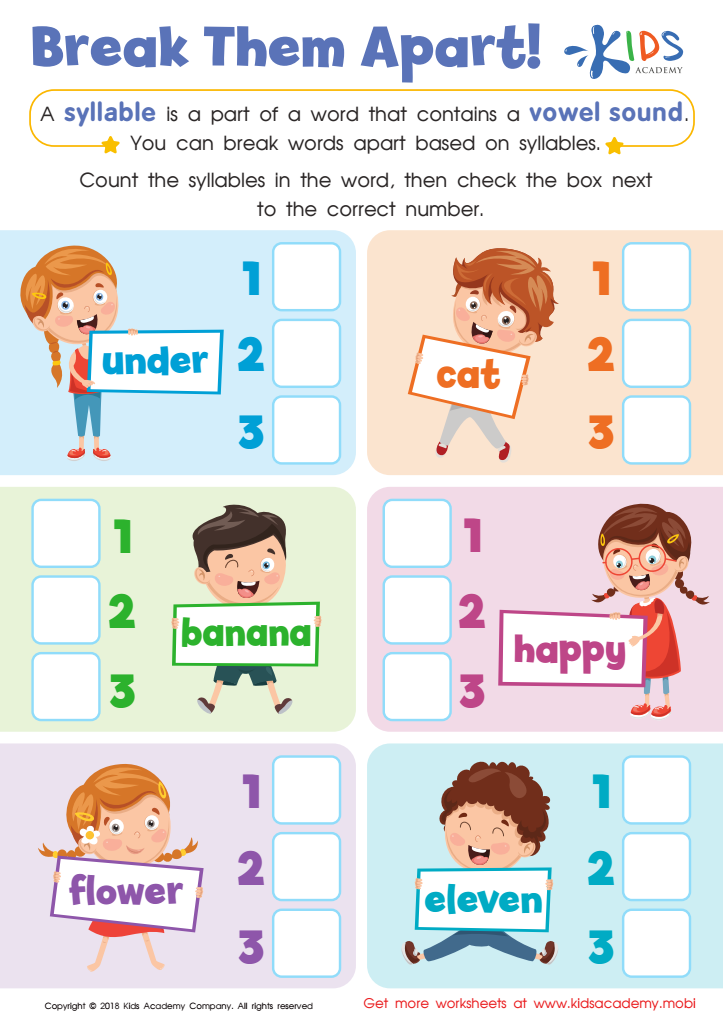
Reading: Break Them Apart Worksheet
See if students understand syllables with this fun worksheet. It teaches them that a syllable is a word part with a vowel sound. Kids read each word and choose how many parts it has. Doing this often helps them decode new words and gain confidence.
Reading: Break Them Apart Worksheet
Worksheet
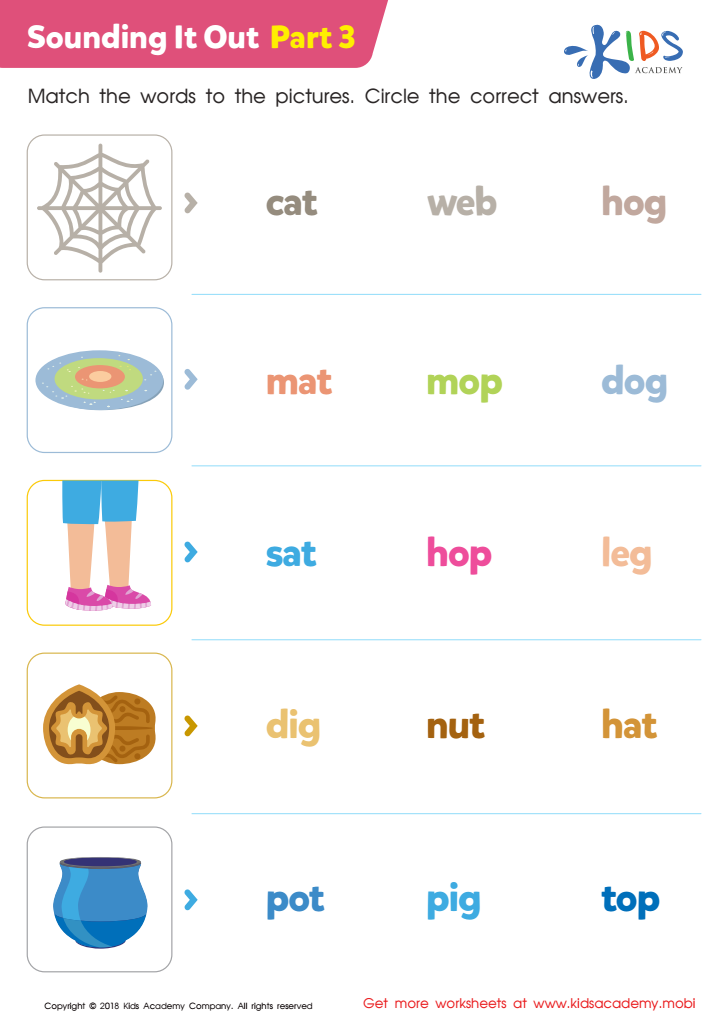
Sounding it Out: Part 3 Worksheet
Once Parts 1 and 2 are complete, this printable phonics worksheet will help kids take their reading skills to the next level! As they gain confidence, give them hints less often and direct their attention to three words in a row. Ask them to read and circle the correct word to complete!
Sounding it Out: Part 3 Worksheet
Worksheet
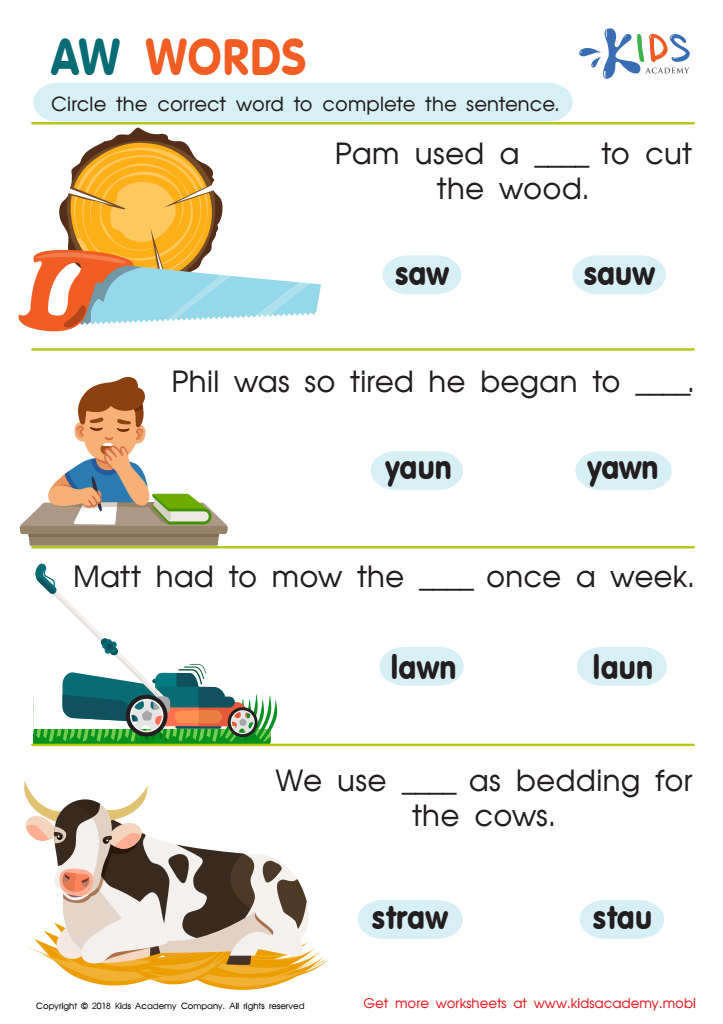
Reading: AW Words Worksheet
Practice decoding the /aw/ digraph with this printable. Students read sentences and select the word with the correct spelling to complete each one. Note, /aw/ is sometimes spelled /au/, so this worksheet helps prevent confusion. Have fun, and practice hard!
Reading: AW Words Worksheet
Worksheet
Join Kids Academy for Free
Who is primarily going to use this learning content?






.jpg)
.jpg)
Phonics skills and vocabulary development are foundational to early literacy and play a crucial role in a child's educational journey. For children ages 4-7, optimal phonics skills and a robust vocabulary set the stage for successful reading and writing abilities, which in turn influence overall academic achievement and cognitive development.
Phonics instruction helps children understand the relationship between letters and sounds, fostering decoding skills that allow them to read new words. By mastering these skills, young learners can approach new texts with confidence, leading to improved reading fluency and comprehension. When children are able to decode words efficiently, they can focus on understanding the text's meaning rather than getting stuck on individual words.
Simultaneously, building a strong vocabulary enriches a child’s ability to express themselves clearly and effectively. A wide vocabulary helps children comprehend what they read, gain insights from conversations, and build knowledge across various subjects. Furthermore, a rich vocabulary strengthens children's overall communication skills, promoting social interaction and self-esteem.
For parents and teachers, nurturing these skills through engaging and interactive practices can significantly influence a child's enthusiasm for learning and academic success. Phonics skills and vocabulary building are integral, interconnected components of literacy development, serving as critical tools in shaping confident, proficient readers and thinkers.








