Understanding forces Normal Science Worksheets for Ages 4-7
3 filtered results
-
From - To
Explore the fascinating world of forces with our "Understanding Forces" Science Worksheets, designed for children aged 4-7. These educational resources introduce young learners to essential concepts such as push and pull, gravity, and friction through engaging activities. Colorful illustrations and simple language make complex ideas graspable for preschool and early grade school students. Featuring a variety of worksheets that encourage hands-on learning, children will enjoy solving interactive problems and completing fun exercises. Support your child’s science education and help them develop critical thinking and observational skills while they discover how forces affect their everyday lives! Ideal for home and classroom use.
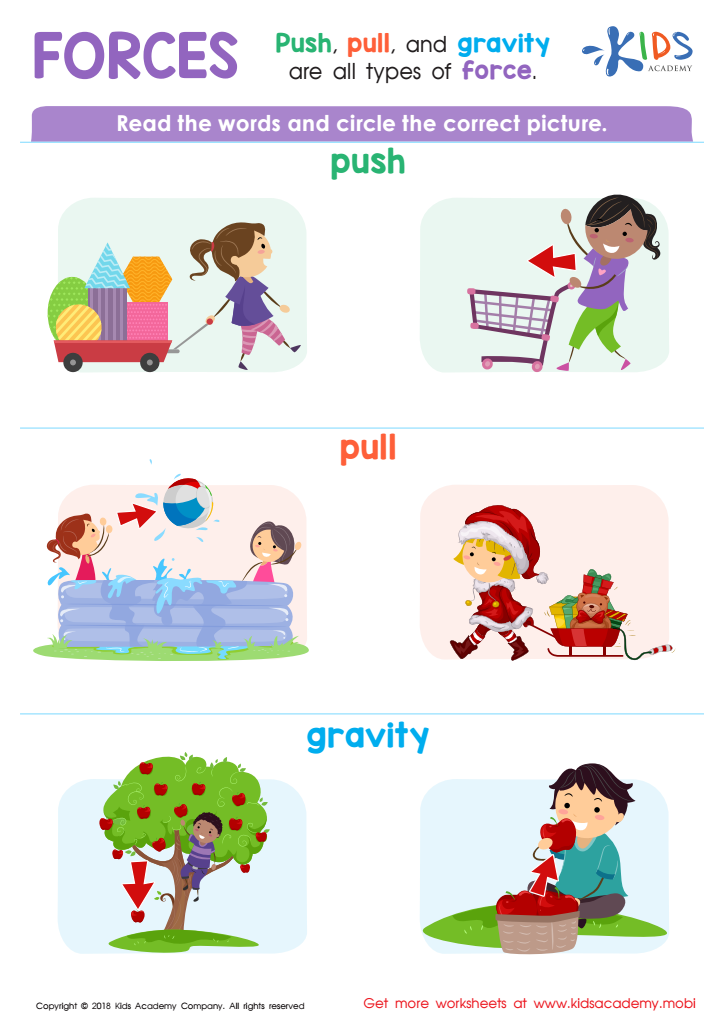
Forces Worksheet
 Assign to My Students
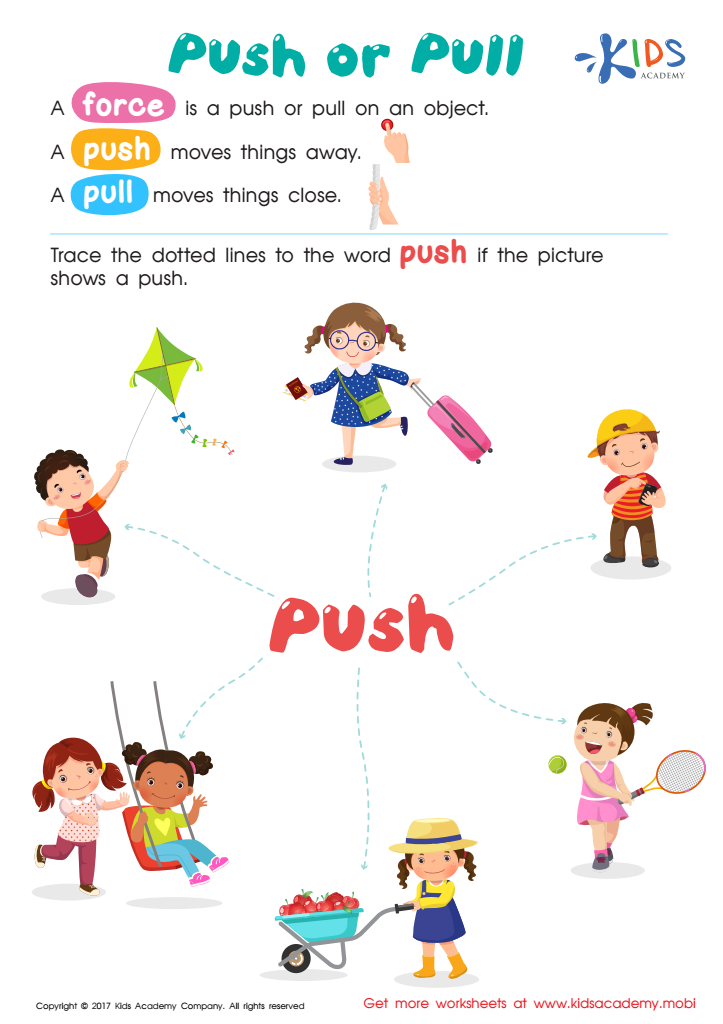
Push or Pull Worksheet
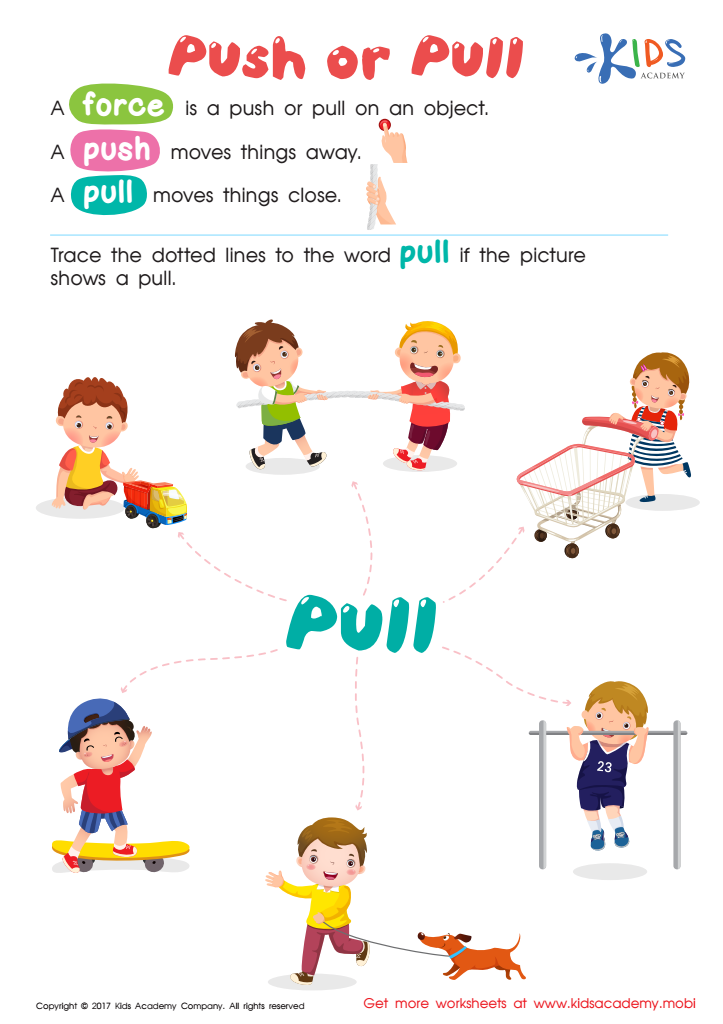
Pull or Push Worksheet



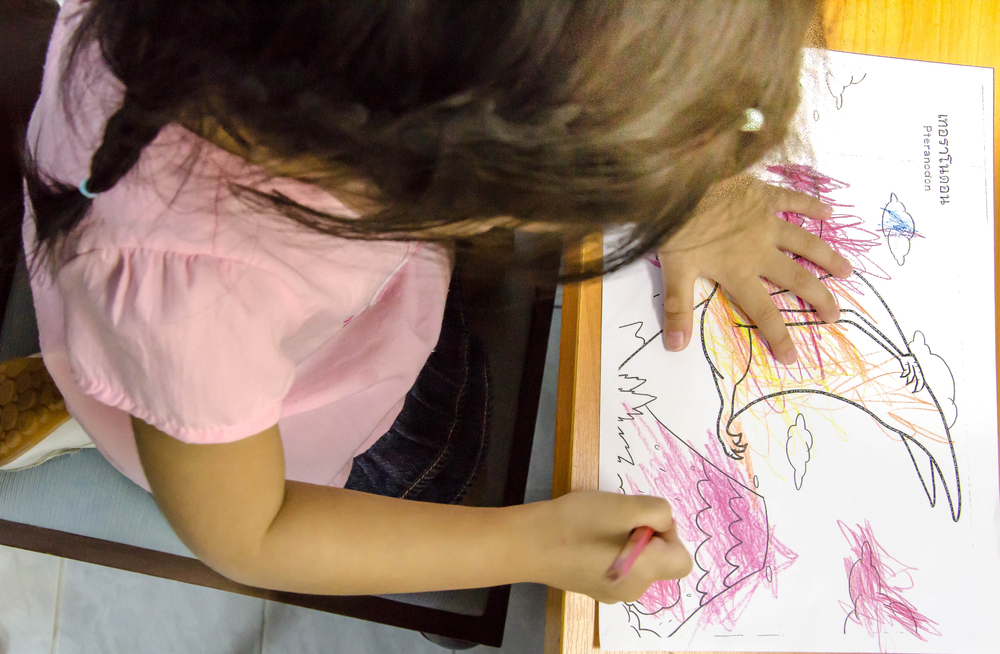




Understanding forces is crucial for young learners aged 4-7 as it lays the foundation for their scientific literacy and critical thinking skills. For parents and teachers, engaging children with the concept of forces fosters curiosity and encourages exploration of the natural world. At this age, children are naturally inquisitive, and discussing forces helps them make sense of their everyday experiences—such as why things fall, how they can push or pull objects, or what makes things move.
Introducing simple concepts like push and pull or gravity through playful activities not only enhances their cognitive development but also promotes fine motor skills. These lessons help young children draw connections between science and their daily activities, cultivating a sense of wonder and inquiry.
Moreover, understanding forces supports foundational problem-solving skills, providing children with tools to analyze and understand their environment. When parents and teachers prioritize science education in early childhood, they inspire a future generation of learners capable of thinking critically and creatively.
Ultimately, embracing force concepts nurtures a love for science, empowering children to explore, experiment, and learn in an engaging manner that builds confidence and resilience. This foundational knowledge is essential for lifelong learning and understanding of more complex scientific principles later on.







