Spatial awareness Normal Physical Science Worksheets for Ages 4-7
3 filtered results
-
From - To
Enhance your child's spatial awareness with our engaging Normal Physical Science Worksheets tailored for ages 4-7. These worksheets are designed to introduce young learners to key concepts of space, shapes, and their relationships in the physical world. Featuring fun activities and vibrant illustrations, they encourage children to observe, identify, and interact with their surroundings. Our resources not only support cognitive development but also foster essential skills that assist in higher learning. Ideal for parents and educators, these worksheets promote hands-on learning while making science enjoyable. Encourage curiosity and readiness for future challenges in STEM with our carefully crafted spatial awareness exercises!
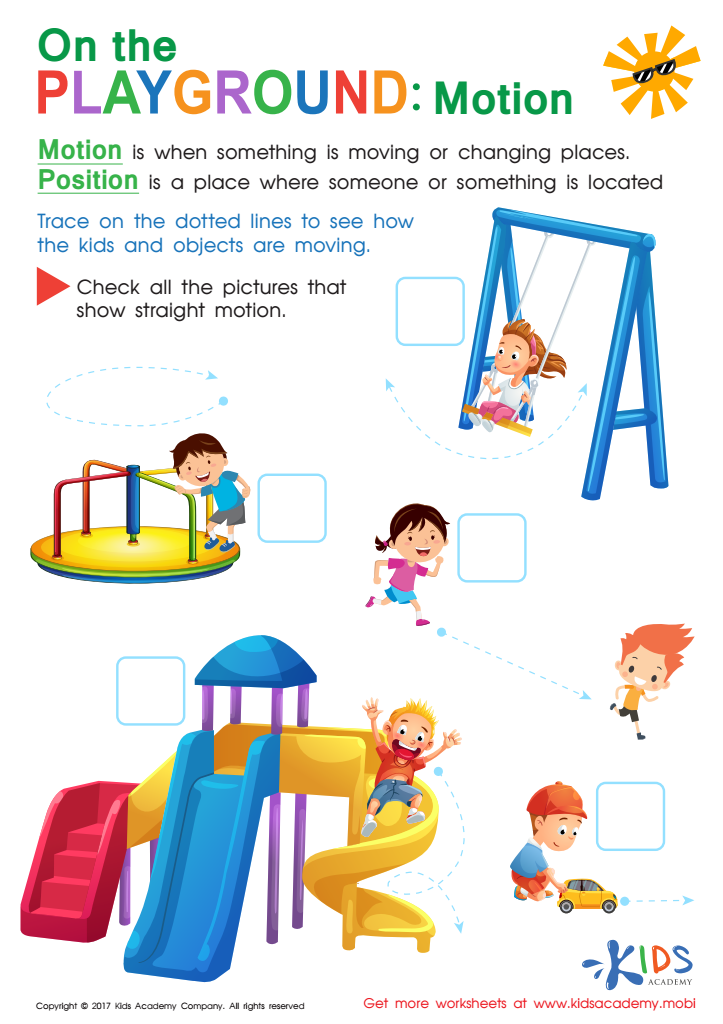
Position and Motion Worksheet
 Assign to My Students
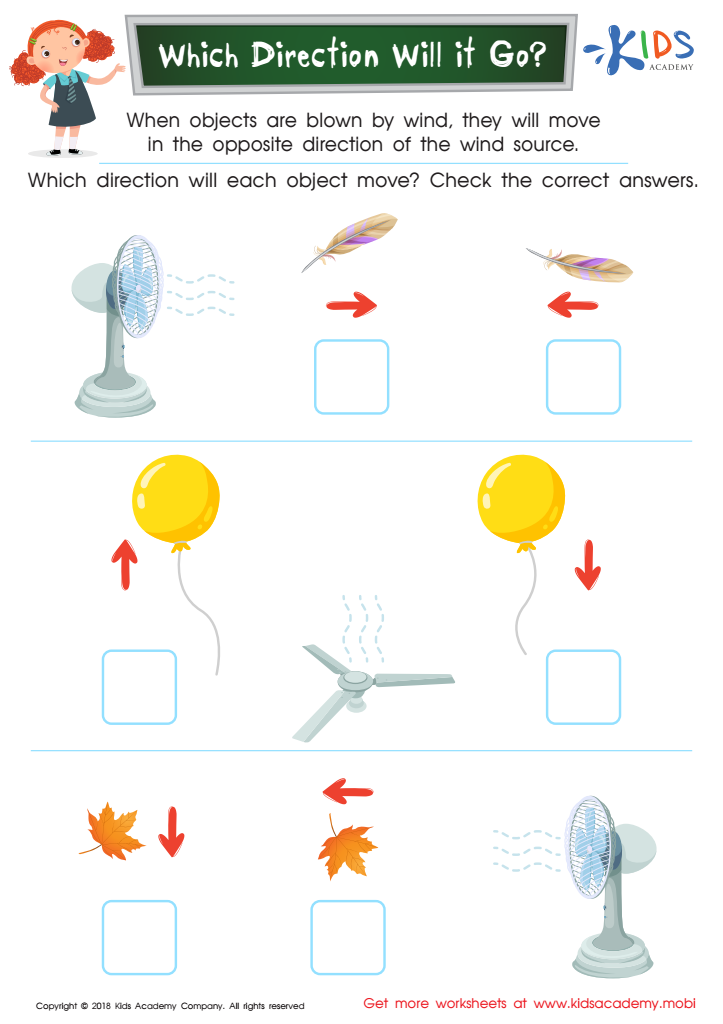
Which Direction Will it Go? Worksheet
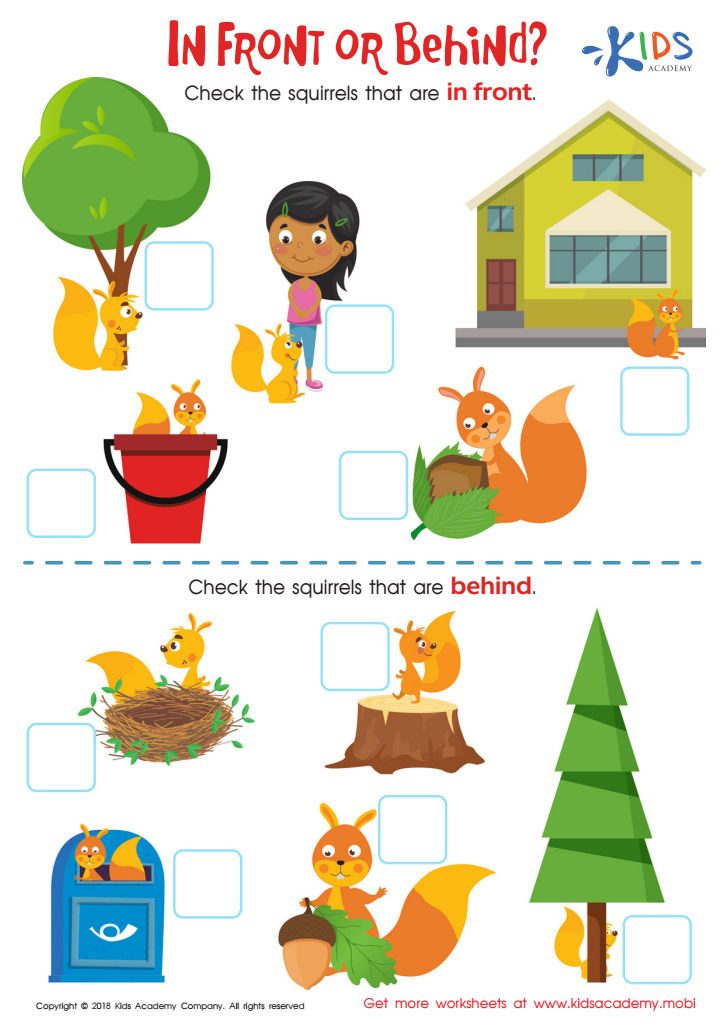
In Front or Behind: Part 2 Worksheet








Spatial awareness is a crucial skill for children aged 4-7, forming the foundation for their understanding of the world around them. For parents and teachers, fostering spatial awareness during these formative years is essential for several reasons. First, it enhances problem-solving skills. Children learn to visualize and manipulate objects, which aids them in tackling complex tasks both in and out of the classroom.
Second, spatial awareness plays a significant role in mathematical understanding. As children develop their ability to perceive space and understand relationships between objects, they improve essential math skills, such as geometry and spatial reasoning. This foundational knowledge is critical as they progress to more advanced concepts.
Additionally, promoting spatial awareness can boost confidence and creativity. When children are encouraged to explore their surroundings and engage in activities that require spatial reasoning, they become more self-assured in navigating their environment and approaching new challenges.
Moreover, activities designed to improve spatial awareness—like building with blocks, puzzles, and art projects—promote fine motor skills and hand-eye coordination. By prioritizing spatial awareness in normal physical science lessons, parents and teachers help cultivate well-rounded, capable learners prepared for future academic and life challenges.







