Hand-eye Coordination Normal ABC Letters Worksheets for 4-Year-Olds
4 filtered results
-
From - To
Introducing our "Hand-eye Coordination Normal ABC Letters Worksheets" designed specifically for 4-year-olds! These engaging worksheets help young learners enhance their hand-eye coordination while practicing their ABCs. Each activity features colorful illustrations and exciting exercises that foster fine motor skills, letter recognition, and coordination. Children will enjoy tracing, coloring, and completing fun exercises that make learning the alphabet enjoyable and interactive. Perfect for preschool and kindergarten classrooms or at-home learning, these worksheets provide a solid foundation for early literacy development. Download now and watch your little ones gain confidence in their handwriting and letter skills while having fun!
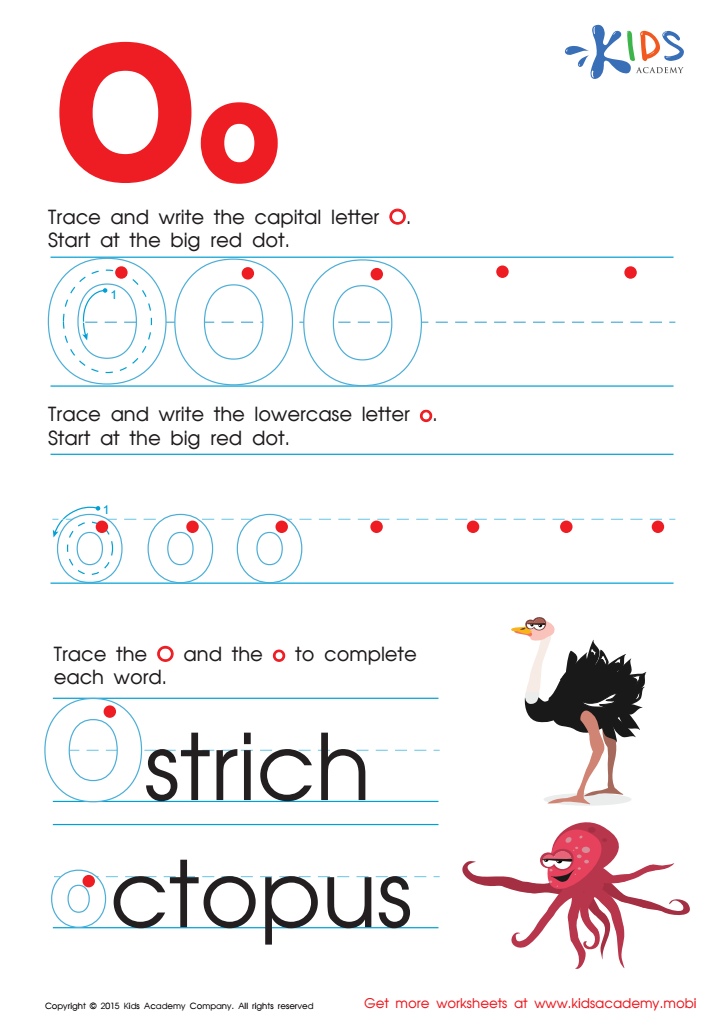
Letter O Tracing Page
 Assign to My Students




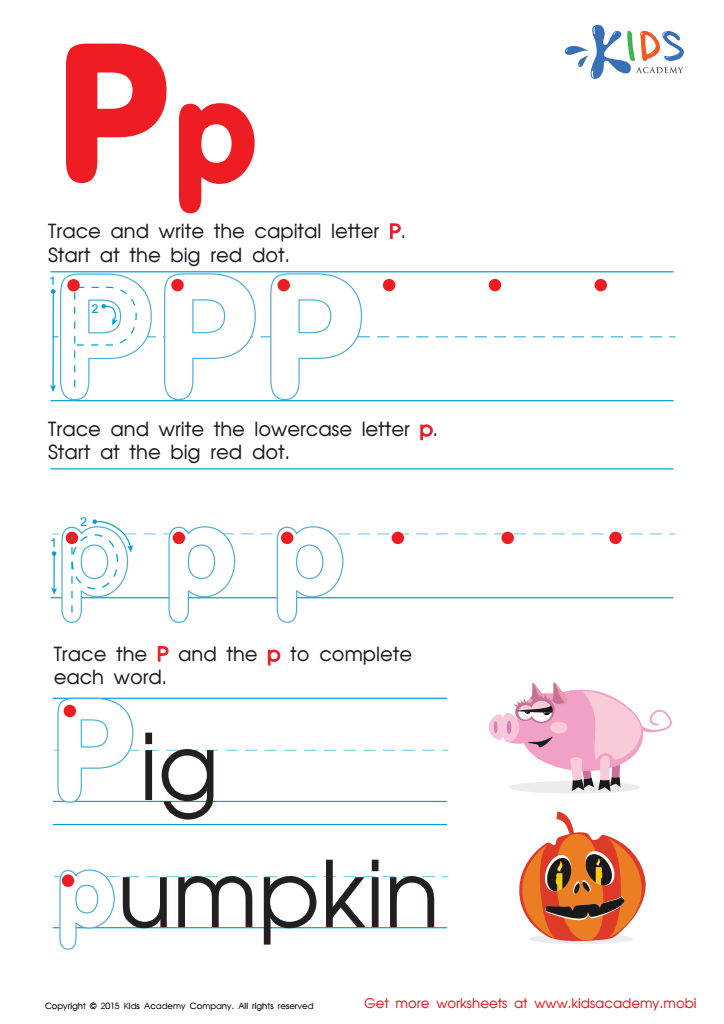
Letter P Tracing Page
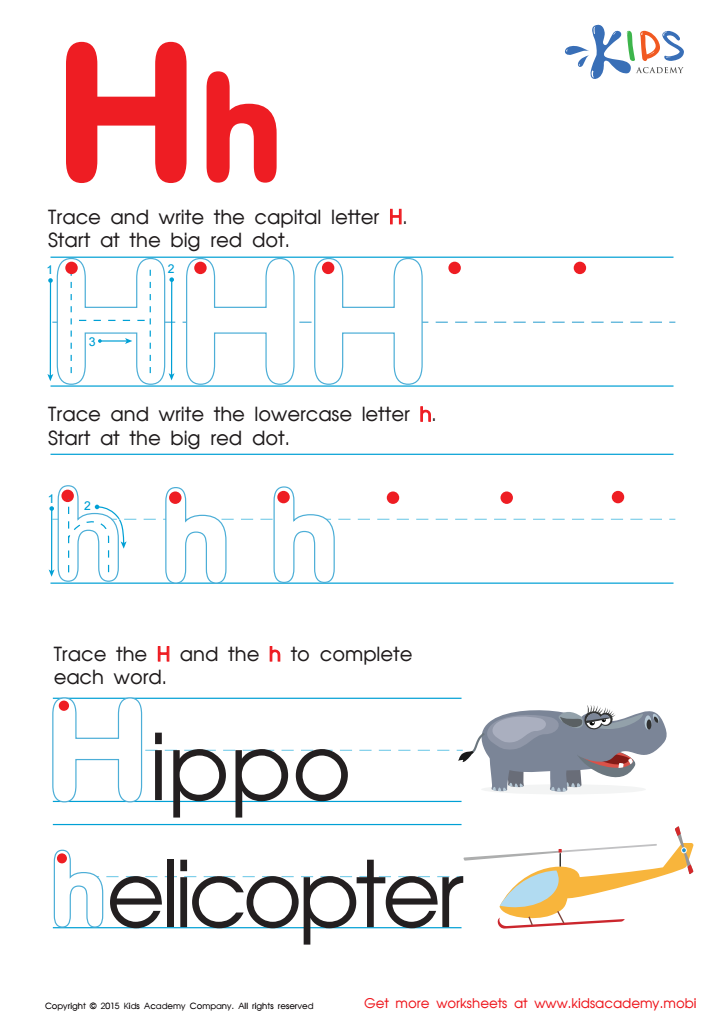
Letter H Tracing Page

Letter D Tracing Page








Hand-eye coordination is a crucial skill that lays the foundation for many everyday activities and academic tasks, particularly when it comes to learning the alphabet at age four. Parents and teachers should care about developing hand-eye coordination in young children for several reasons.
Firstly, strong hand-eye coordination enhances fine motor skills, which are essential for tasks such as writing, drawing, and directly interacting with letters—activities vital to early literacy. By mastering control over their hand movements, children can better grasp writing tools and begin forming letters and words.
Secondly, coordinated movements improve children's confidence and motivation in learning scenarios. When they experience success with letters, from tracing to recognizing shapes, they are more likely to engage enthusiastically with educational activities.
Moreover, hand-eye coordination is closely linked to cognitive development. Activities that promote this skill can boost memory and concentration, enabling children to relate letters to sounds effectively and begin early phonics skills.
Finally, fostering hand-eye coordination helps prepare children for more complex skills they will learn in later grades, such as reading and math. Thus, actively supporting this development in four-year-olds is key to laying a solid foundation for lifelong learning.







