
Alphabet Learning Normal Alphabet Worksheets for 4-Year-Olds
4 filtered results
Difficulty Level
Grade
Age
-
From - To
Subject
Activity
Standards
Our "Alphabet Learning Normal Alphabet Worksheets for 4-Year-Olds" provide an engaging and effective solution for alphabet mastery. These colorful, age-appropriate worksheets are designed to introduce letters, enhance memory, and build foundational literacy skills. Activities include tracing, matching, and identifying letters, ensuring entertaining practice sessions. Ideal for preschoolers, parents, and teachers, these worksheets support early reading development in a structured yet fun way. Foster your child's curiosity and academic confidence through our expert-crafted educational resource, laying the groundwork for a lifelong love of learning. Discover more and watch your child thrive with our alphabet worksheets!
Favorites
With answer key
Interactive
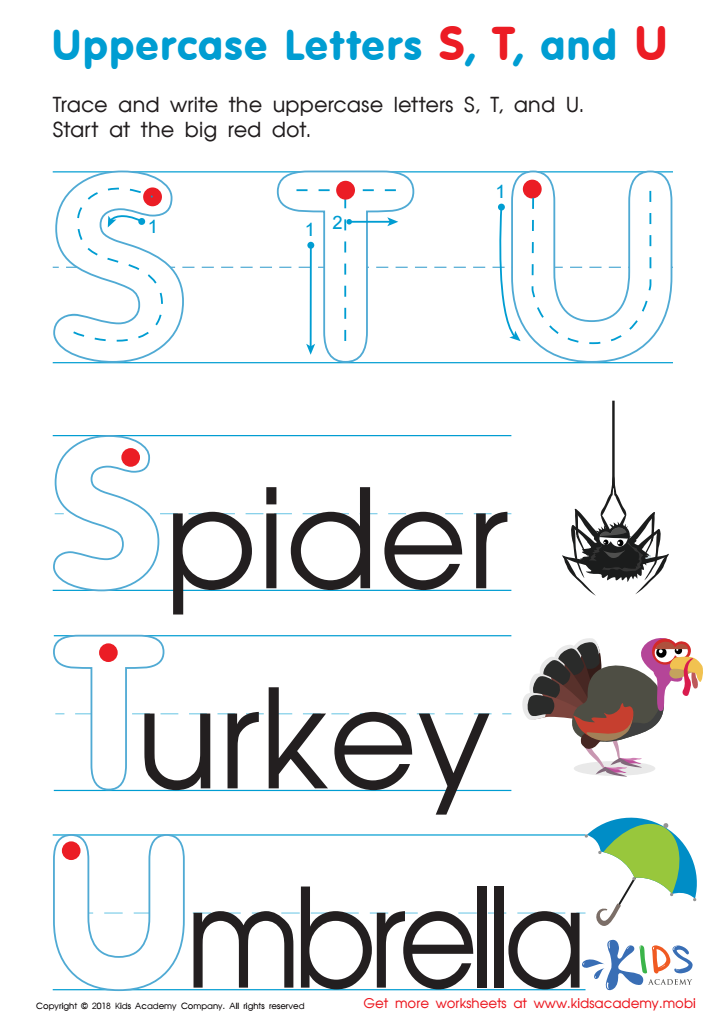
Uppercase Letters S, T, and U Worksheet
Help your kids learn to write upper-case letters with this fun tracing sheet. Start at the big red dot for each letter: S, T, and U. Show them the pictures and ask what letter each word starts with. Guide their hand and watch them learn!
 Assign to My Students
Uppercase Letters S, T, and U Worksheet
Worksheet
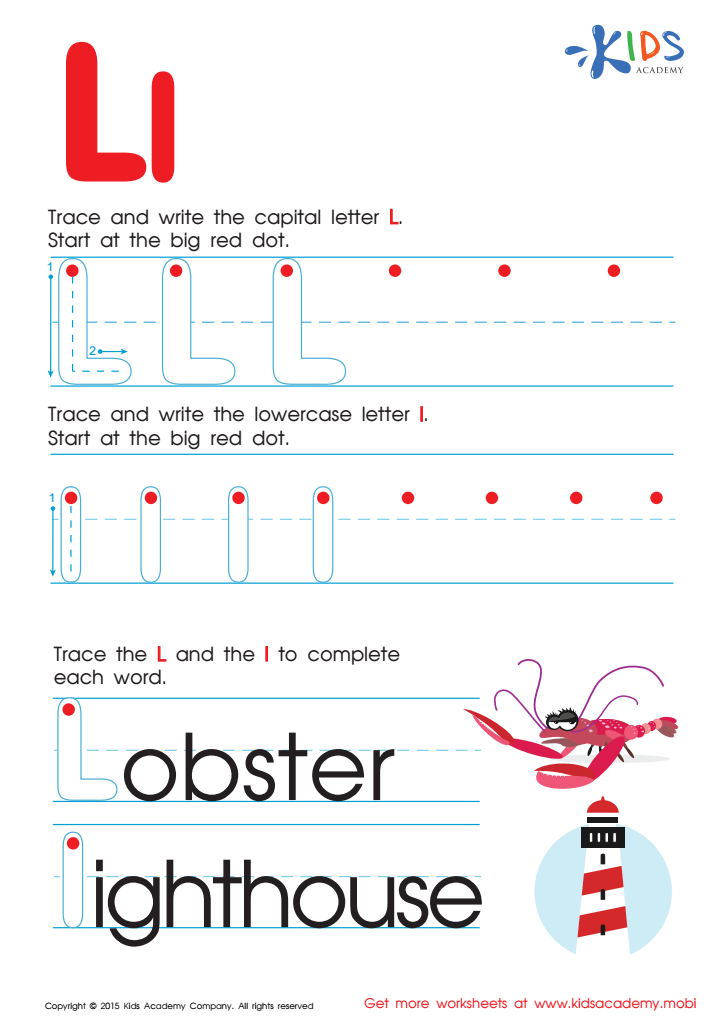
Letter L Tracing Page
Trace uppercase and lowercase letters to practice writing. Pay attention to the lowercase letters, like the "L", that are not as tall as an uppercase "I" or as short as a lowercase "i". Words like "lobster" and "lighthouse" are waiting to be completed. Enjoy!
Letter L Tracing Page
Worksheet
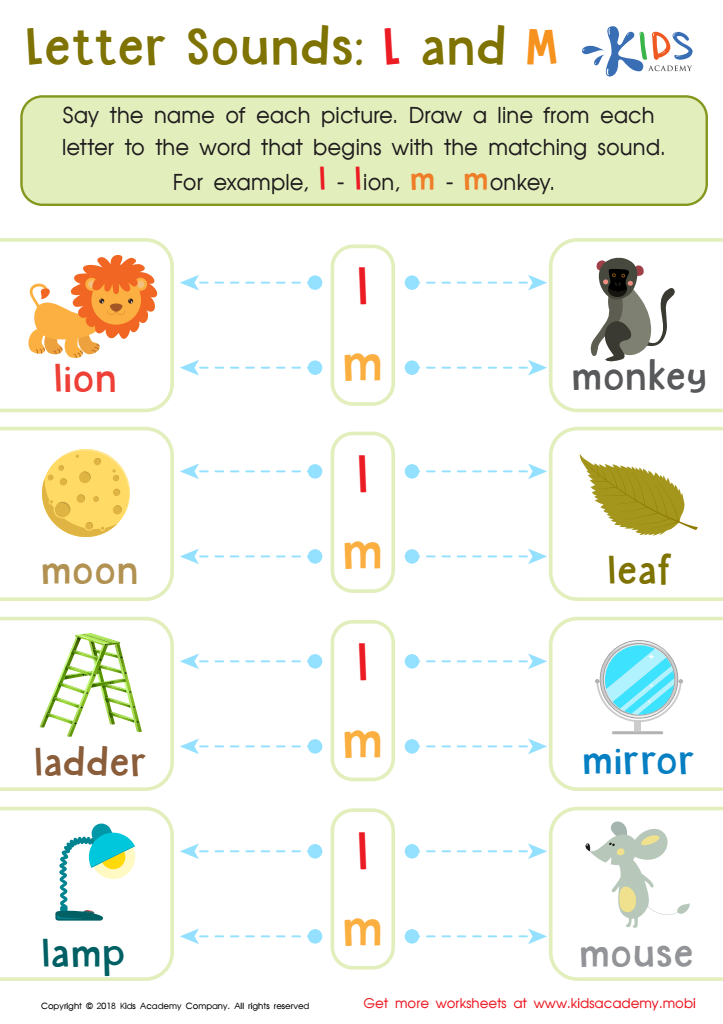
Letter l and M Sounds Worksheet
Our Kids Academy phonics practice pages give clear instructions and captivating pictures to pique children's interest. This fun worksheet helps kids identify a picture, then match its beginning sound. Listen and say each word - does it start with "L" or "M"? Trace the dotted line from the letter to the correct match and listen closely to the sound it makes.
Letter l and M Sounds Worksheet
Worksheet

Letter F Tracing Page
Trace "F" with your pencil! Start at the red dot and draw lines — it's fun! Check it out — it looks great! Keep practicing to make it even better. Then, try completing words. Help out the broken fan and funny frog! Get free alphabet worksheets and activities for your kids. Come see our new tracing pages!
Letter F Tracing Page
Worksheet
Join Kids Academy for Free
Who is primarily going to use this learning content?



.jpg)




Parents and teachers have a significant role in a child's early developmental milestones, and introducing an Alphabet Learning Normal Alphabet for 4-year-olds is paramount for multiple reasons. Firstly, the alphabet forms the cornerstone of literacy. At the age of four, children are incredibly receptive and can absorb new information quickly. Learning the alphabet equips them with essential literacy skills that lay the foundation for reading and writing.
Secondly, early exposure to the alphabet promotes cognitive development. It not only enhances memory skills through letter recognition but also bolsters language skills as children begin to understand that letters represent sounds, which then form words and sentences.
Thirdly, learning the alphabet can instill a sense of achievement and boost a child's self-confidence. Mastery of each letter provides a tangible milestone for them to accomplish, fostering a positive learning mindset that transcends beyond literacy into other academic subjects.
Moreover, early alphabet learning can aid in the development of fine motor skills when children practice writing or tracing letters. This instructional strategy paves the way for more intricate writing tasks tackled in subsequent years.
Parents and teachers should care about imparting alphabet knowledge at this age as it ensures that children possess the relevant skills at the onset of their educational journey. This starkly raises their likelihood for academic success and creates a deeper, lifelong appreciation for learning.







