Phonics development Normal Alphabet Worksheets for 4-Year-Olds
3 filtered results
-
From - To
Unlock the magical world of reading with our "Phonics Development Normal Alphabet Worksheets for 4-Year-Olds." Our engaging and educational worksheets are designed to help young learners master letter recognition, sounds, and basic phonics. Each fun and interactive activity focuses on enhancing phonemic awareness while making learning delightful and effortless. Tailored for preschoolers, these worksheets foster foundational reading skills and boost confidence in every budding reader. Whether at home or in the classroom, our carefully crafted phonics worksheets ensure that early literacy skills blossom seamlessly for your 4-year-old. Explore, learn, and grow with Kids Academy today!
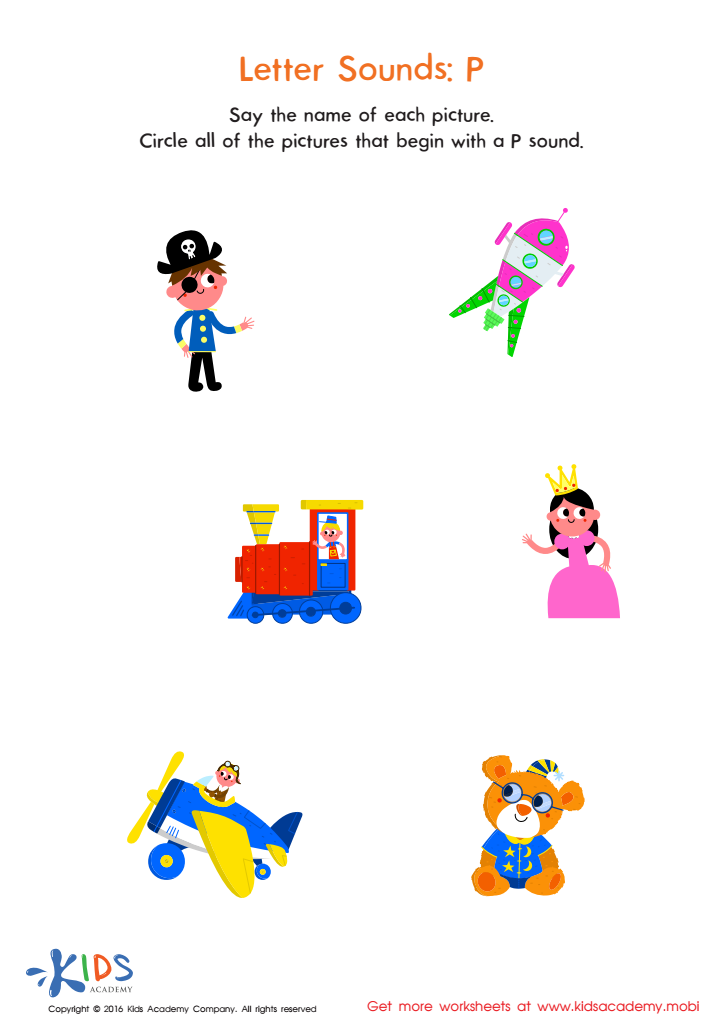
Letter P Sound Worksheet
 Assign to My Students
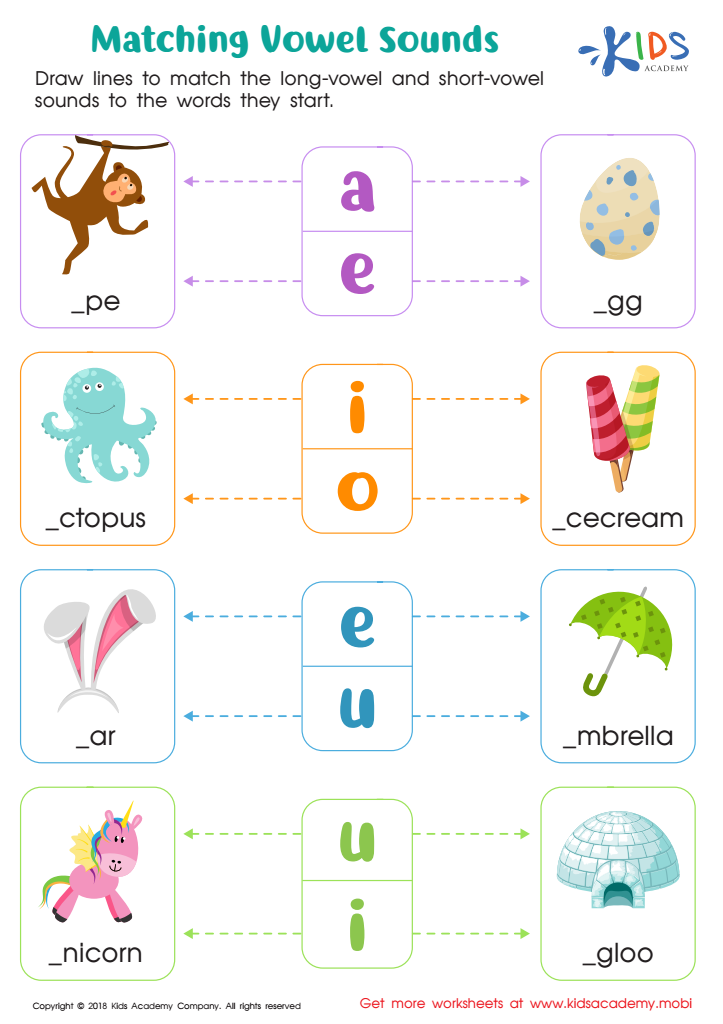
Matching Vowel Sounds Worksheet
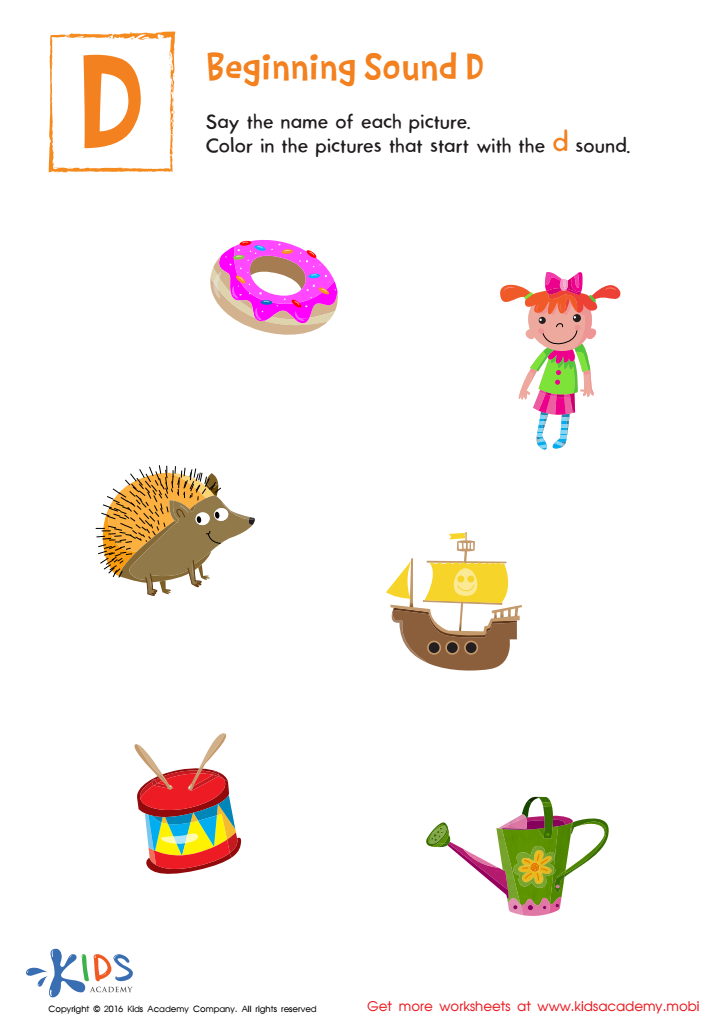
Beginning Sound D Worksheet






.jpg)

Phonics development is crucial for 4-year-olds because it serves as the building block for reading and writing skills that are essential for academic success and daily life. Phonics involves understanding the relationship between letters and their corresponding sounds, which is foundational for decoding words. When children learn phonics early, they develop the skills needed to approach reading systematically and confidently.
Parents and teachers should care about phonics because it directly influences a child's literacy journey. A solid grasp of phonics can lead to better reading fluency, comprehension, and spelling skills, all of which contribute to overall educational achievement. Early exposure to phonics helps children recognize patterns in words, enabling them to read and write more independently. It also boosts vocabulary acquisition, enriches language abilities, and nurtures a love for reading.
Moreover, learning phonics can foster cognitive skills such as listening, attention to detail, and memory. When children successfully decode words using phonics, it boosts their confidence and encourages a positive attitude toward learning. In essence, early phonics instruction equips children with essential language tools, setting a strong foundation for future academic and personal success. By investing time in phonics education for 4-year-olds, parents and teachers are investing in the child's lifelong learning and development.







