
Alphabet understanding Normal Letter Recognition Worksheets for 4-Year-Olds
5 filtered results
Difficulty Level
Grade
Age
-
From - To
Subject
Activity
Standards
Discover engaging Alphabet Understanding Normal Letter Recognition Worksheets designed specifically for 4-year-olds! Our interactive worksheets help young learners build crucial literacy skills through fun and age-appropriate activities. These resources promote letter recognition, fostering a strong foundation for reading and writing. Each worksheet features colorful visuals and playful exercises that motivate children to identify, trace, and match letters in a supportive, learning-friendly environment. Perfect for home or classroom use, these worksheets aim to boost confidence and knowledge in letter recognition, ensuring your child is well-prepared for future literacy challenges. Start the learning journey today with our delightful alphabet resources!
Favorites
With answer key
Interactive
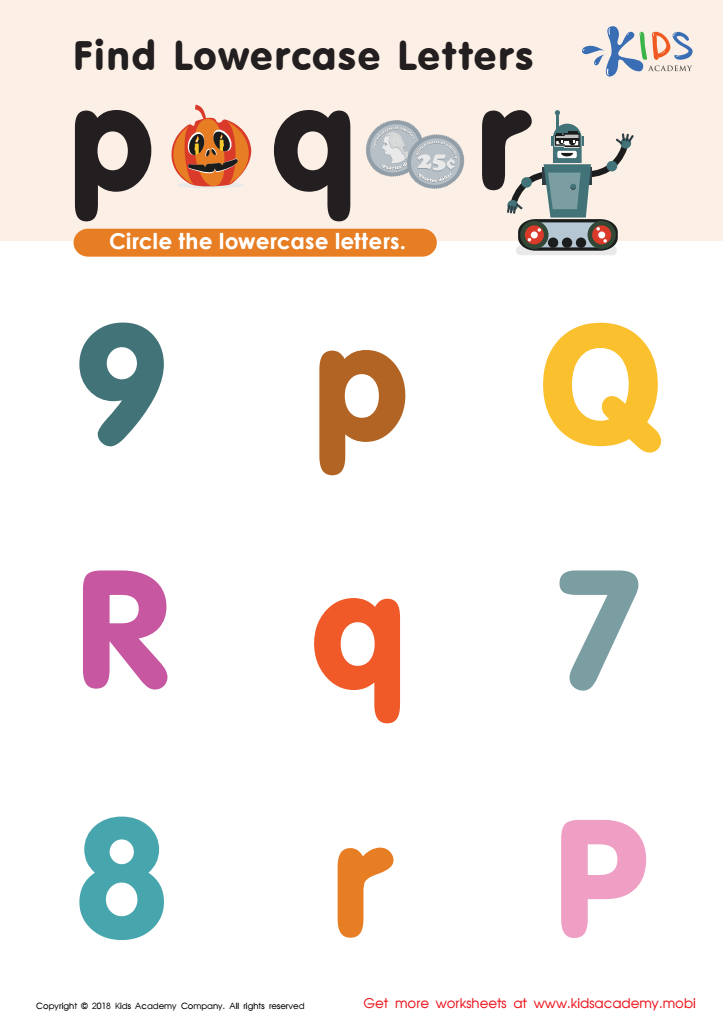
Find lowercase Letters p q r Worksheet
Help your child spot the lowercase letters among the numbers and uppercase letters in this worksheet. It's a great way to teach them to identify and write the lowercase and uppercase letters. Assist them in completing the exercise to give them a better understanding of the alphabets.
 Assign to My Students
Find lowercase Letters p q r Worksheet
Worksheet
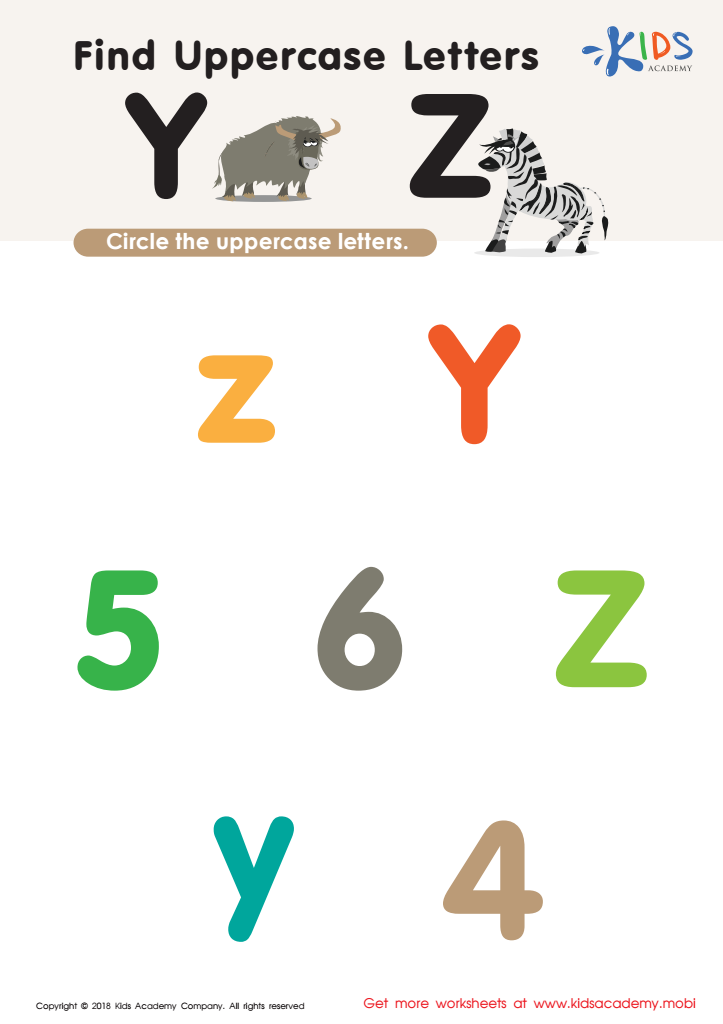
Find Uppercase Letters Y Z Worksheet
Download the worksheet! Help your youngster to learn the alphabet and distinguish uppercase from lowercase letters by having them circle the uppercase ones. It's an important first step towards reading and writing success!
Find Uppercase Letters Y Z Worksheet
Worksheet
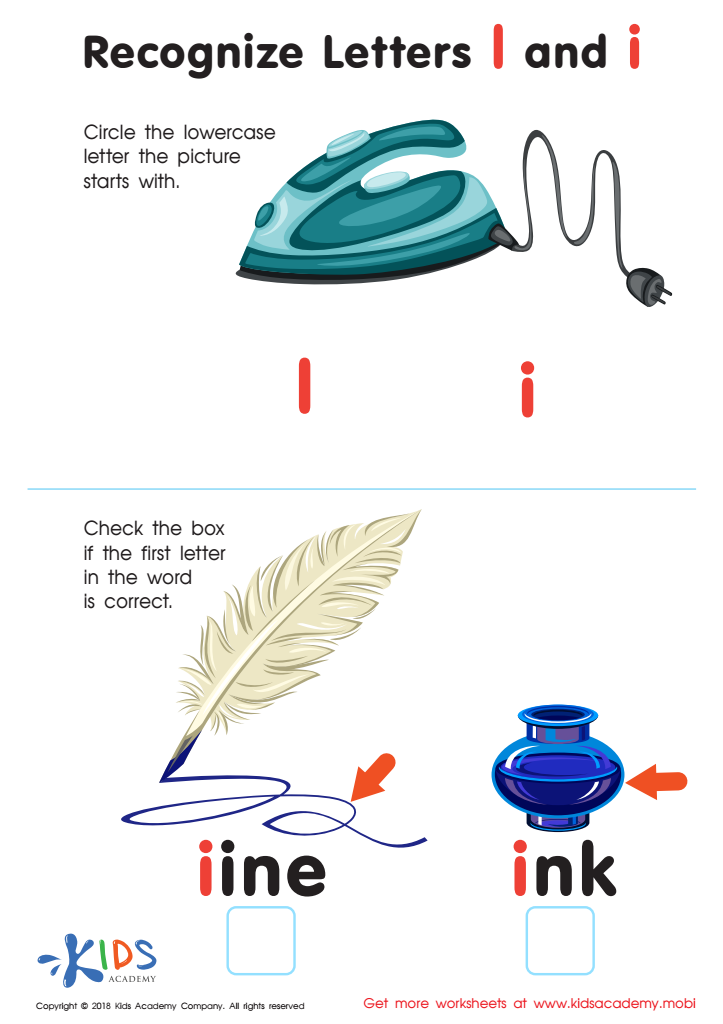
Recognize Letters l and i Worksheet
Help your child become familiar with uppercase and lowercase letters. Have them look at the pictures in the worksheet and circle the lowercase letter the picture starts with. For example: which one is the lowercase "i", the capital "I" or the small "i"?
Recognize Letters l and i Worksheet
Worksheet

Find lowercase letters a b c Worksheet
Help your child identify lowercase letters with this worksheet. Carefully look at each letter and have your child circle the lowercase ones. This exercise is vital in helping them understand the alphabet and the difference between lower and uppercase letters.
Find lowercase letters a b c Worksheet
Worksheet
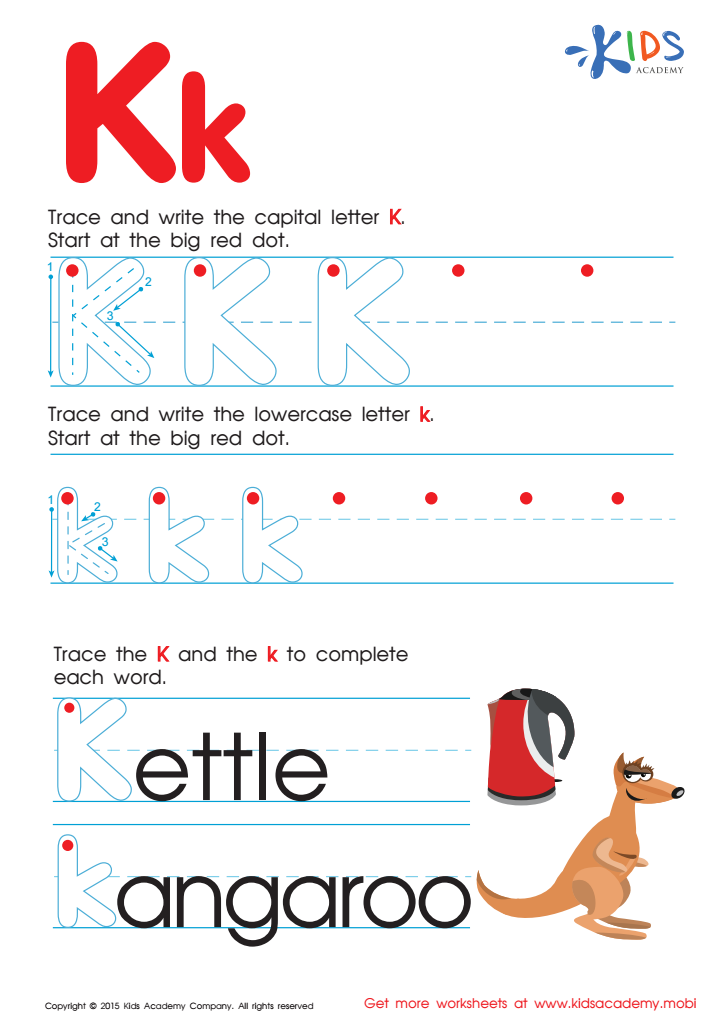
Letter K Tracing Page
Trace and write the letter K; start at the big red dot. Use it to complete words like "Kettle" and "Kangaroo". Visit Kids Academy for more free alphabet worksheets for kindergarten.
Letter K Tracing Page
Worksheet
Join Kids Academy for Free
Who is primarily going to use this learning content?








Understanding alphabet letters and recognizing them is a foundational skill for 4-year-olds that significantly impacts their literacy development. When children can identify normal letters, they build the groundwork for reading and writing proficiency. Early letter recognition helps young learners connect sounds with symbols, an essential step in phonics and language acquisition.
Caring about this development is crucial for parents and teachers because it influences a child's confidence and eagerness to learn. Mastering alphabet recognition at this stage can foster a love for reading and language, opening doors to improved communication skills and academic success later on.
Additionally, understanding letters enhances cognitive skills, such as memory and categorization, promoting overall brain development. Engaging children in fun activities related to letter recognition can also strengthen parent-child or teacher-student relationships, making the learning process enjoyable and meaningful.
By prioritizing early alphabet recognition in their education, parents and teachers can set the stage for literacy proficiency, enabling 4-year-olds to become more enthusiastic and capable readers and writers throughout their school years and beyond. Ultimately, nurtured early literacy skills can lead to lifelong benefits in education and personal growth.








