
Letter-sound association Normal Letter Recognition Worksheets for 4-Year-Olds
4 filtered results
Difficulty Level
Grade
Age
-
From - To
Subject
Activity
Standards
Enhance your child's early literacy skills with our engaging Letter-Sound Association Normal Letter Recognition Worksheets designed specifically for 4-year-olds. These interactive worksheets foster an understanding of the connection between letters and sounds, making learning fun and effective. Each activity encourages children to identify letters while associating them with their corresponding sounds, paving the way for phonemic awareness and reading readiness. Ideal for both homeschooling and classroom settings, our worksheets provide a playful approach to learning, promoting fine motor skills and confidence. Discover the joy of literacy with our challenges that make every learning session an enjoyable adventure for your little ones!
Favorites
With answer key
Interactive
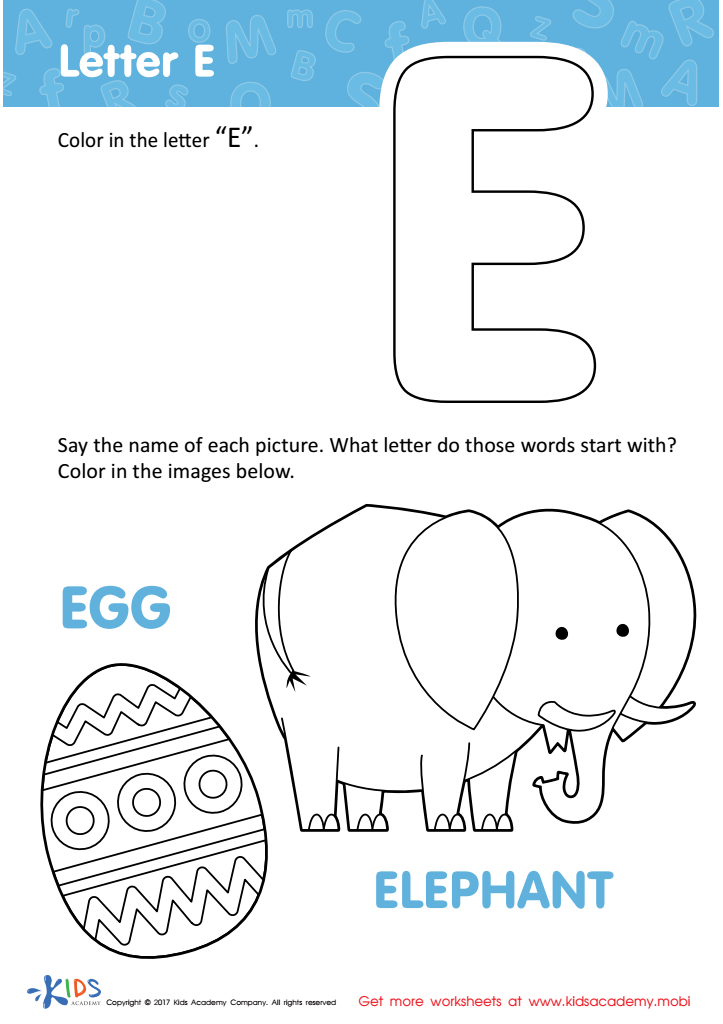
Letter E Coloring Sheet
Coloring pages are great for teaching kids the alphabet and words! This "E" page features a cute elephant and Easter egg. Kids will love it and learn the letter "E" at the same time. 80 words
Download (PDF)
 Assign to My Students
Assign to My Students
Letter E Coloring Sheet
Worksheet
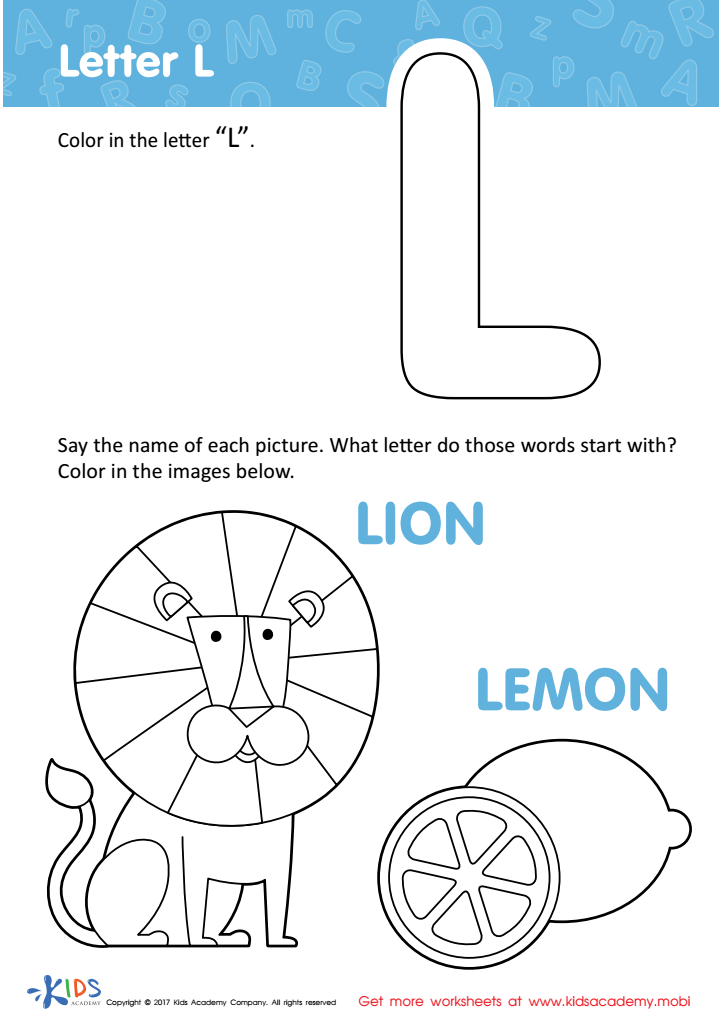
Letter L Coloring Sheet
Kids often struggle to say "L" and love it because so many things they love start with it! This coloring page combines the letter and fun images like a lemon and lion to teach and entertain!
Download (PDF)
Assign to My Students
Assign to My Students
Letter L Coloring Sheet
Worksheet
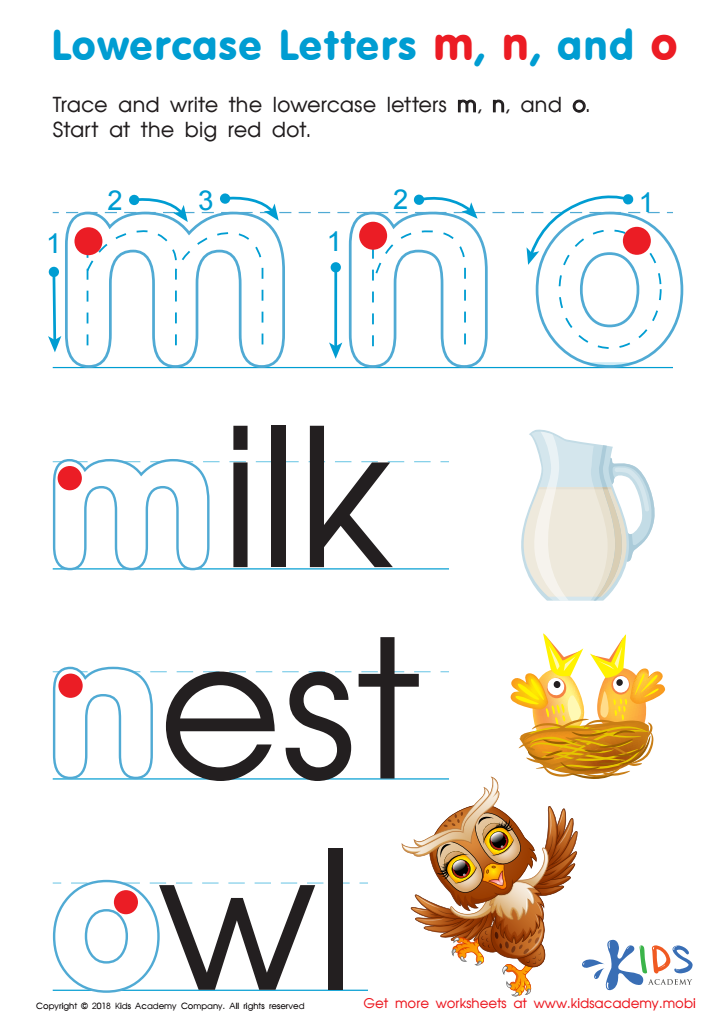
Lowercase Letters m n o Worksheet
Help your child learn the alphabet with letter tracing. Show them the difference between uppercase and lowercase letters by working through this free worksheet, tracing and writing lowercase m, n and o.
Lowercase Letters m n o Worksheet
Worksheet
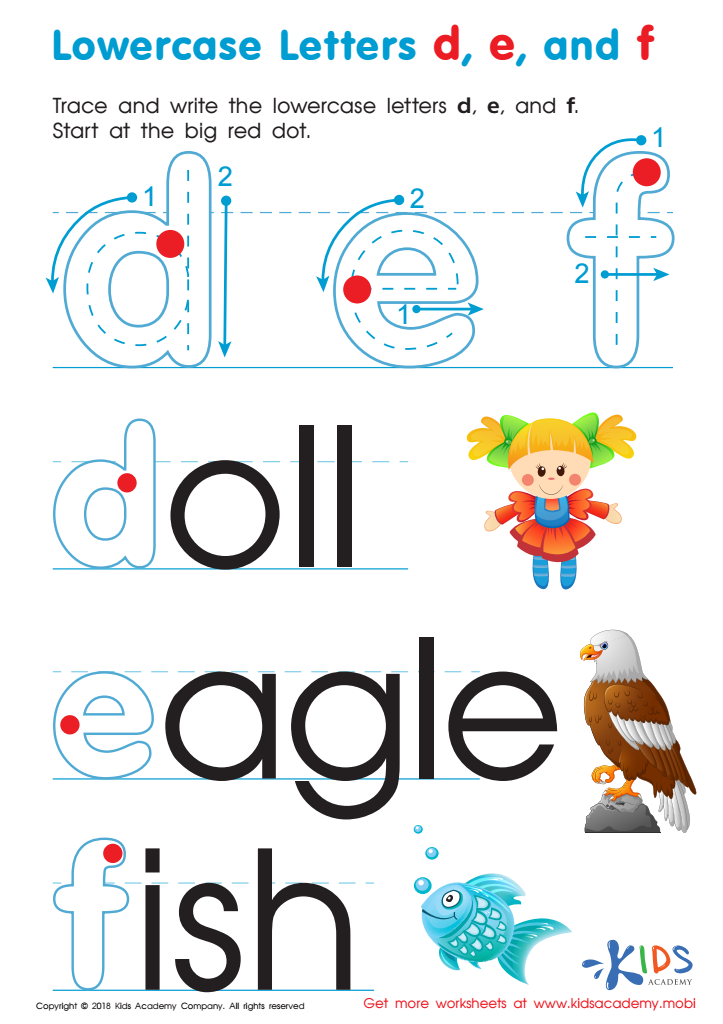
Lowercase Letters d e f Worksheet
Help your child learn the alphabet letters by tracing and writing the lowercase letters d, e, and f. Begin at the big red dot and follow the dots. This worksheet will help your little one gain a better understanding of the letters.
Lowercase Letters d e f Worksheet
Worksheet
Join Kids Academy for Free
Who is primarily going to use this learning content?








Letter-sound association and normal letter recognition are crucial elements in early literacy development for 4-year-olds. Parents and teachers should prioritize understanding these concepts because they form the foundation for reading skills. When children learn to associate letters with their corresponding sounds, they begin to decode words, facilitating their ability to read independently. This skill not only enhances their reading fluency but also boosts their vocabulary and comprehension.
Additionally, early mastery of letter recognition lays the groundwork for writing. Children who can identify letters are more likely to experiment with spelling and express their thoughts on paper. This emerging literacy skill fosters confidence in their ability to communicate.
Moreover, engaging with these foundational skills can enhance a child’s overall cognitive development. Activities centered around letter-sound association—like rhyming games or phonetic songs—naturally integrate play with learning, making education enjoyable. Supported by caregivers, children are more likely to develop a love for reading and learning, essential for lifelong success.
Ultimately, focusing on letter-sound association and normal letter recognition invites a rich, interactive environment where early learners thrive, encouraging not only academic growth but also social and emotional development as they build connections with language.








