
Visual discrimination Normal Letter Recognition Worksheets for 4-Year-Olds
4 filtered results
Difficulty Level
Grade
Age
-
From - To
Subject
Activity
Standards
Unlock your child’s reading potential with our Visual Discrimination Normal Letter Recognition Worksheets designed for 4-year-olds. These engaging worksheets help young learners differentiate letters through fun and interactive exercises. Each activity is thoughtfully crafted to build essential skills, such as identifying uppercase and lowercase letters, recognizing letter formations, and enhancing attention to detail. By practicing visual discrimination, children strengthen their pre-reading abilities, which is crucial for their literacy journey. Our worksheets are perfect for at-home practice or supplemental classroom use, ensuring foundational growth in a playful and supportive environment. Empower your preschooler’s learning with Kids Academy today!
Favorites
With answer key
Interactive
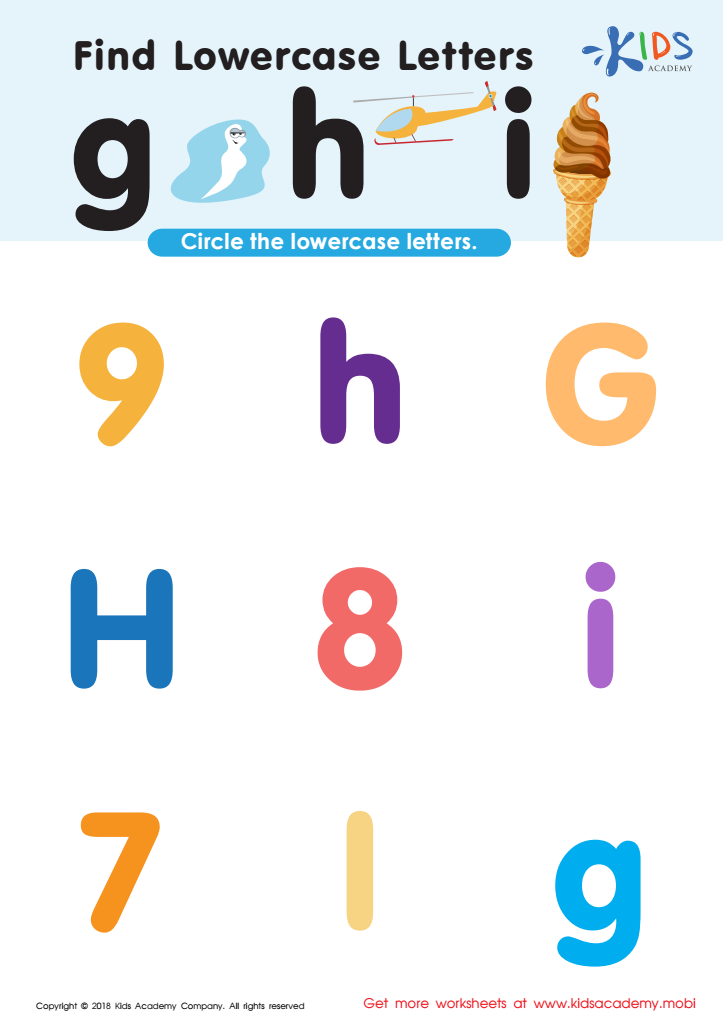
Find Lowercase Letters g h i Worksheet
Turn learning into a fun journey with your child! Use this free worksheet to find and circle the lowercase letters hidden amongst uppercase letters and numbers. Your child will understand what you're teaching them as they enjoy the search.
 Assign to My Students
Find Lowercase Letters g h i Worksheet
Worksheet
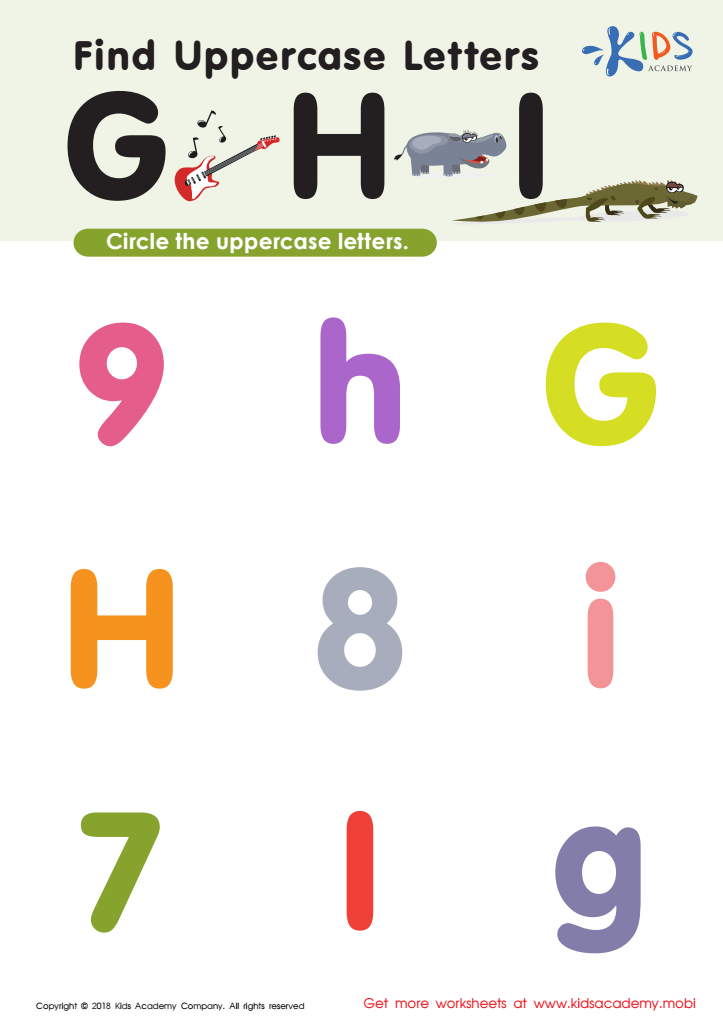
Find Uppercase Letters G, H, and I Worksheet
Find G, H, and I in uppercase with this downloadable worksheet! Numbers are included to challenge your kindergartener's letter recognition skills. Plus, practice G, H, and I sounds using the cute graphics. Perfect for learning letter case recognition!
Find Uppercase Letters G, H, and I Worksheet
Worksheet
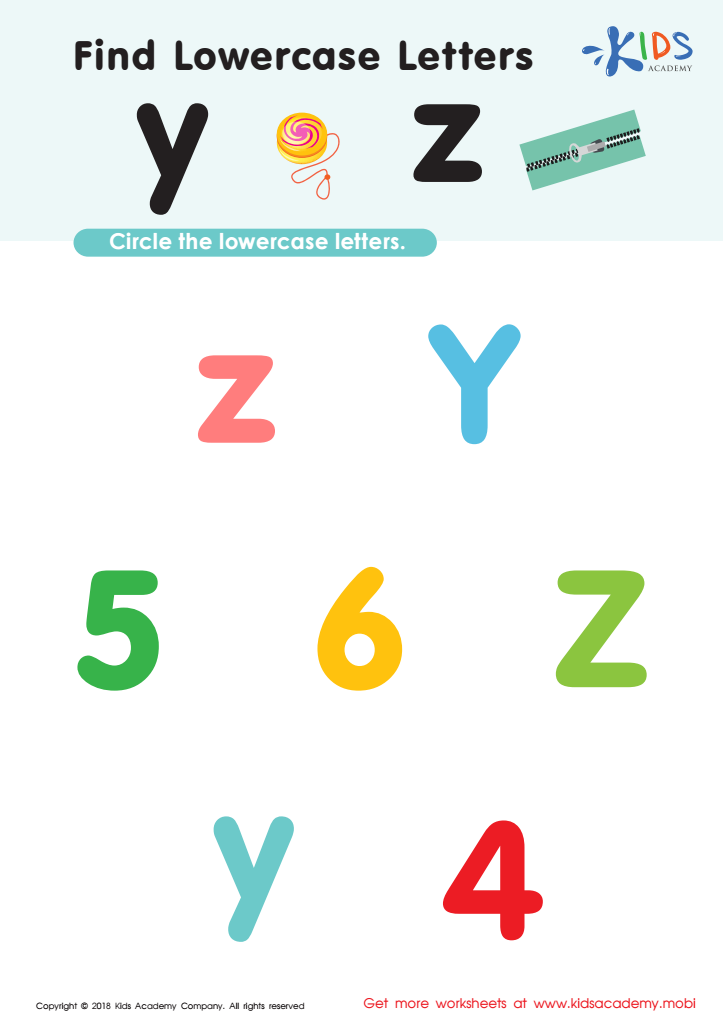
Find Lowercase Letters y z Worksheet
Help your kid learn the alphabet. Before they can move on to words and reading, they must first know the lower and uppercase letters. Show them how to find the letters y and z in this worksheet, which is filled with uppercase letters and numbers. Together, find and circle them.
Find Lowercase Letters y z Worksheet
Worksheet
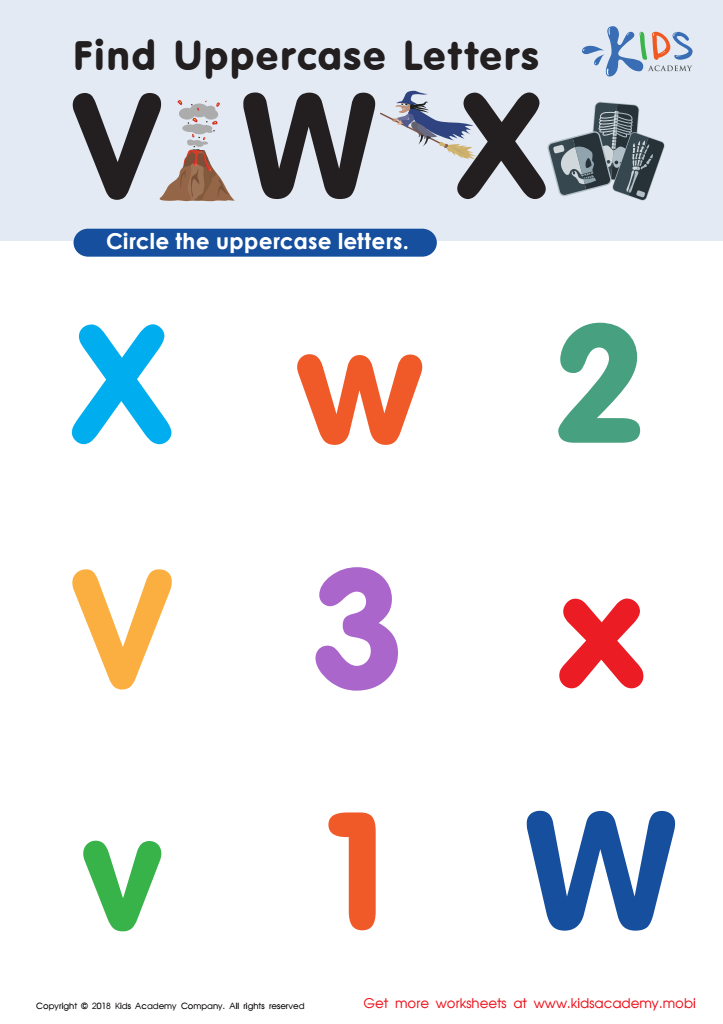
Find Uppercase Letters V, W, X Worksheet
Ask your kids if they can spot the uppercase letters V, W and X hidden in the lowercase letters and numbers, then have them circle them. After that, ask them to give you examples of words beginning with those letters. This worksheet will help them get started.
Find Uppercase Letters V, W, X Worksheet
Worksheet
Join Kids Academy for Free
Who is primarily going to use this learning content?








Visual discrimination, especially in the context of letter recognition, is a critical skill for 4-year-olds as they embark on their journey toward literacy. This skill allows children to distinguish between different letters and shapes, a foundational step that underpins reading and writing abilities.
Parents and teachers should prioritize visual discrimination for several reasons. Firstly, early mastery of letter recognition directly influences the ease with which children learn to read. Recognizing letters and understanding their unique forms enable children to start linking visual representations with sounds, a crucial component of phonemic awareness. Second, strong visual discrimination skills facilitate accurate writing. If children can readily identify and differentiate letters, they are less likely to mix them up when writing, leading to clearer and more confident written communication.
Moreover, cultivating this skill contributes to broader cognitive development. It enhances attention to detail, strengthens memory, and nurtures problem-solving abilities as children begin to notice subtle differences in visual information. This foundational understanding supports other areas of learning, including mathematics and comprehension skills.
Lastly, early success in visual discrimination and letter recognition fosters confidence and a positive attitude towards learning. Children who feel competent easily engage more willingly with educational activities, setting the stage for ongoing academic success and a lifelong love of learning.








