Handwriting practice Normal Letter Sounds Worksheets for 4-Year-Olds
4 filtered results
-
From - To
Nurture your child's early literacy skills with our Handwriting Practice Normal Letter Sounds Worksheets designed specifically for 4-year-olds. These engaging worksheets from Kids Academy focus on helping young learners recognize and write letters while associating them with their respective sounds. Each sheet offers enjoyable activities to improve fine motor skills and phonemic awareness. With colorful illustrations and kid-friendly exercises, your child will embark on an exciting journey of learning the alphabet. Perfect for preschool teachers and parents, these printable resources make handwriting and letter sound recognition a fun and interactive experience for early learners. Discover more at Kids Academy!
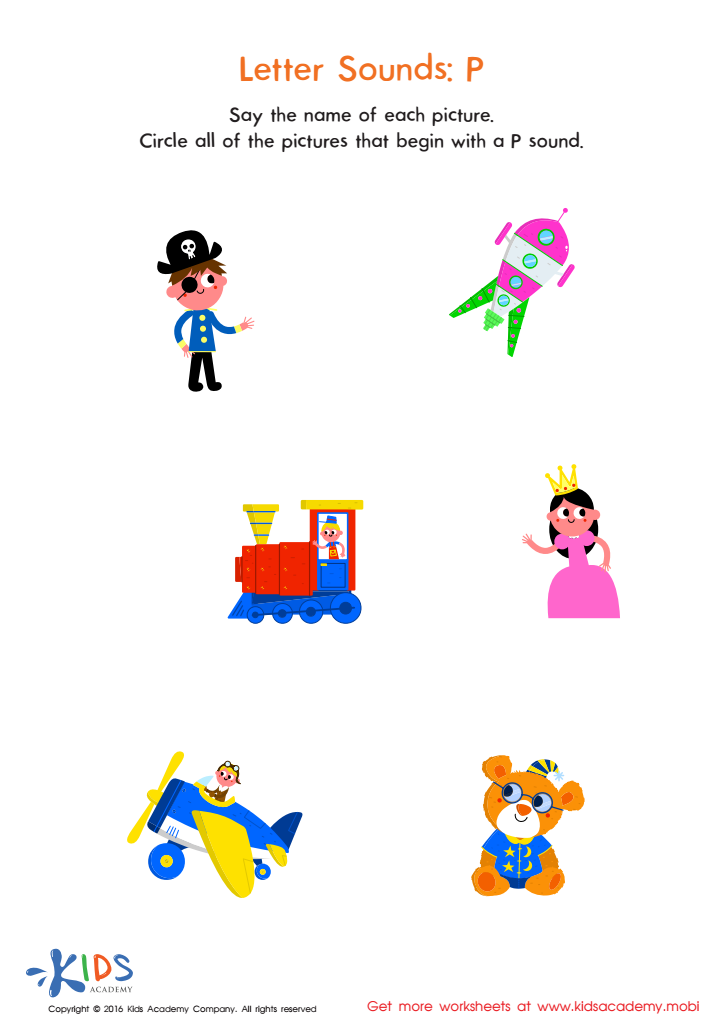
Letter P Sound Worksheet
 Assign to My Students
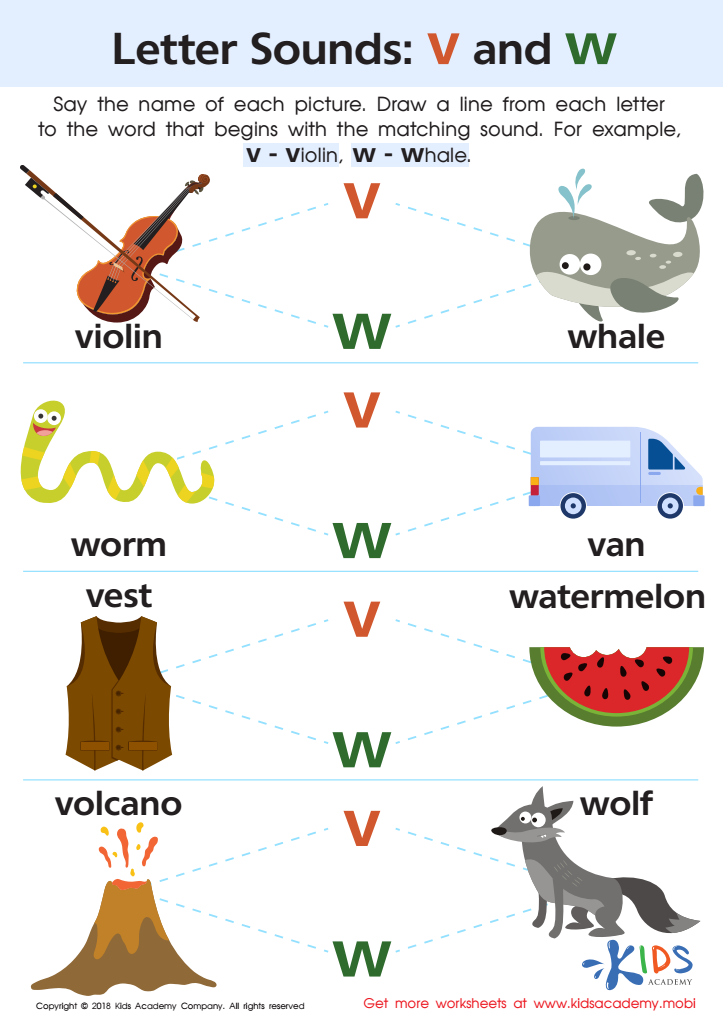
Letter V and W Sounds Worksheet
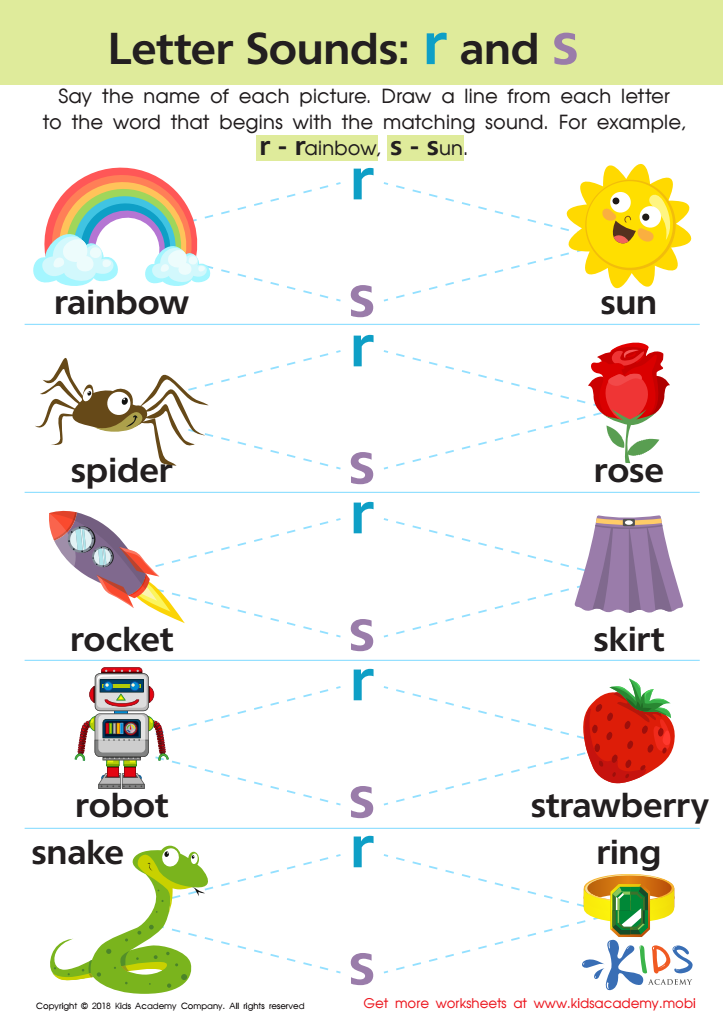
Letter R and S Sounds Worksheet
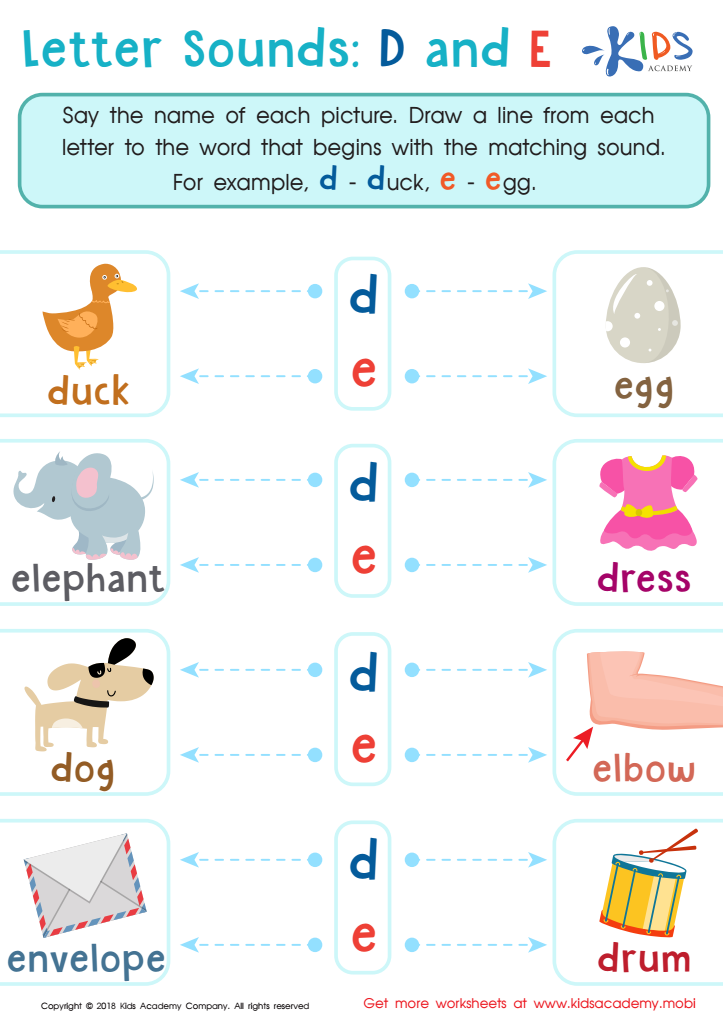
Letter D and E Sounds Worksheet








Parents and teachers should highly prioritize handwriting practice and normal letter sounds for 4-year-olds as these foundational skills are crucial for early literacy development. Handwriting practice helps young children develop fine motor skills, eye-hand coordination, and muscle memory, which are essential for their overall academic growth. When children engage in writing letters, they reinforce their understanding of letter shapes, enabling quicker and more accurate recognition of both uppercase and lowercase letters in the future.
Additionally, learning normal letter sounds is vital for phonemic awareness, which is the ability to hear, identify, and manipulate individual sounds in spoken words. This skill is a strong predictor of a child's future success in reading and spelling. By associating letters with their correct sounds through consistent practice, children can decode words more efficiently and build a stronger vocabulary.
Moreover, early exposure to these practices supports cognitive development by enhancing memory, attention, and sequencing abilities. A strong foundation in handwriting and letter sounds will not only make the transition to more complex literacy tasks smoother but also foster a sense of accomplishment and confidence in young learners. Therefore, incorporating these activities into a child’s daily routine can have long-lasting, positive impacts on their educational journey.






