Handwriting improvement Normal Tracing Letters Worksheets for 4-Year-Olds
4 filtered results
-
From - To
Enhance your 4-year-old's handwriting skills with our expertly crafted Normal Tracing Letters Worksheets. Designed to make learning fun and engaging, these worksheets help preschoolers develop fine motor skills, letter recognition, and proper writing techniques. Each sheet features easy-to-follow tracing paths, encouraging children to practice and perfect their handwriting. With a variety of letters to trace, these worksheets offer an excellent foundation for future writing success. Ideal for home or classroom use, they effortlessly combine learning and play, setting the stage for a lifelong love of writing. Start your child’s educational journey today!
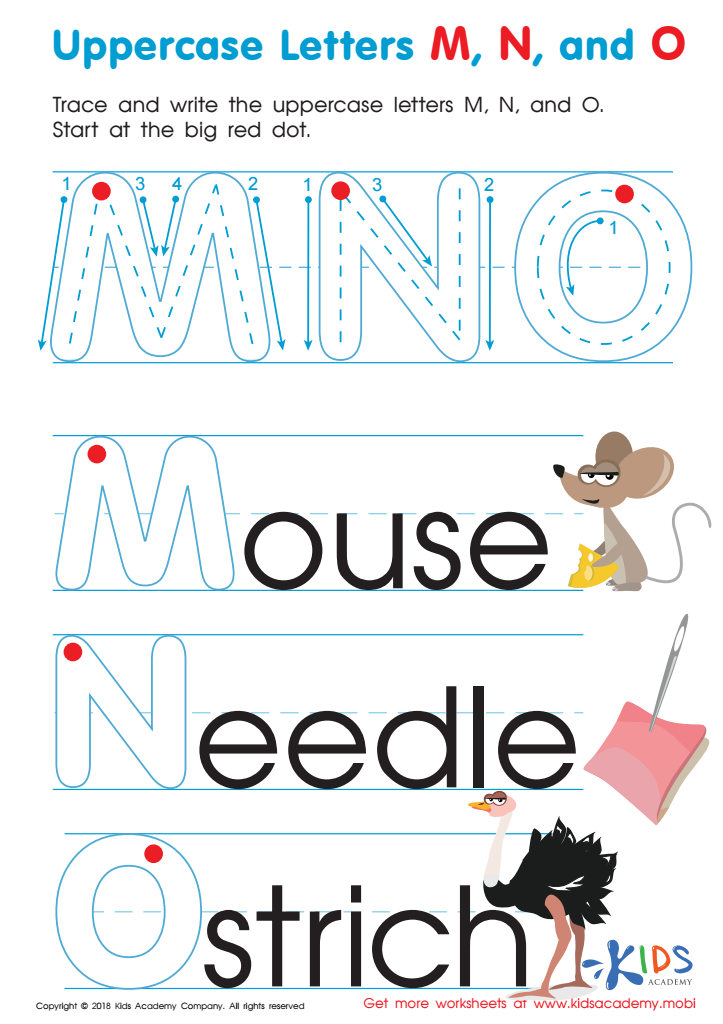
Uppercase Letters M, N, and O Worksheet
 Assign to My Students
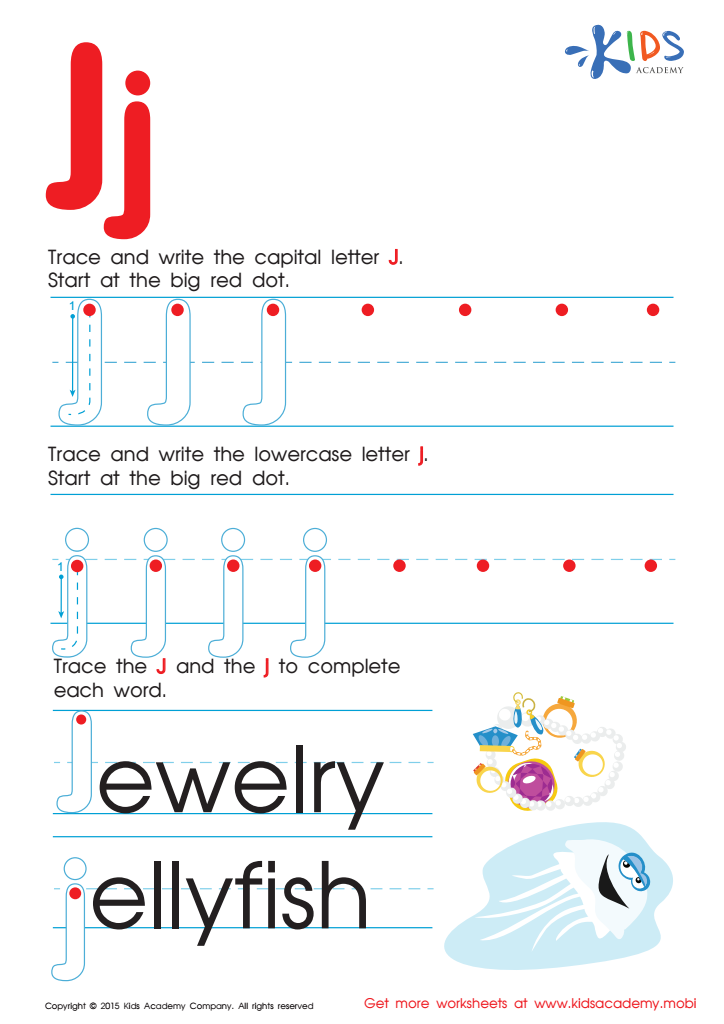
Letter J Tracing Page
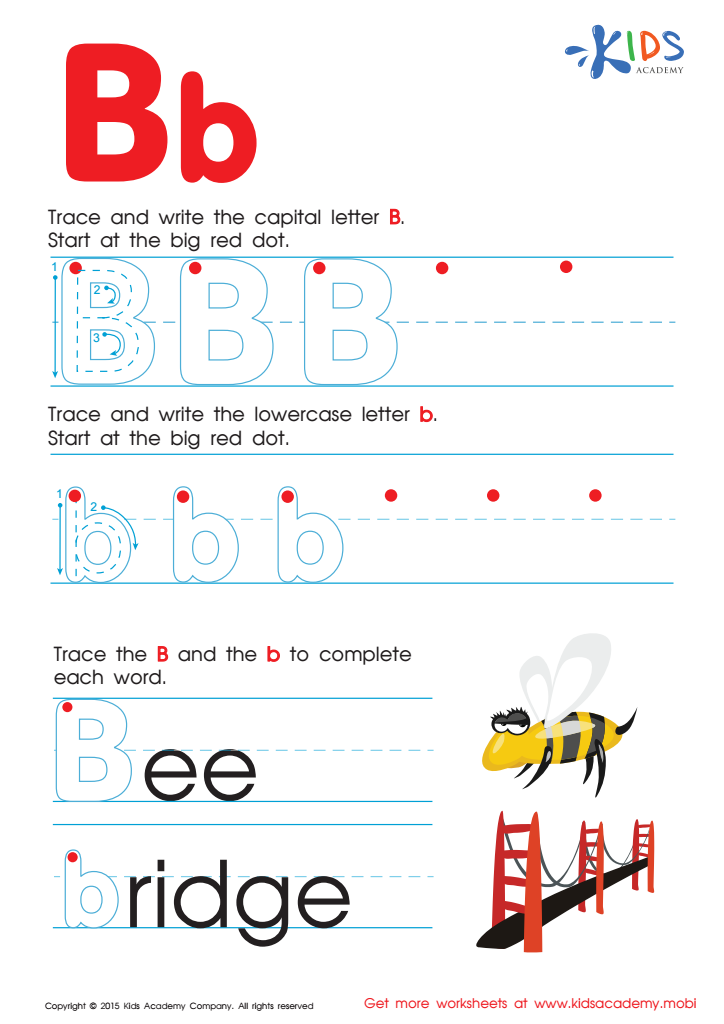
Letter B Tracing Page
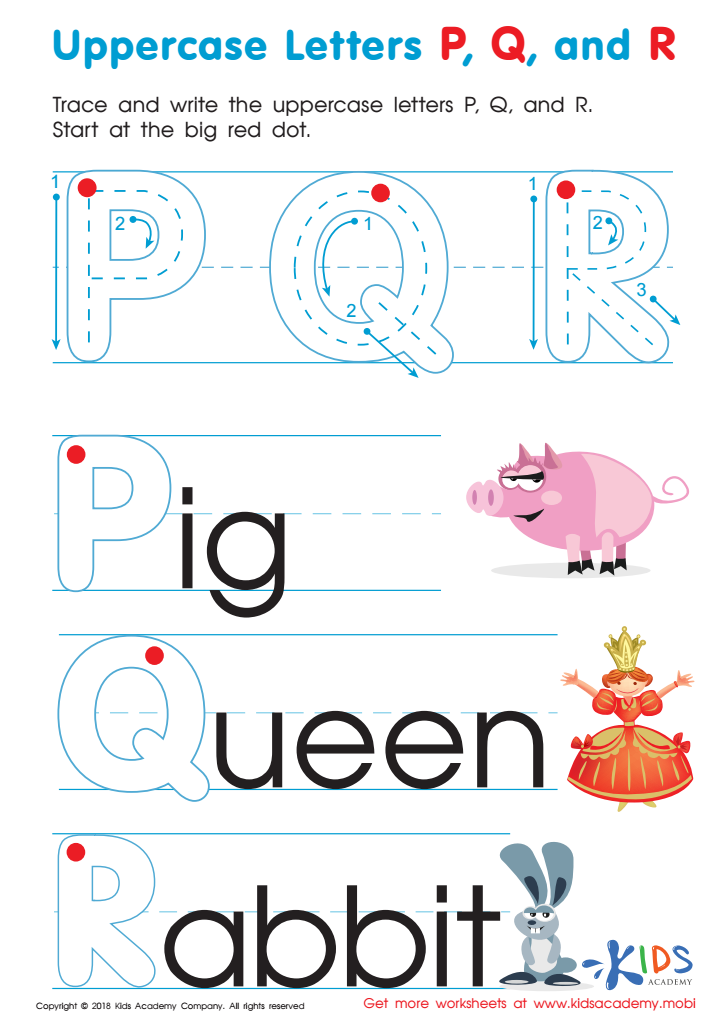
Uppercase Letters P, Q, and R Worksheet








Handwriting improvement through normal tracing letters is crucial for 4-year-olds as it lays a foundational skill for their future academic success and cognitive development. At this age, young children are rapidly developing their fine motor skills, which are essential for writing. By engaging in activities like tracing letters, they strengthen the small muscles in their hands and fingers, enhancing their ability to control a pencil or crayon effectively.
Furthermore, handwriting activities improve a child’s hand-eye coordination, which is vital for many other tasks, such as tying shoelaces or picking up small objects. Learning to trace letters also enhances a child’s visual perception skills—helping them distinguish between different shapes and patterns, which is key to reading and writing proficiency.
Cognitively, tracing letters helps children understand the relationship between letters and sounds—a fundamental component of literacy. It familiarizes them with the alphabet, making it easier to recognize letters and eventually spell words. This early exposure also builds their confidence, setting a positive tone for later learning experiences.
Moreover, handwriting is a form of expression that supports emotional and intellectual growth. By developing neat handwriting, children can convey their thoughts more clearly, fostering better communication skills. Therefore, parents and teachers should prioritize handwriting improvement to support holistic development and pave the way for future educational achievements.








