Hand-eye Coordination Normal Tracing Lines and Curves Worksheets for 4-Year-Olds
4 filtered results
-
From - To
Enhance your child's hand-eye coordination with our engaging Tracing Lines and Curves Worksheets, specifically designed for 4-year-olds. Our expertly crafted printables help little hands master the essential skills of following simple lines and curves, laying a solid foundation for future writing abilities. These fun and educational worksheets feature a mix of playful images and exercises that captivate young learners' attention. By regularly practicing with these printables, your child will develop better control and precision in their movements, setting the stage for success in both writing and everyday tasks. Discover these valuable resources at Kids Academy today!
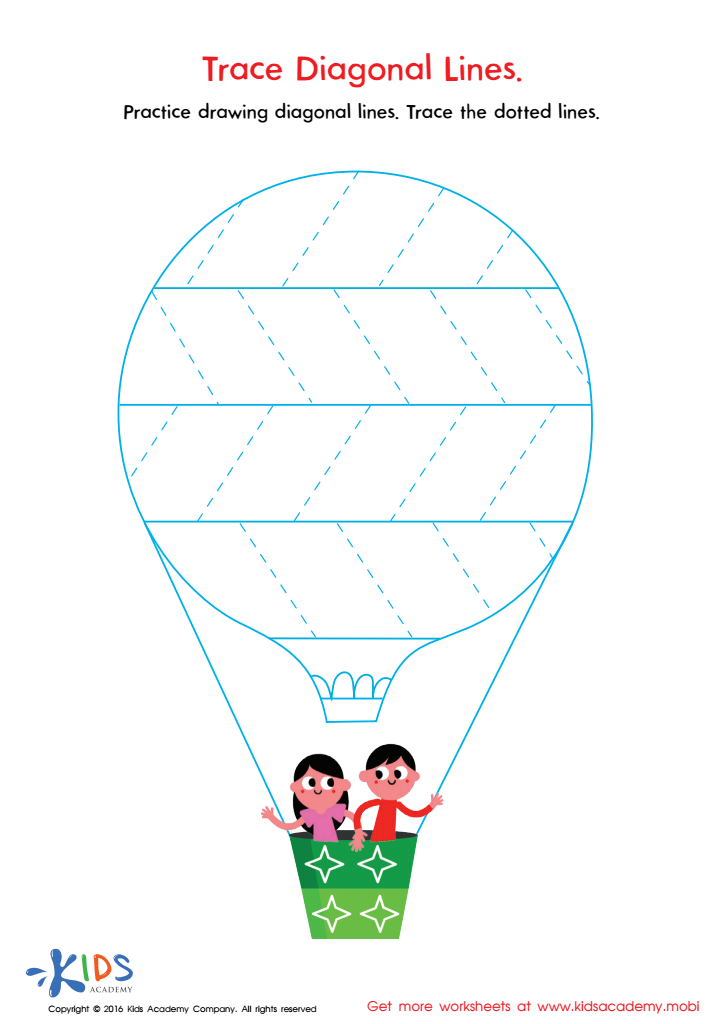
Trace Diagonal Lines Worksheet
 Assign to My Students
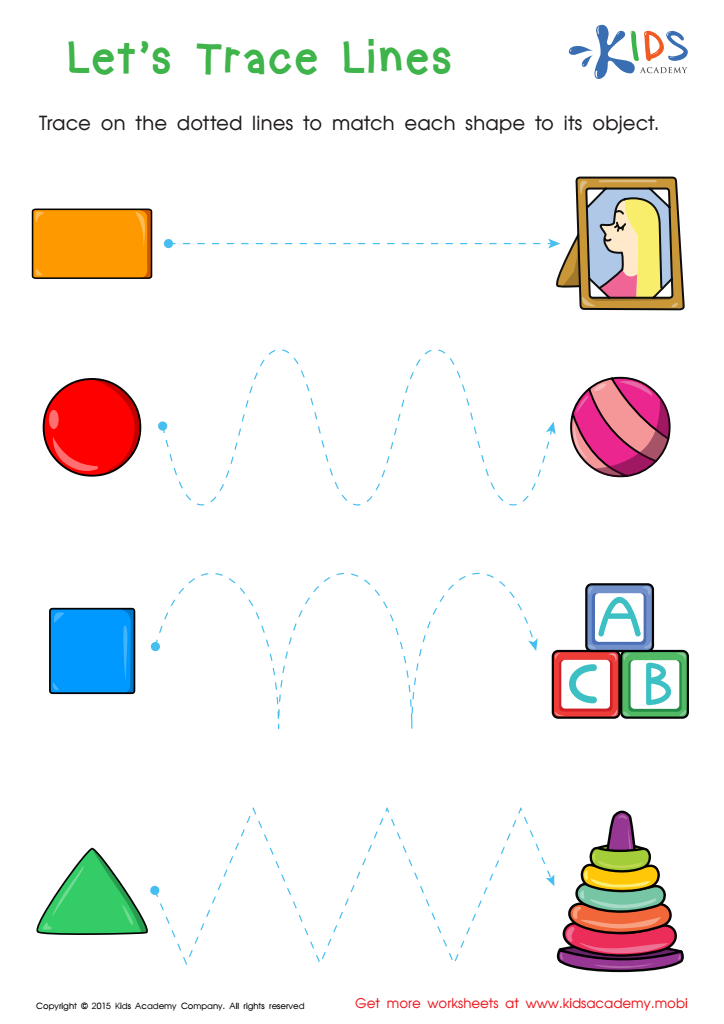
First Words: Let's Trace Lines Worksheet
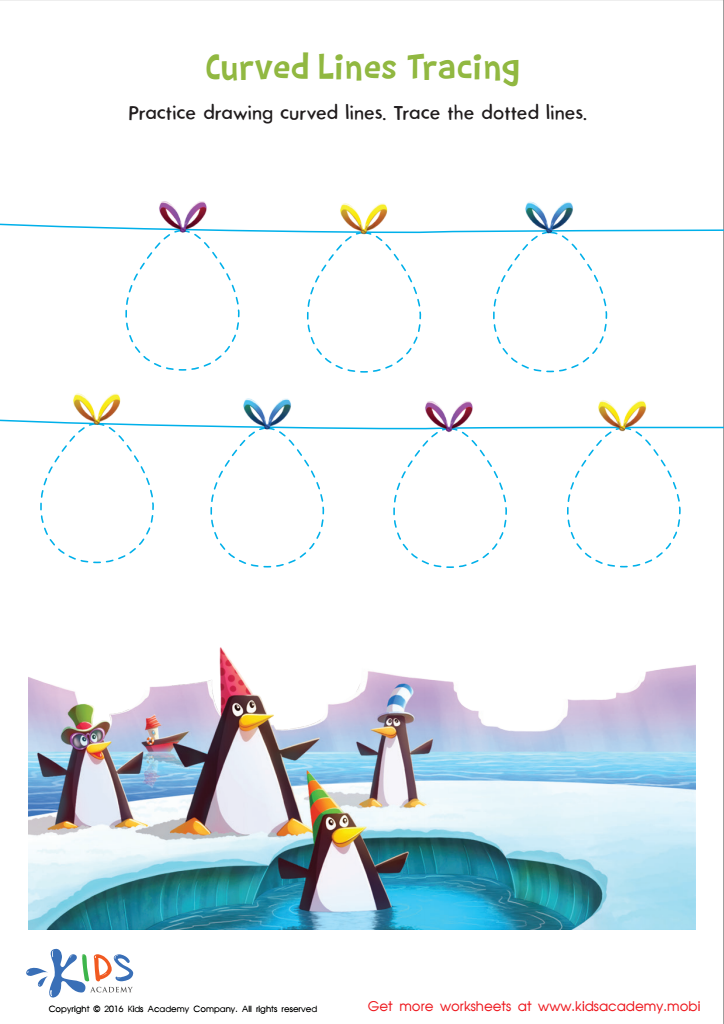
Curved Lines Tracing Worksheet
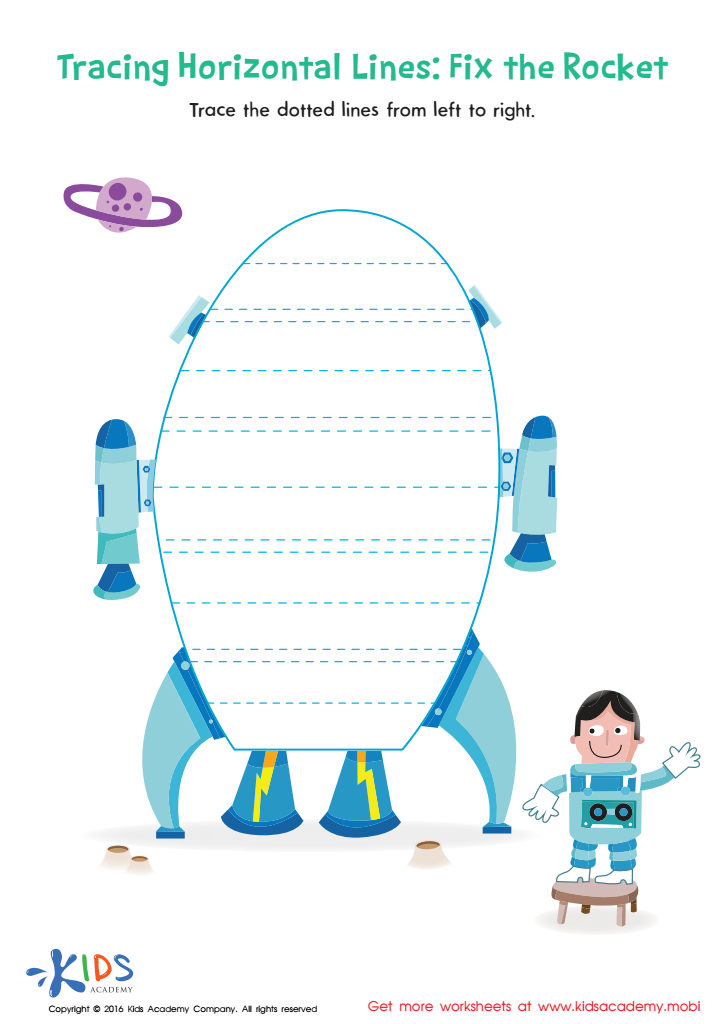
Tracing Horizontal Lines Worksheet




Hand-eye coordination, particularly normal tracing of lines and curves, is a fundamental skill for 4-year-olds that serves as a cornerstone for numerous developmental milestones. This ability is pivotal for a child's overall cognitive and motor development and closely tied to their future academic success.
Tracing lines and curves helps children refine their fine motor skills, which are crucial for everyday tasks like buttoning clothes, cutting with scissors, and eventually writing. An improvement in these motor skills can directly impact a child's ability to handle writing instruments properly, leading to better handwriting and drawing capabilities. Moreover, hand-eye coordination exercises enhance visual-spatial awareness, allowing children to better understand the relationship between their hands and their environment.
For parents, investing time in developing a child's hand-eye coordination can result in improved concentration and patience, skills that are vital for future learning activities. Teachers will notice that children with stronger hand-eye coordination tend to perform better in tasks that require precision and control, helping them to excel academically and develop confidence.
In summary, focusing on hand-eye coordination through activities like tracing lines and curves not only improves a child’s fine motor skills but also contributes to their cognitive development, better academic performance, and higher levels of self-esteem. This makes it an essential area for both parents and teachers to nurture during early childhood.







