Letter Tracing Practice Normal Upper & Lowercase Letters Worksheets for 4-Year-Olds
3 filtered results
-
From - To
Introduce your 4-year-olds to the joy of writing with our "Letter Tracing Practice: Normal Upper & Lowercase Letters Worksheets." These engaging worksheets from Kids Academy are perfect for early learners developing fine motor skills and letter recognition. Each sheet features easy-to-follow guides to trace both uppercase and lowercase letters, helping young children build the foundational skills needed for reading and writing. Fun illustrations and clear instructions make practice enjoyable and effective. Boost your child's confidence and prepare them for academic success with these essential letter tracing worksheets. Ideal for home practice or preschool settings.
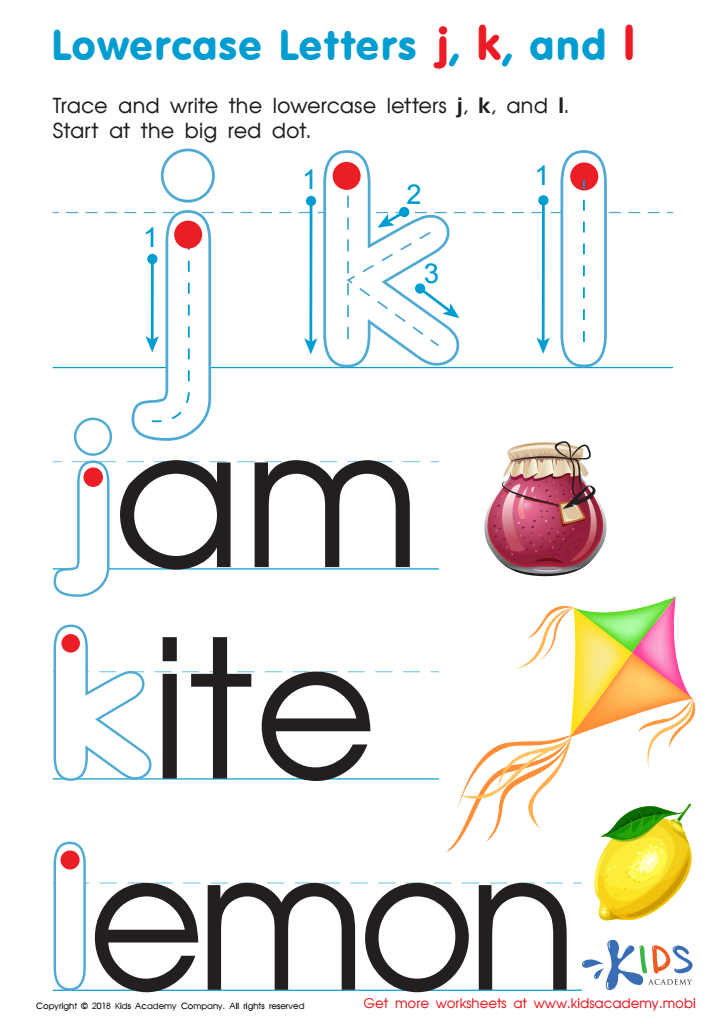
Lowercase Letters j k l Worksheet
 Assign to My Students



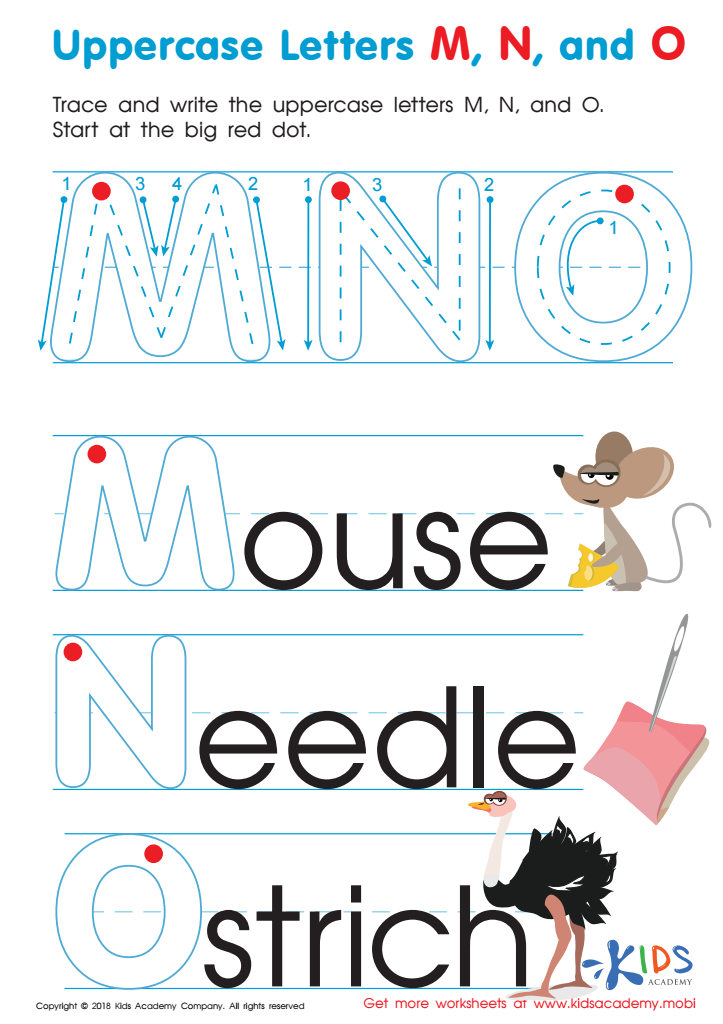
Uppercase Letters M, N, and O Worksheet
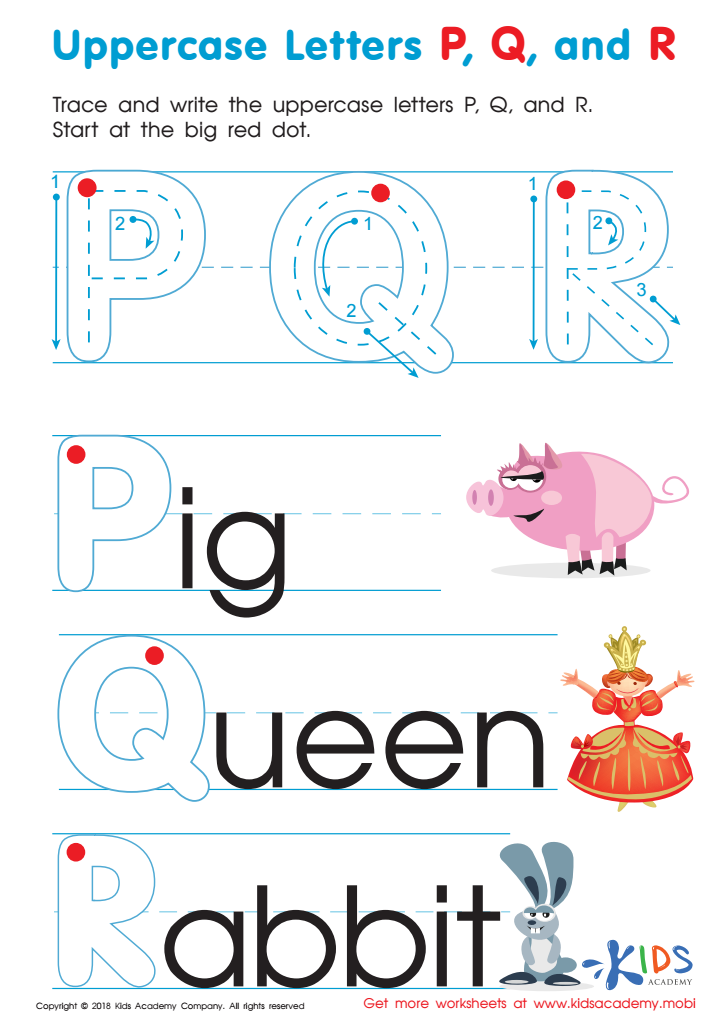
Uppercase Letters P, Q, and R Worksheet






Letter tracing practice for 4-year-olds is of significant importance for both parents and teachers. At this developmental stage, children are beginning to hone their fine motor skills, which are crucial for writing. Engaging in letter tracing helps strengthen hand muscles and improve hand-eye coordination, laying a strong foundation for these skills.
Moreover, tracing letters helps young learners become familiar with the alphabet – both uppercase and lowercase forms – which is essential for early literacy. As children trace letters, they learn to recognize shapes, practice proper letter formations, and solidify their understanding of how letters are constructed. This foundational knowledge is key to successful reading and writing as they progress in their education.
Additionally, letter tracing activities can enhance cognitive development. These exercises promote focus, attention to detail, and the ability to follow instructions. Through repetition and practice, children also develop memory skills related to letter shapes and sounds.
Parents and teachers supporting these activities ensure that children receive the guided practice they need to develop confidence in their writing abilities. Creating a positive and structured learning environment makes the process enjoyable and stress-free, fostering a lifelong love for learning and literacy. Investing time in letter tracing exercises is an effective and simple way to pave the path toward a child's academic success.







