Lowercase letter writing Normal Upper & Lowercase Letters Worksheets for 4-Year-Olds
3 filtered results
-
From - To
Discover our engaging worksheets designed specifically for 4-year-olds to master lowercase letter writing! These fun and interactive activities help young learners distinguish between uppercase and lowercase letters while enhancing fine motor skills. With a variety of playful exercises, children can practice tracing and writing lowercase letters, building their confidence and proficiency in early literacy. Our Normal Upper & Lowercase Letters Worksheets encourage creativity and promote a love for learning, making it easy and enjoyable for your little one to grasp the fundamentals of the alphabet. Perfect for parents and educators, these resources provide a strong foundation for future reading and writing success!
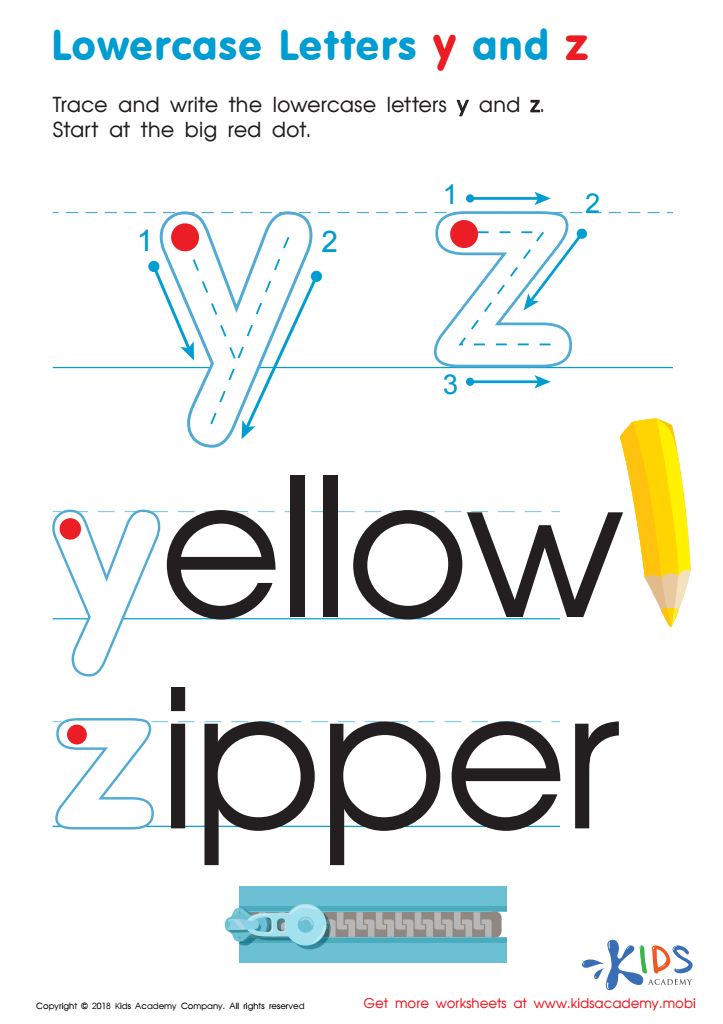
Lowercase Letters y z Worksheet
 Assign to My Students


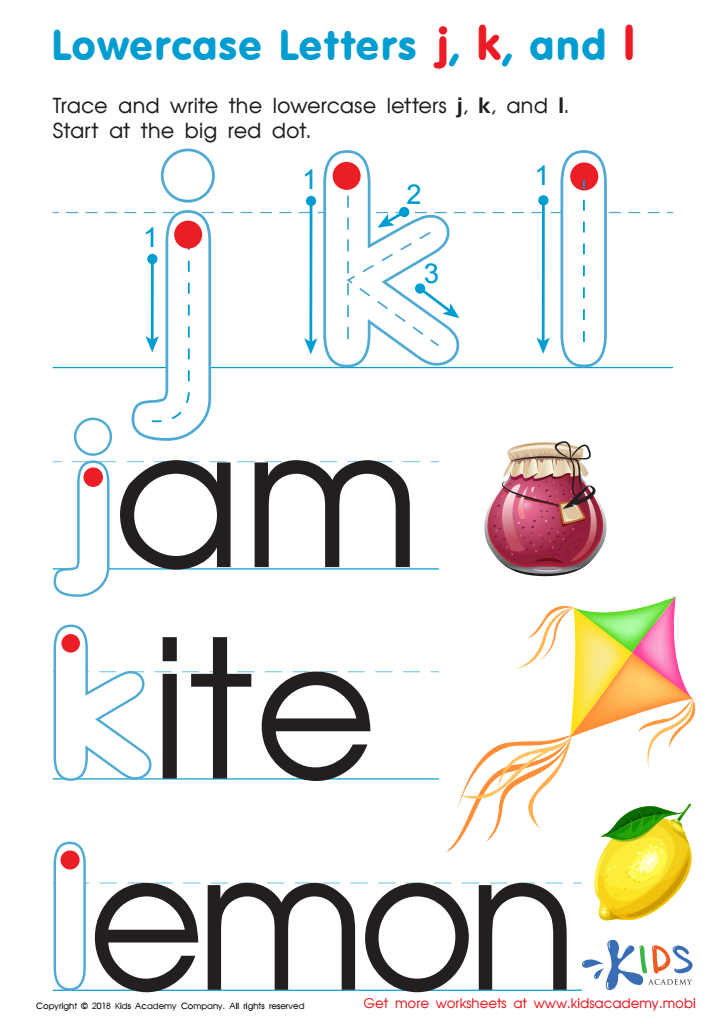
Lowercase Letters j k l Worksheet
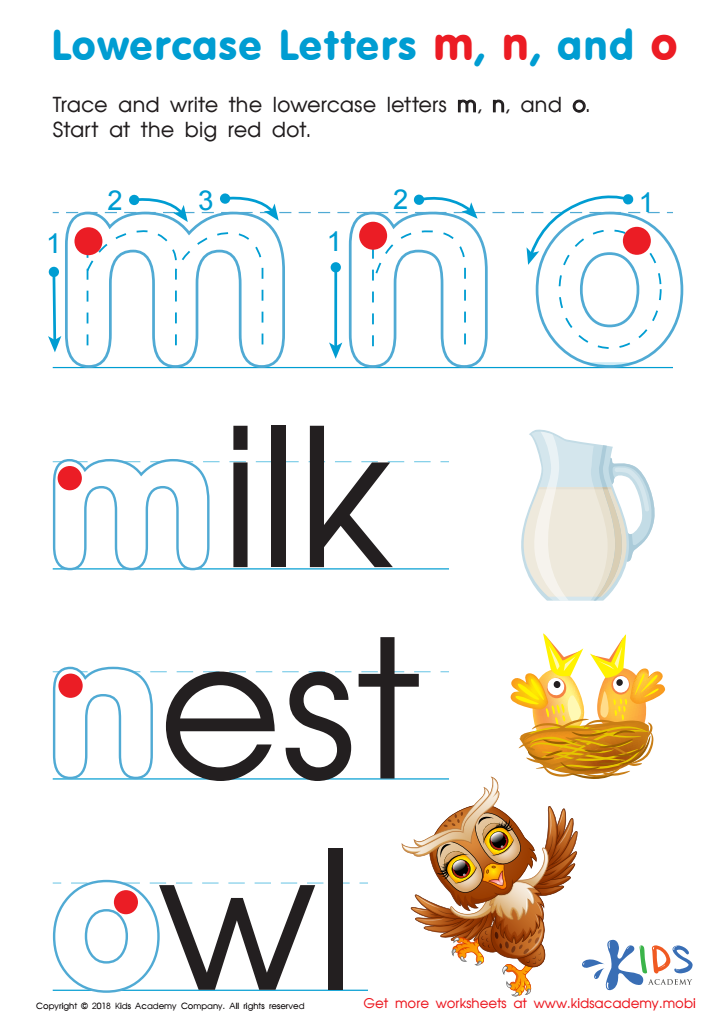
Lowercase Letters m n o Worksheet






Teaching 4-year-olds to write lowercase and uppercase letters is crucial for their early literacy development. At this age, children are developing fine motor skills and cognitive abilities that form the foundation for more advanced writing and reading tasks. Learning the distinction between uppercase and lowercase letters enhances their understanding of language structure, as each serves unique functions in writing—such as starting sentences with uppercase letters and the intricacies of word formation.
Engaging with letter writing helps reinforce phonemic awareness, where children begin to connect sounds with written symbols. This process fosters a deeper appreciation for language and prepares them for future reading comprehension. Moreover, mastering letter formation cultivates confidence in their writing capabilities, encouraging them to express their ideas with clarity.
For parents and teachers, fostering these skills provides a broader educational context, promoting playful interactions around words and stories. Incorporating fun activities, like drawing letters in the sand or using engaging apps, makes learning enjoyable. By prioritizing lowercase and uppercase letter writing, parents and teachers equip children with essential skills that empower them throughout their educational journey and beyond.







