
Critical Thinking Normal Building Vocabulary Worksheets for 4-Year-Olds
6 filtered results
Difficulty Level
Grade
Age
-
From - To
Subject
Activity
Standards
Our "Critical Thinking Normal Building Vocabulary Worksheets for 4-Year-Olds" are expertly designed to engage and enhance your child's language skills. Featuring fun activities and colorful images, these worksheets help young learners build essential vocabulary while developing their critical thinking abilities. Each worksheet encourages kids to explore new words in context, promoting better understanding and retention. Ideal for preschoolers, these resources transform learning into an enjoyable adventure, setting a strong foundation for future reading success. Boost your child's cognitive growth and verbal skills with our thoughtfully crafted vocabulary worksheets today!
Favorites
With answer key
Interactive
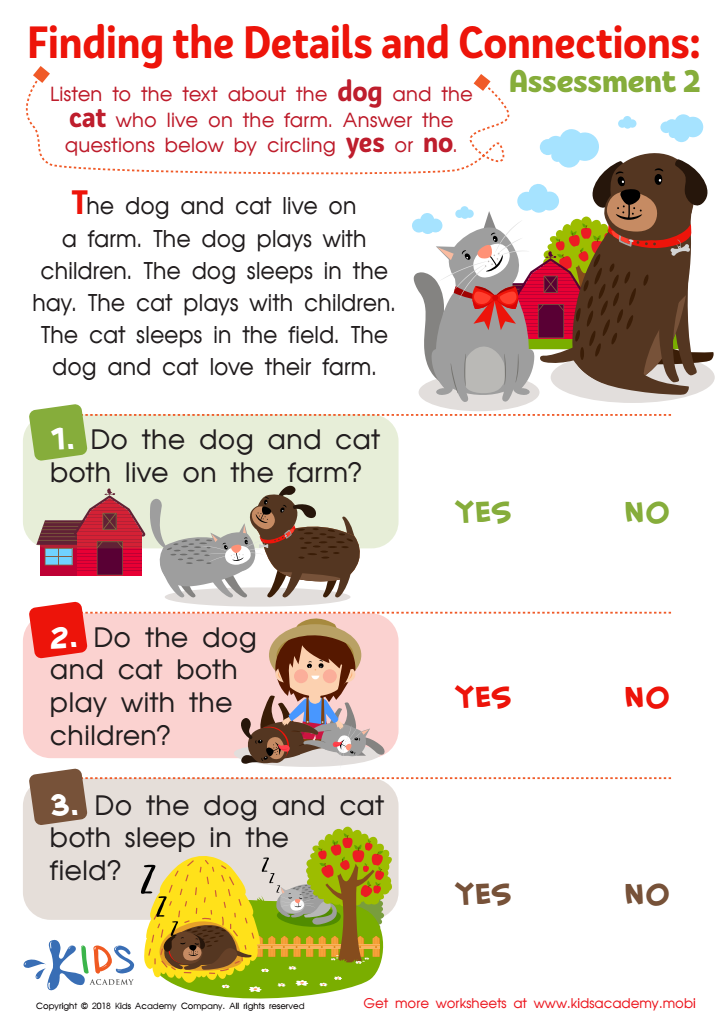
Finding the Details and Connections: Assessment 2 Worksheet
Does your child love animals? If you have pets, they'll relate to the text in this worksheet. Read it aloud to them and help them answer the simple questions by circling yes or no. The story is about a dog and cat living on a farm. Let your child read it aloud to you if they can.
 Assign to My Students
Finding the Details and Connections: Assessment 2 Worksheet
Worksheet











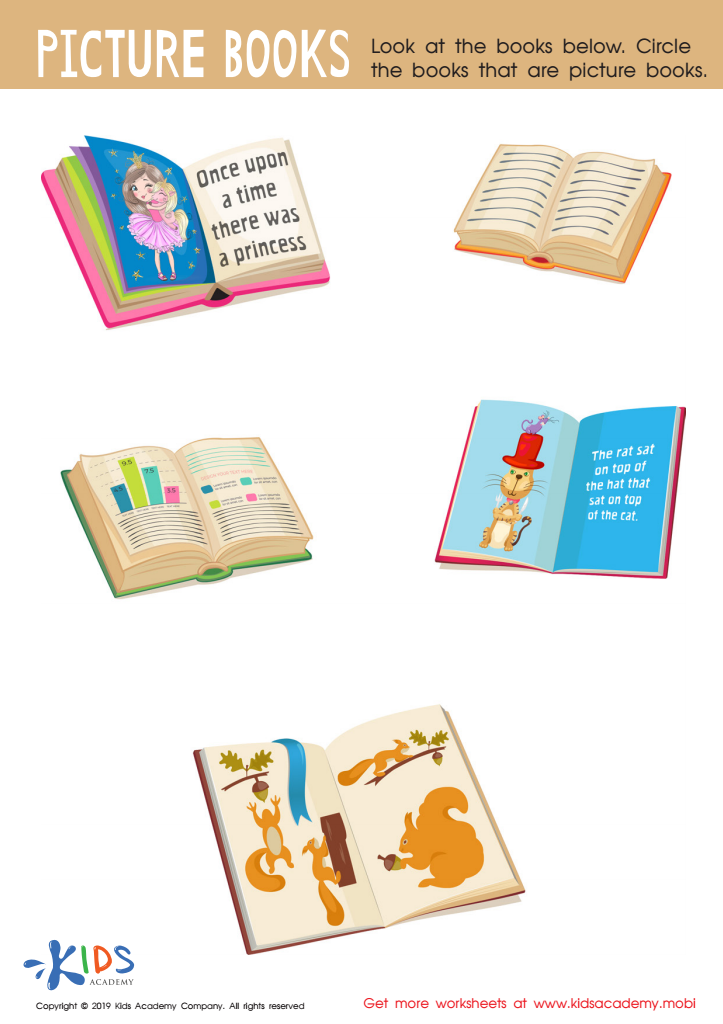
Picture Books Worksheet
Kids will love this exercise! Get their imaginations going with five colorful picture books. Ask them to circle the books that are picture books and have them enjoy the exciting stories, along with the colorful images. Reading can become that much more enjoyable!
Picture Books Worksheet
Worksheet
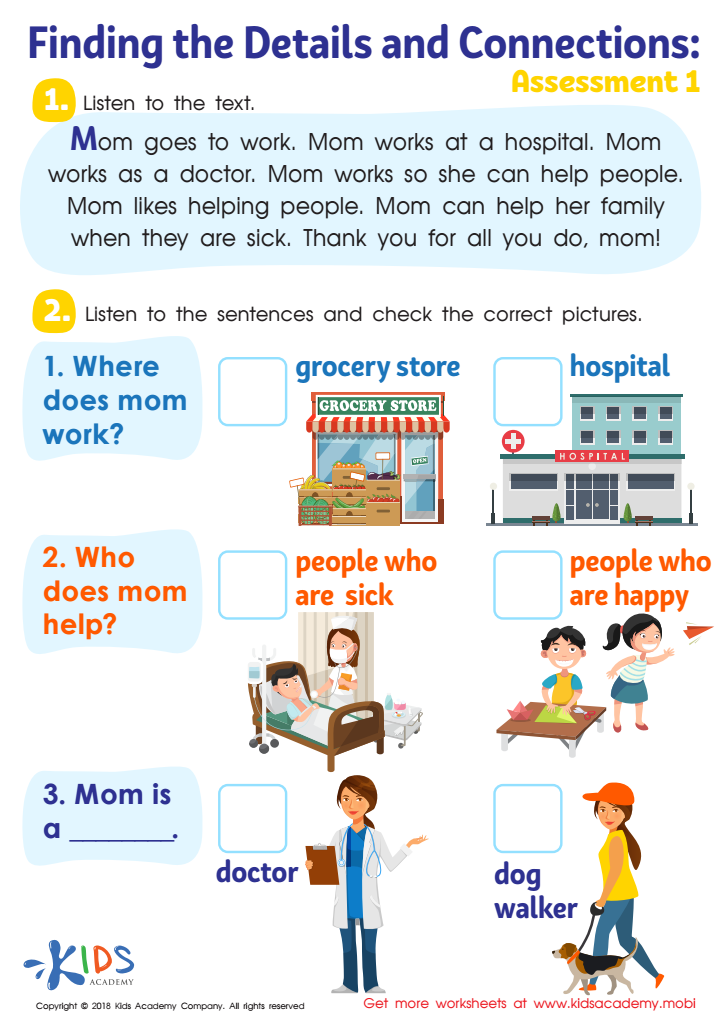
Finding the Details and Connections: Assessment 1 Worksheet
Ask your students what their parents do for a job. Do they know what profession their mom is in and where she works? Professionals have places they go to do their job. In this task, Mom goes to a hospital and is a doctor. Read the text and help them check the right pictures.
Finding the Details and Connections: Assessment 1 Worksheet
Worksheet
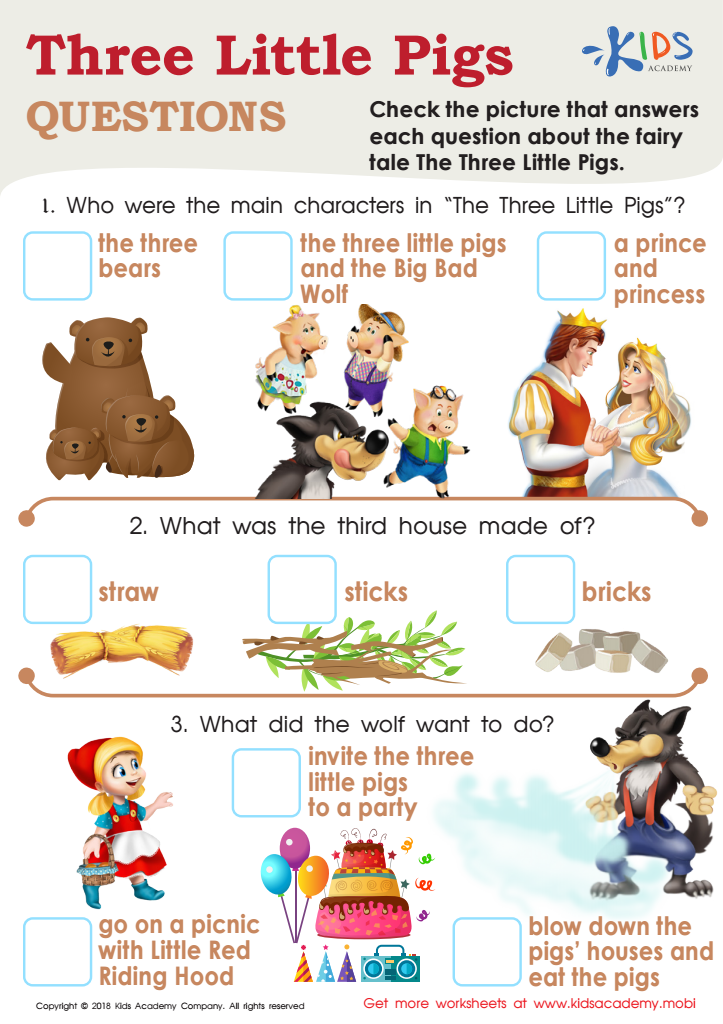
Three Little Pigs Questions Worksheet
Does your kid love bedtime stories? Test their classic fairytale knowledge with this worksheet! If they mention The Three Little Pigs, they're in luck - this pdf has them answering questions based off the classic fairytale. They'll check the picture that answers each question about the story. Is their fairytale knowledge up to scratch?
Three Little Pigs Questions Worksheet
Worksheet
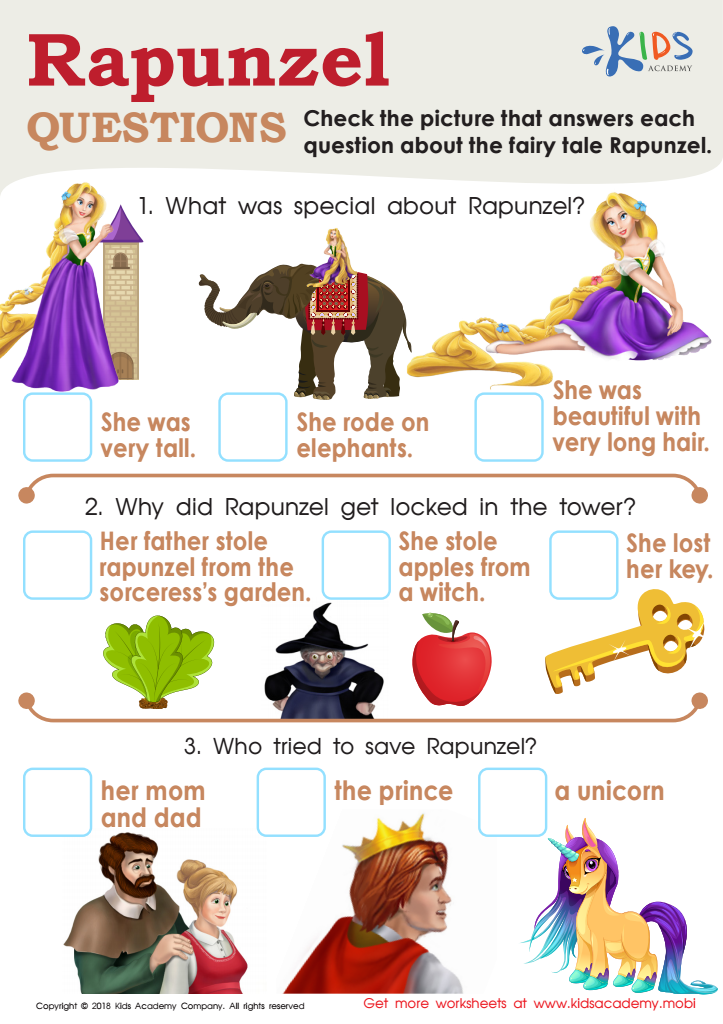
Rapunzel Questions Worksheet
Read the fairy tale 'Rapunzel' to your kids. For those who really enjoyed it, read it twice and ask questions to test their understanding. Then, get them to check the pictures related to the questions to test their comprehension of the story.
Rapunzel Questions Worksheet
Worksheet
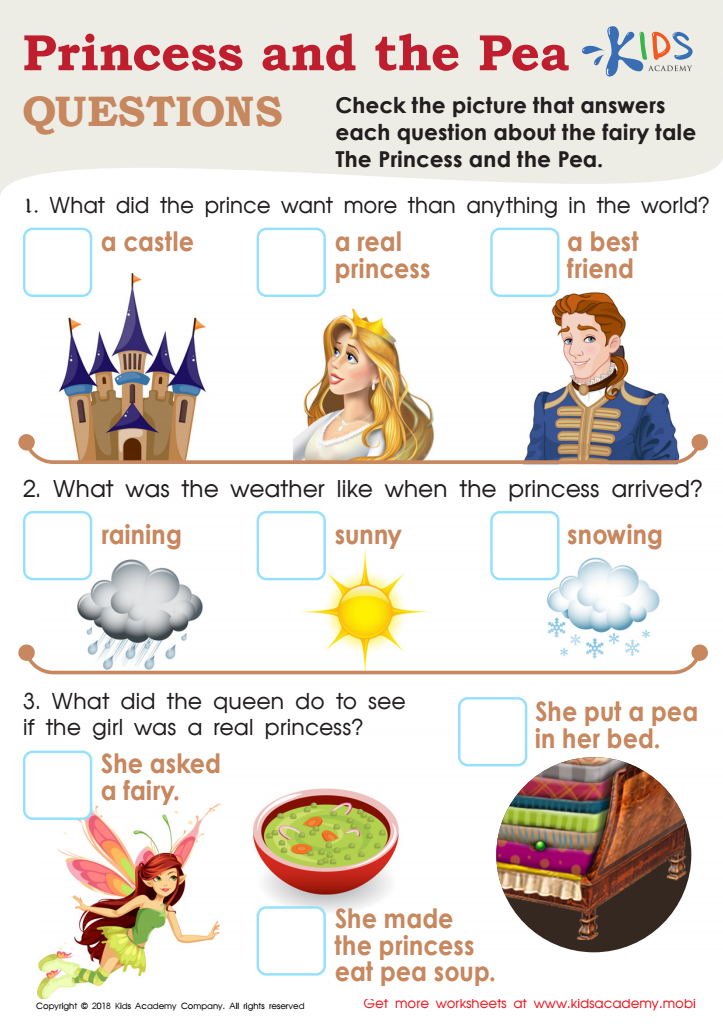
Princess and the Pea Questions Worksheet
Your kid knows The Princess and the Pea inside-out? Test their knowledge with this worksheet. Ask your little one to read the questions and match each one to the picture. It's a fun way to see just how much attention they've paid to their bedtime story.
Princess and the Pea Questions Worksheet
Worksheet
Join Kids Academy for Free
Who is primarily going to use this learning content?








Parents and teachers play a crucial role in fostering critical thinking and building vocabulary in 4-year-olds. At this formative age, children's brains are exceptionally receptive to new information, establishing a foundation for future learning and cognitive development.
Engaging children in activities that promote critical thinking encourages curiosity and problem-solving skills. This not only boosts their cognitive abilities but also helps them become more independent thinkers. For instance, asking open-ended questions like, "Why do you think the sky is blue?" versus a simple "Is the sky blue?" prompts kids to think deeply and articulate their understanding, fostering analytical skills.
Simultaneously, building a robust vocabulary enriches their language skills which are directly linked to literacy and academic success. A rich vocabulary enables children to express their thoughts, emotions, and ideas more clearly and effectively. Reading diverse books, playing word games, and having meaningful conversations are excellent ways to enhance vocabulary. This dual focus on critical thinking and language development offers children the tools they need for effective communication and advanced thinking, preparing them for the more complex demands of schooling and beyond.
Prioritizing these areas of development ensures children not only perform well academically but also acquire essential life skills, fostering a lifelong love for learning and intellectual growth.








