Sound recognition Normal Reading Worksheets for 4-Year-Olds
3 filtered results
-
From - To
Enhance your child's early literacy skills with our Sound Recognition Reading Worksheets designed specifically for 4-year-olds. These engaging worksheets provide fun and interactive activities that introduce young learners to the fundamentals of sound recognition. Through colorful images and straightforward exercises, children will develop their ability to identify and match sounds with corresponding letters and words. Perfect for home and classroom use, our worksheets promote cognitive growth and early reading readiness. Encourage your little one's learning journey and lay a solid foundation for language development with our tailored resources. Empower their love for reading today with our Sound Recognition Worksheets!
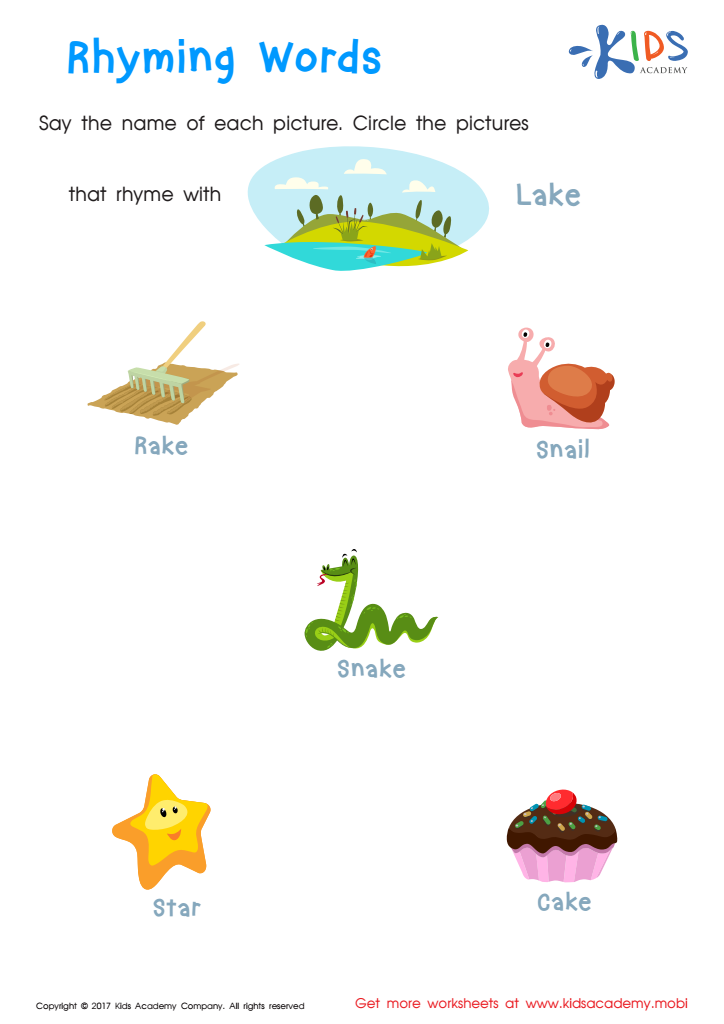
Rhyming Words Rhyming Worksheet
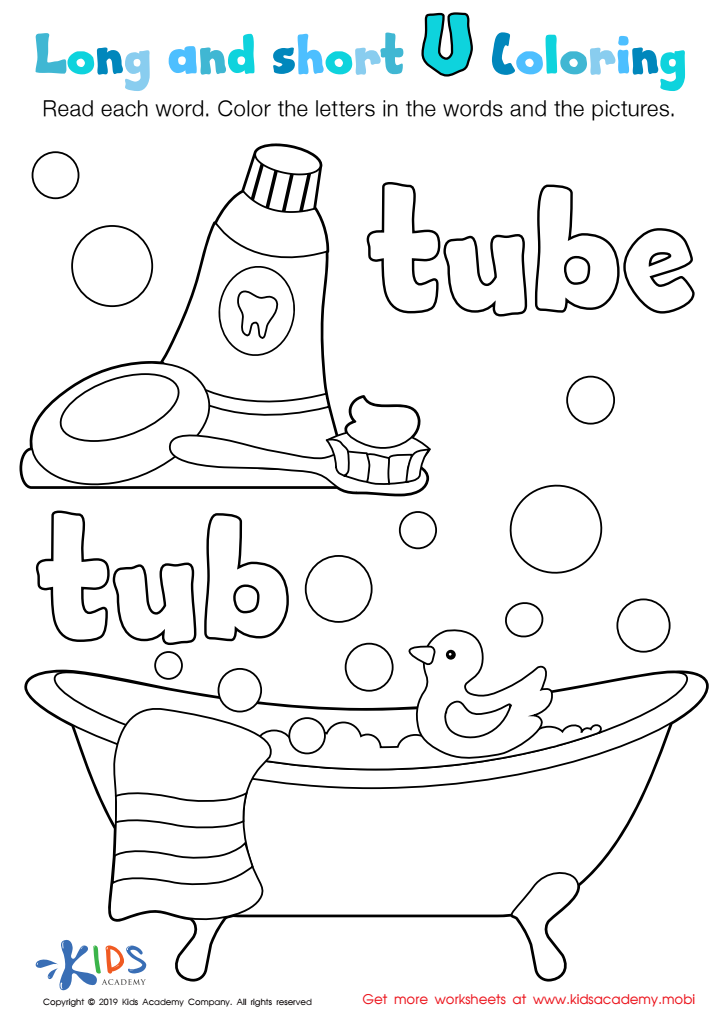
Long and Short U Worksheet
 Assign to My Students
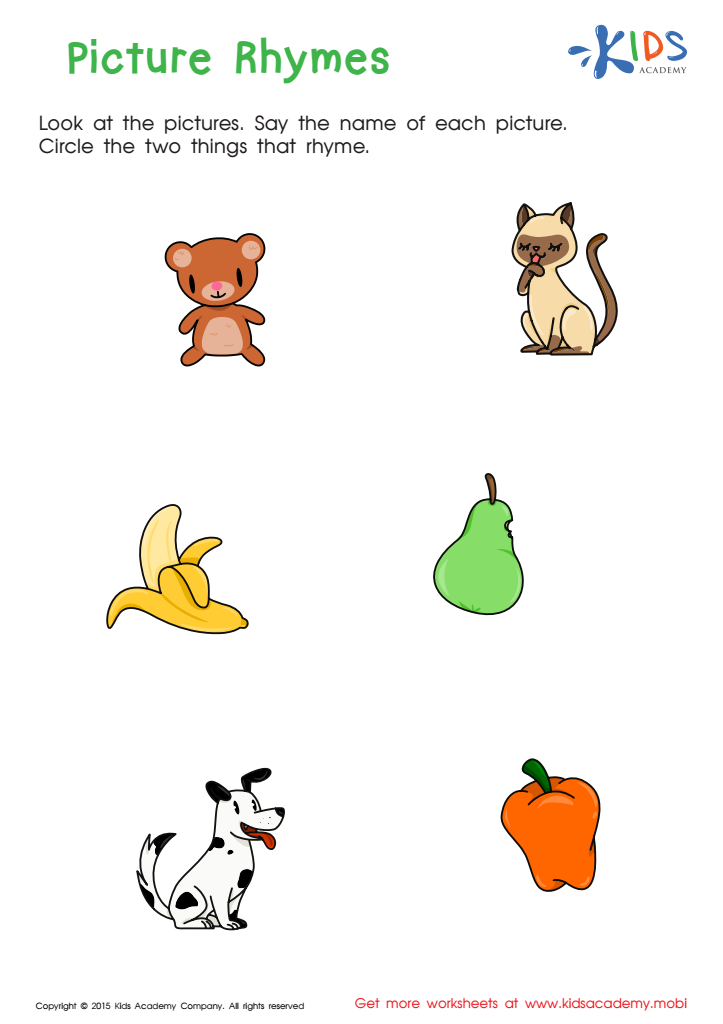
First Words: Picture Rhymes Worksheet


.jpg)





Sound recognition is a fundamental skill for early reading and language development, making it crucial for parents and teachers to prioritize this aspect for 4-year-olds. It involves recognizing and differentiating sounds, laying the groundwork for phonemic awareness, which is essential for children to decode words when they start reading. Mastering sound recognition helps children connect spoken language to written words, fostering their overall literacy skills.
At this age, young children are rapidly developing their cognitive abilities. Engaging with sound recognition through games, songs, and playful learning can enhance their listening skills, vocabulary, and comprehension. When children are encouraged to identify and manipulate sounds, such as rhyming words or syllables, they become more confident readers.
Furthermore, early intervention in sound recognition can help identify potential reading difficulties before they become more pronounced. Supporting a child's sound recognition journey ensures that they are well-prepared for the academic challenges ahead, promoting a lifelong love of reading.
Ultimately, prioritizing sound recognition in preschoolers enriches their learning experience, boosts their communication skills, and lays a strong foundation for their future educational success. Both parents and teachers play a vital role in nurturing these critical skills.








