Visual interpretation Normal Reading Worksheets for 4-Year-Olds
3 filtered results
-
From - To
Discover our engaging Visual Interpretation Normal Reading Worksheets designed specifically for 4-year-olds! These printable worksheets encourage young learners to enhance their reading skills through visual cues. Each worksheet features colorful illustrations and simple texts that spark imagination and promote comprehension. As children explore various scenarios, they develop critical thinking and visual literacy, essential building blocks for effective reading. Tailored for early learners, our materials foster a love for reading while ensuring that learning is both fun and interactive. Ideal for parents and educators alike, these worksheets make it easy to support the development of essential reading skills. Start your child’s reading journey today!
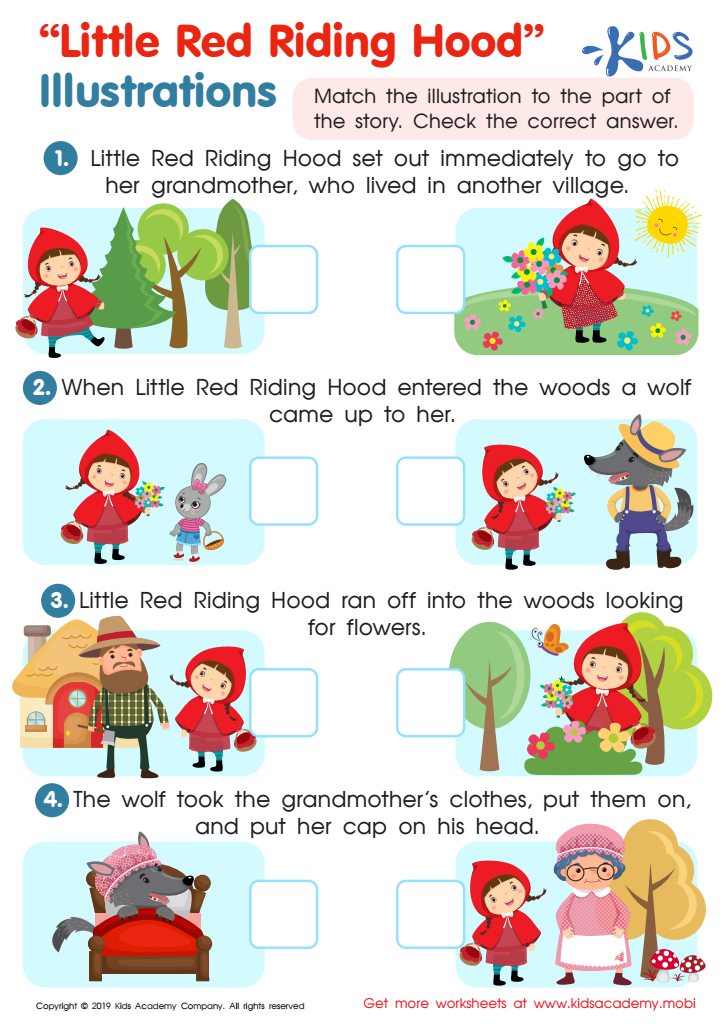
Little Red Riding Hood: Illustrations Worksheet
 Assign to My Students
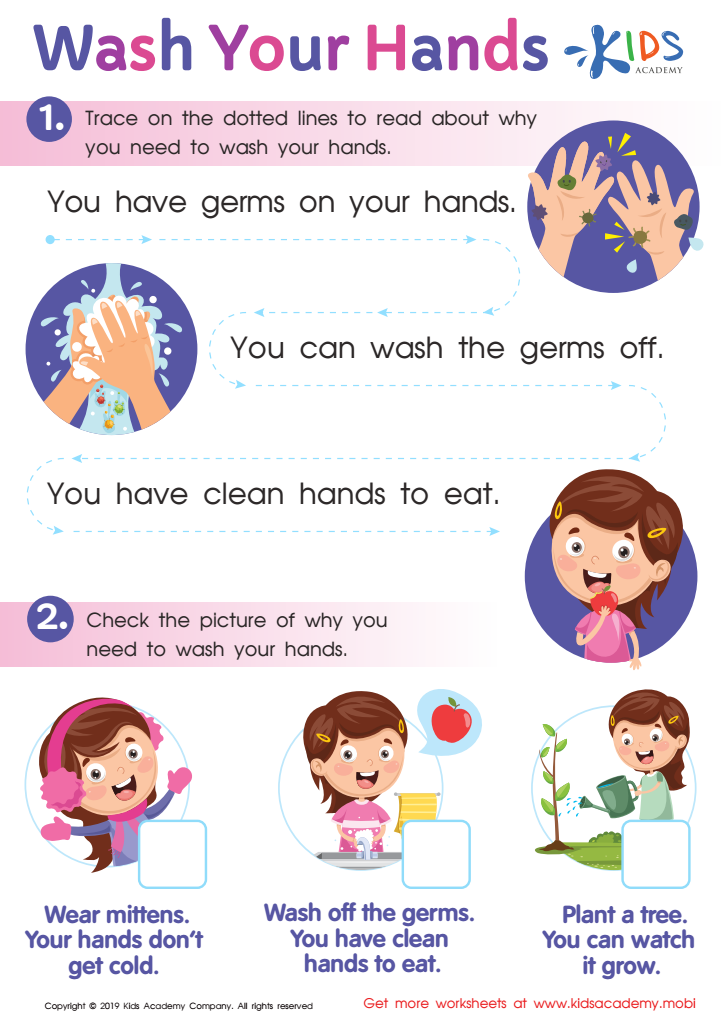
Wash Your Hands Worksheet
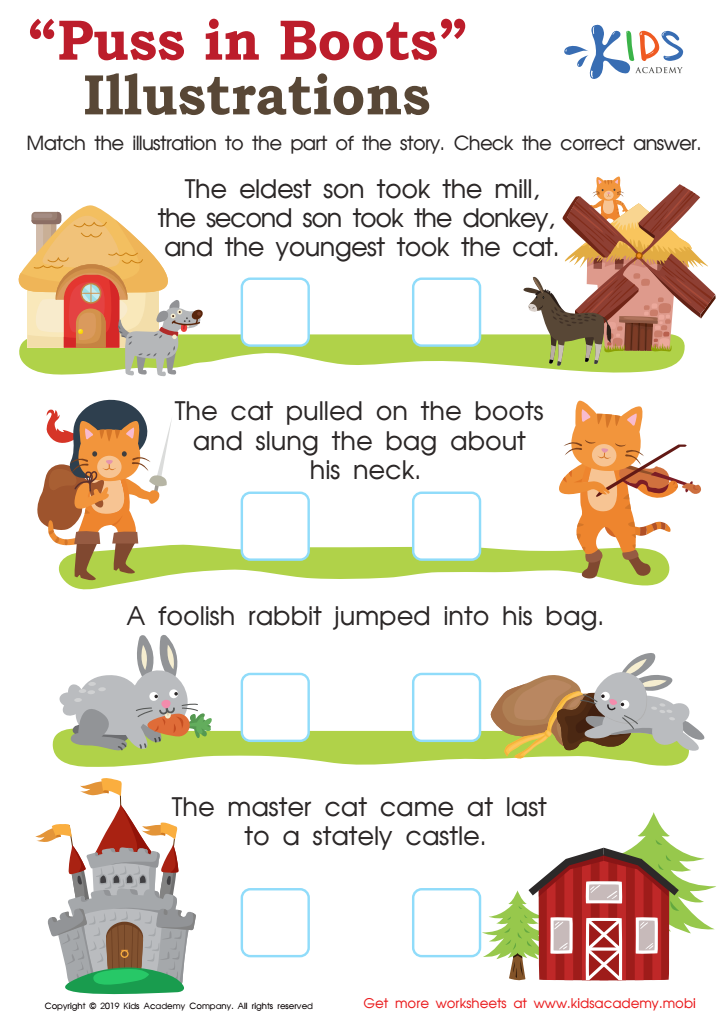
Puss in Boots Illustrations Worksheet







Visual interpretation is a critical skill for 4-year-olds, as it lays the foundation for future literacy and learning. At this age, children are highly visual learners; they make sense of their world through pictures, symbols, and visual cues. Understanding visual interpretation encourages not only reading skills but also critical thinking and comprehension.
Teaching children to interpret pictures and illustrations in books aids in developing their ability to predict outcomes and make connections with text, enhancing both their reading fluency and vocabulary. This skill allows them to decode simple narratives, fostering a love for reading that may continue into their later years.
Parents and teachers play a pivotal role in facilitating this learning. By engaging children in conversations about what they see in storybooks or visual media, caregivers can spark curiosity and dialogue, leading to a deeper understanding of content. Activities such as storytelling with imagery or asking open-ended questions about pictures reinforce these skills. Moreover, as children learn to interpret visuals, they gain confidence in their ability to communicate and express themselves.
In summary, fostering visual interpretation not only benefits reading abilities but also nurtures cognitive and emotional development in young children, making it essential for parents and teachers to prioritize this skill.








