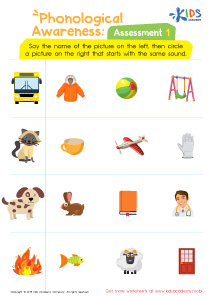
Reading readiness Normal Beginning Sounds Worksheets for Ages 5-6
3 filtered results
-
From - To
Enhance your child's reading readiness with our engaging Normal Beginning Sounds Worksheets, designed specifically for ages 5-6. These worksheets introduce young learners to the foundational skills of identifying and practicing initial sounds in words. With colorful illustrations and interactive activities, children will develop phonemic awareness through a playful approach that fosters a love for reading. Each worksheet aligns with early literacy standards, helping kids identify letters and match them with corresponding images. Perfect for home or classroom use, these resources support cognitive development and encourage kids to take their first steps towards reading fluency. Get started on this exciting learning journey today!
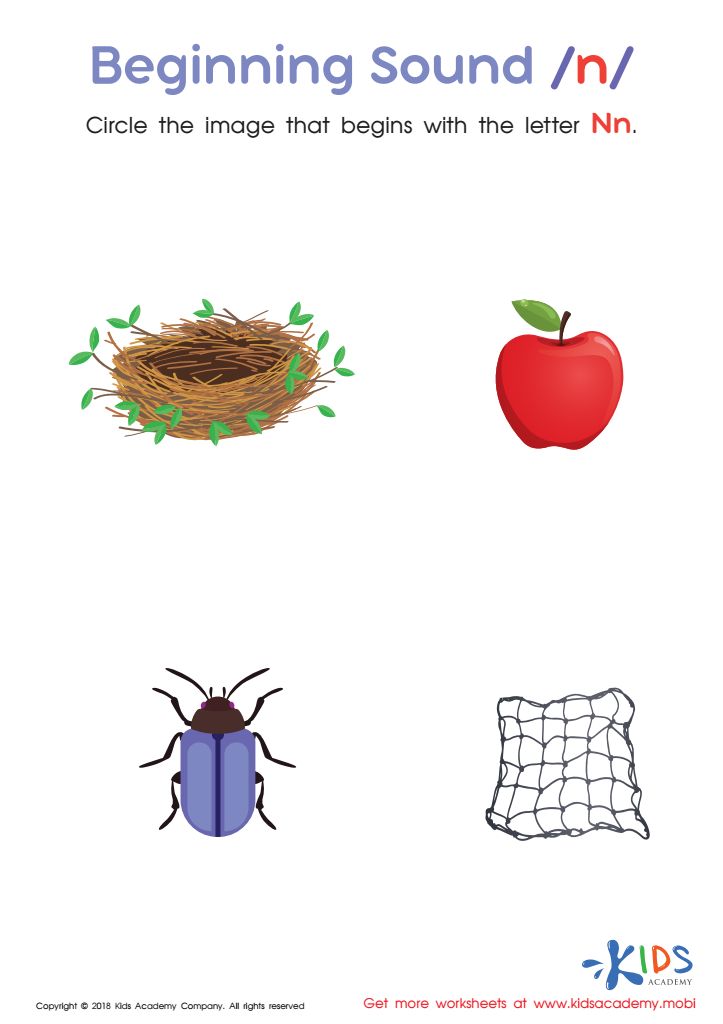
Beginning Sound «n» Worksheet
 Assign to My Students
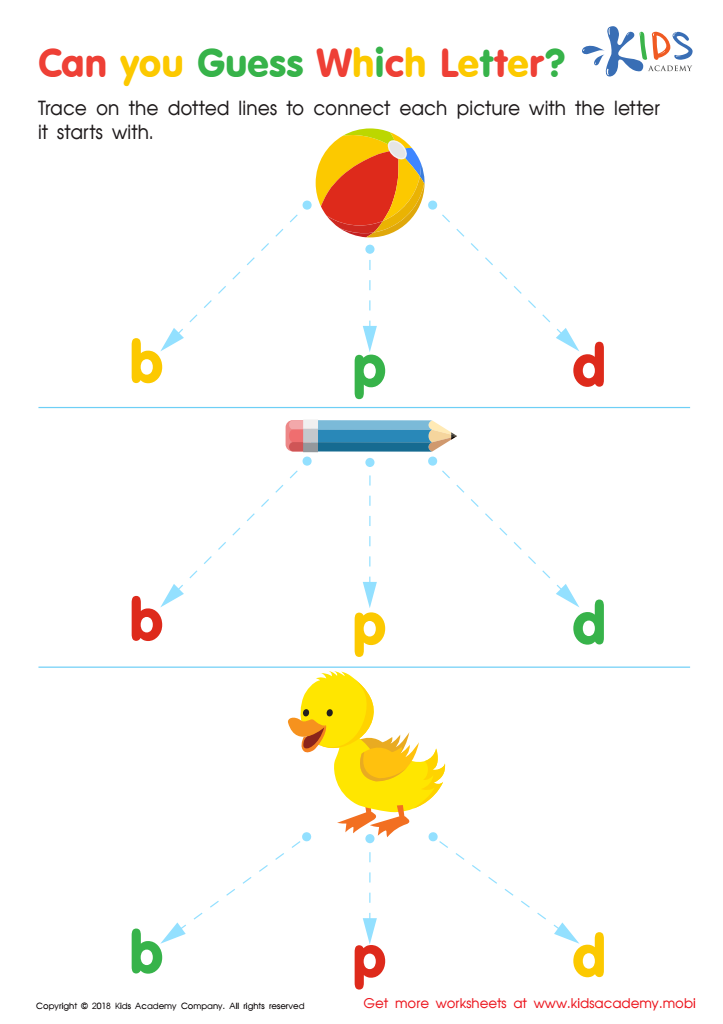
Can you Guess Which Letter? Worksheet
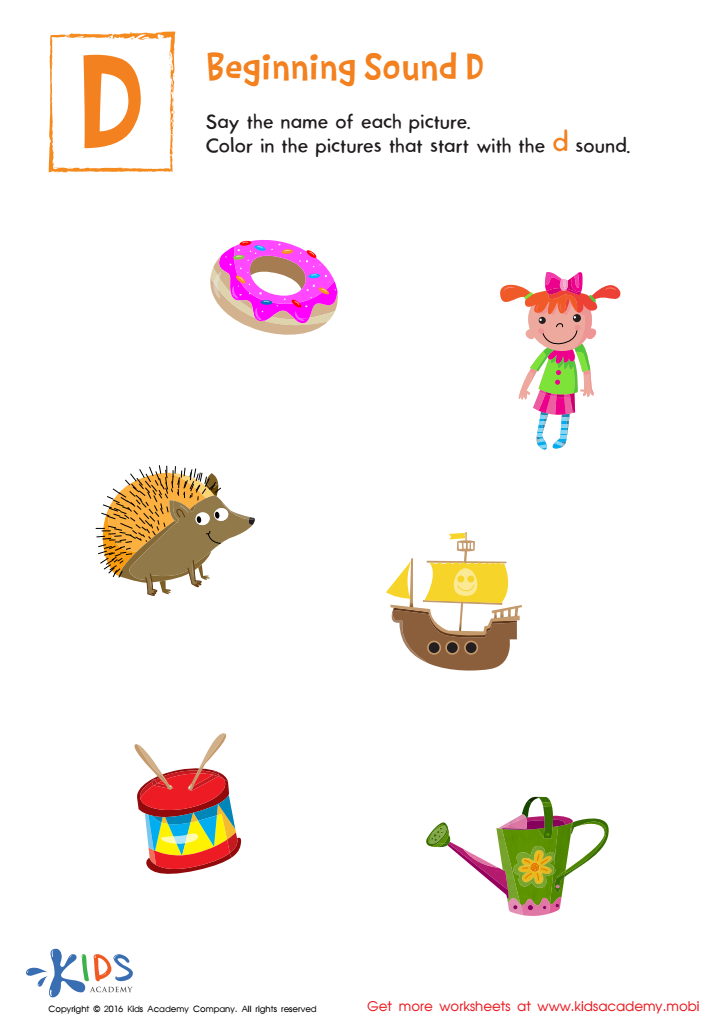
Beginning Sound D Worksheet








Reading readiness, particularly concerning normal beginning sounds, is a crucial aspect of early literacy development for children aged 5-6. At this age, children are forming the foundation for their reading skills, and understanding phonemic awareness—specifically how sounds correspond to letters—is paramount. Parents and teachers should care about this because mastering beginning sounds enables children to decode words, making it easier for them to connect spoken language to written text.
When children recognize and articulate beginning sounds, they become more confident in their reading abilities, which is vital for their overall academic success. This skill is not only tied to reading but also supports spelling and writing proficiency. Engaging children in activities that promote sound recognition, such as rhymes, songs, and phonics games, is essential to developing their analytical skills necessary for reading.
Additionally, supporting reading readiness helps to instill a love for literacy early on, encouraging lifelong learning habits. By focusing on beginning sounds, parents and teachers empower children, building a strong literacy foundation that benefits their cognitive development across various subjects as they progress in their education. Ultimately, fostering these skills sets children on a path to succeed in school and beyond.