Phonics improvement Normal Alphabet Worksheets for Ages 5-6
3 filtered results
-
From - To
Enhance your child's phonics skills with our engaging Normal Alphabet Worksheets, designed for children ages 5-6. These worksheets focus on phonics improvement, helping young learners master letter sounds and develop essential reading abilities. Featuring fun activities and vibrant illustrations, each worksheet captures children's attention and makes learning enjoyable. Our carefully crafted exercises encourage phonetic recognition, sound-letter mapping, and blending skills, laying a strong foundation for literacy. Perfect for parents and educators, these printable resources make it easy to support your child's learning journey at home or in the classroom. Boost your little one's confidence and literacy with our phonics-focused curriculum!
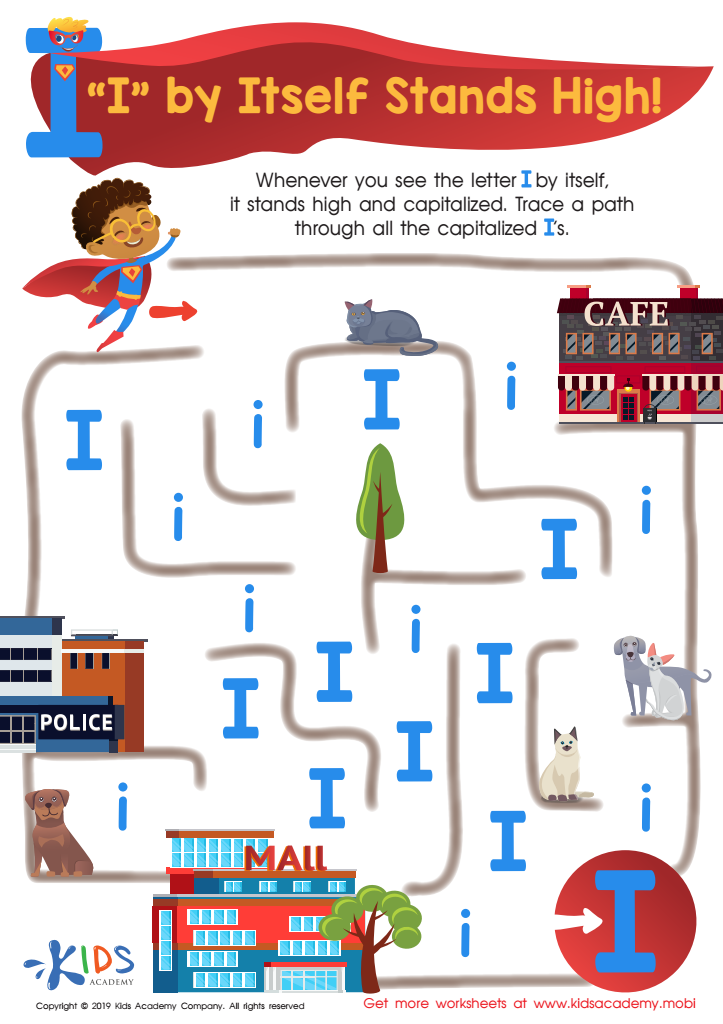
I Stands High Worksheet
 Assign to My Students
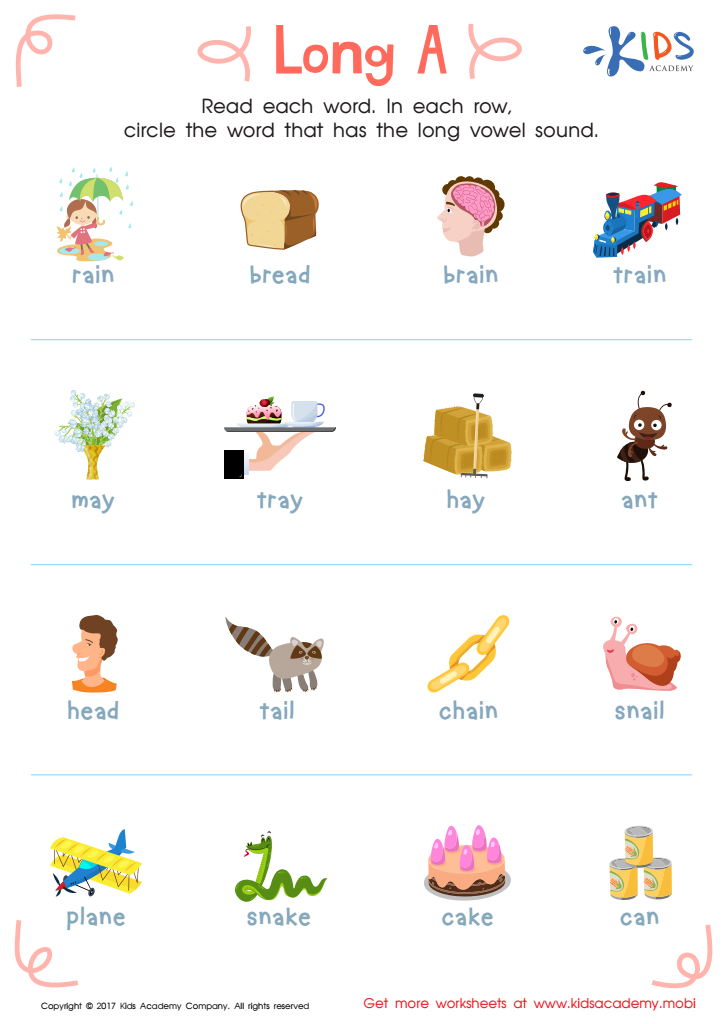
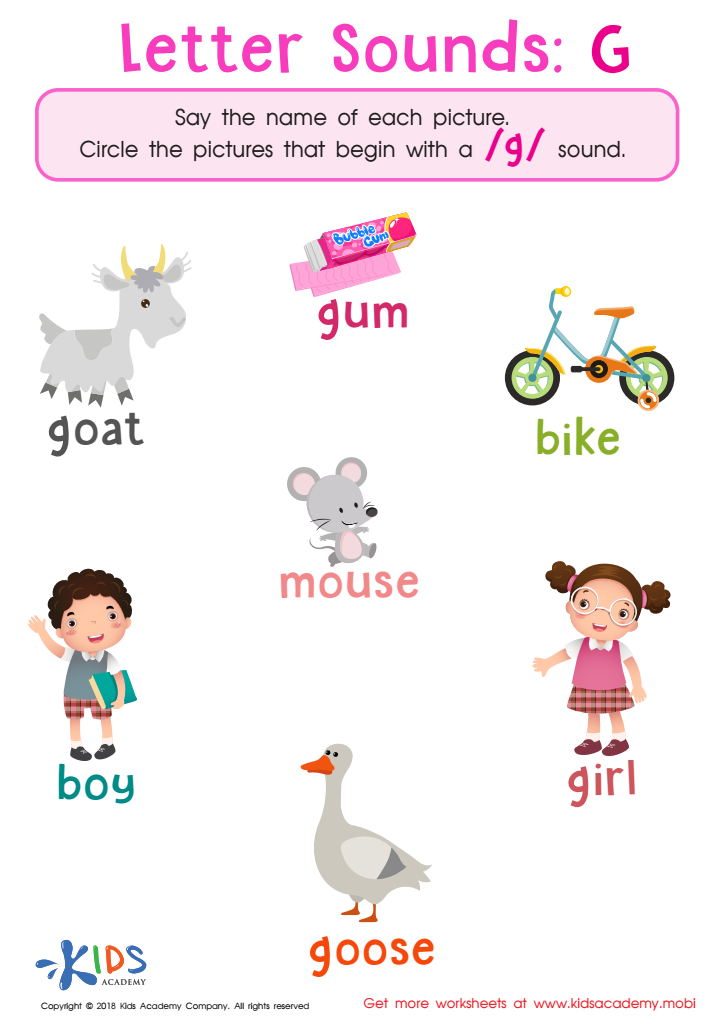
Letter G Sounds Worksheet








Phonics is a foundational skill in early literacy, crucial for children ages 5-6 as they begin to read and write. At this age, children are developing their understanding of how letters represent sounds, which is essential for decoding simple words. When parents and teachers focus on phonics improvement, they foster essential skills that support reading fluency and comprehension.
Strong phonics instruction helps children recognize patterns, blending sounds to form words effortlessly. This strategy promotes confidence and independence in reading, encouraging a lifelong love for books and learning. Moreover, good phonics skills lay the groundwork for future academic success, reducing the risk of reading difficulties later on and enhancing performance in other subjects.
Involving parents in this process can deepen comprehension and reinforce learning at home, promoting a unified approach to literacy development. Teachers benefit from collaborating with parents, ensuring consistency in methods and techniques.
Ultimately, prioritizing phonics improvement empowers children to explore their world through reading and writing, enhances their communication skills, and unlocks endless opportunities for creativity, understanding, and inquiry. Therefore, both parents and teachers should take an active role in supporting phonics in these crucial early years.







