
Reading practice Normal Alphabet Worksheets for Ages 5-6
4 filtered results
Difficulty Level
Grade
Age
-
From - To
Subject
Activity
Standards
Discover our engaging Reading Practice Normal Alphabet Worksheets designed specifically for children ages 5-6. These worksheets provide an exciting way for young learners to enhance their reading skills through fun activities that focus on letter recognition and phonemic awareness. Packed with colorful illustrations and relatable themes, our resources aim to make learning enjoyable and effective. As children navigate through tracing, matching, and identifying letters, they'll build confidence in their reading abilities while reinforcing foundational literacy skills. Perfect for both classroom and home use, these worksheets offer an excellent opportunity for pre-reading practice, ensuring your child is well-prepared for future learning adventures!
Favorites
With answer key
Interactive
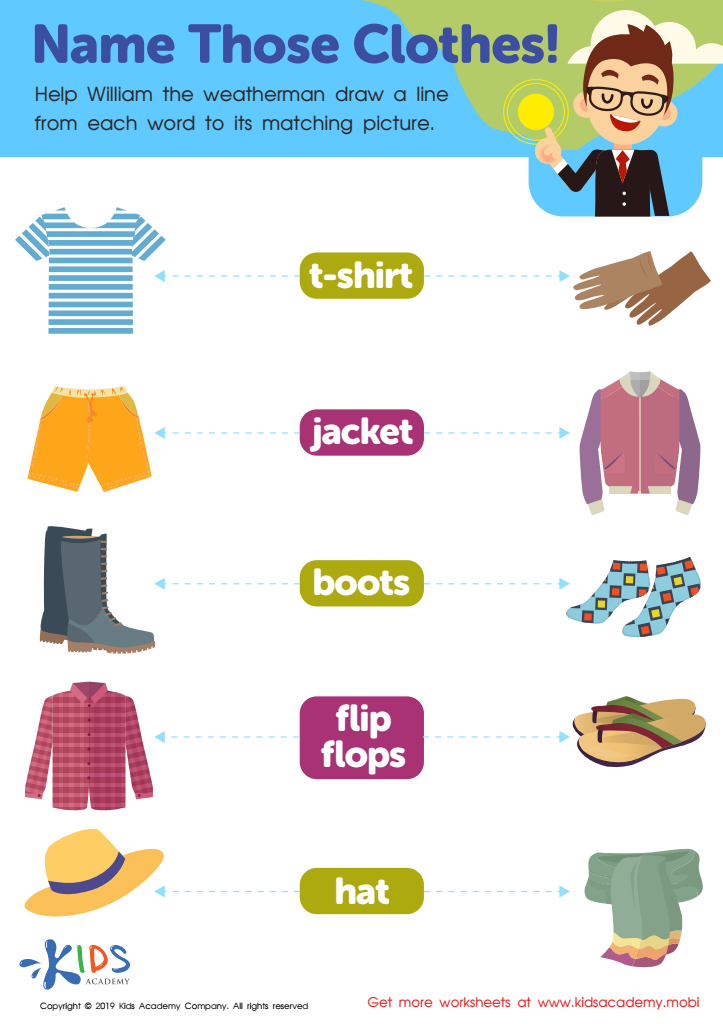
Name Those Clothes Worksheet
This worksheet will help your preschooler build their vocabulary, develop life-skills and work on fine motor skills. They'll analyze which clothing goes with the weatherman and match it to the word. It's a fun and interactive way to recognize high-frequency words.
 Assign to My Students
Name Those Clothes Worksheet
Worksheet
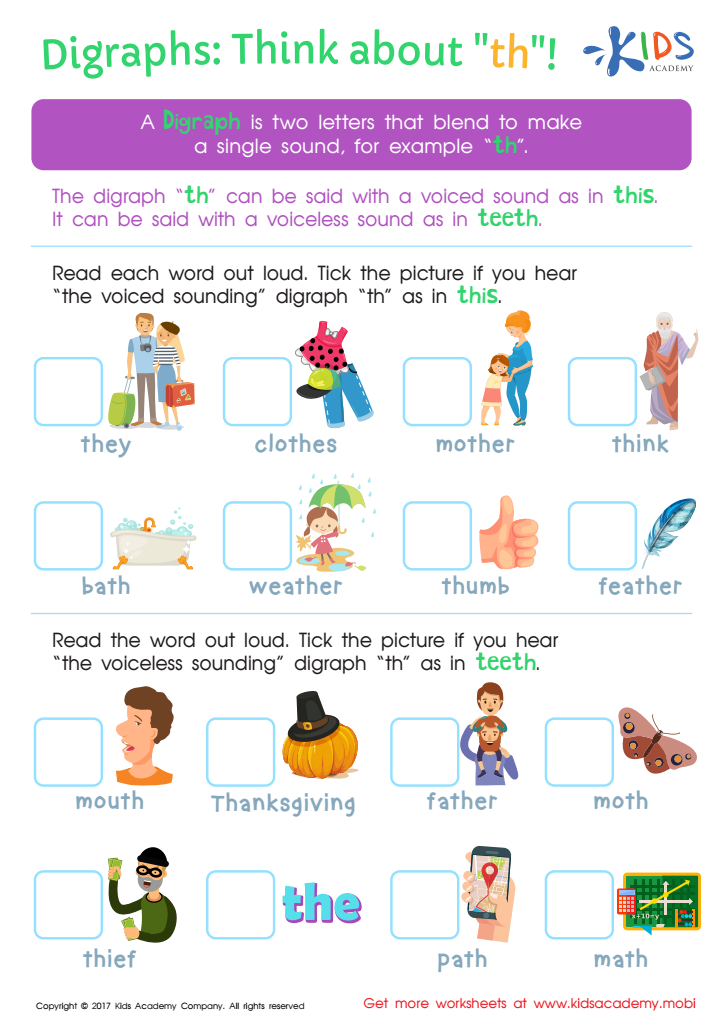
Digraphs: Think About "th" Worksheet
Help your child master phonics with this illustrated digraph Th printable worksheet. It will help recognize "Th" words, differentiate voiced and voiceless sounds and understand key concepts. Use similar words while they work to reap its full benefits!
Digraphs: Think About "th" Worksheet
Worksheet
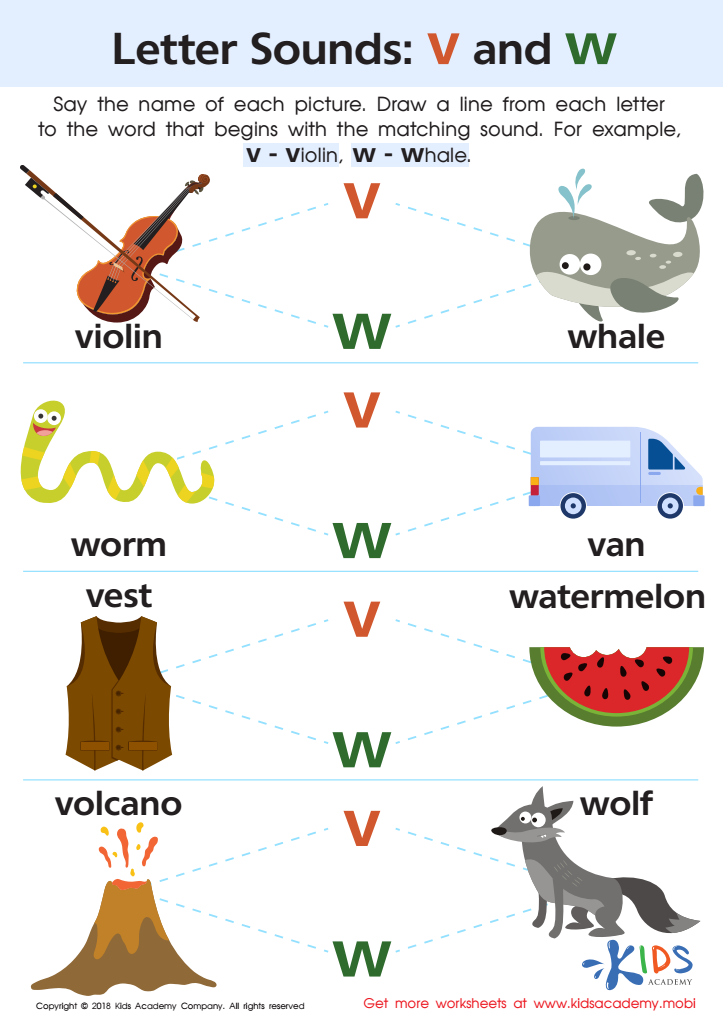
Letter V and W Sounds Worksheet
Help your child master the sounds of W & V while completing this fun phonics worksheet. Have them trace the dotted line from letter to picture while saying words like "worm", "violin" and "van" aloud to notice how each word begins with either W or V. Listen and pay attention to the pronunciation to complete the practice.
Letter V and W Sounds Worksheet
Worksheet
Join Kids Academy for Free
Who is primarily going to use this learning content?








Reading is a fundamental skill that lays the groundwork for a child's future academic success and overall development. For ages 5-6, practicing with the Normal Alphabet is particularly crucial as this stage encompasses major cognitive and linguistic milestones. At this age, children develop phonemic awareness, which helps them decode words and understand how letters combine to form sounds.
When parents and teachers prioritize reading practice, they contribute to a child’s vocabulary expansion and comprehension skills. Engaging with books together boosts confidence and fosters a love for reading, encouraging them to explore stories and information beyond their immediate environment.
Additionally, reading practice assists in building fine motor skills through writing and tracing activities. It promotes social skills through shared reading experiences and discussions about stories, enhancing emotional intelligence as children connect with characters and their journeys.
Ultimately, prioritizing reading with the Normal Alphabet cultivates a strong literacy foundation from an early age. This early exposure to reading influences academic performance, encouraging lifelong learners who are equipped to navigate an increasingly complex world. By nurturing these skills, both parents and teachers play a vital role in shaping confident, capable readers prepared for future educational challenges.







