
Alphabet Learning Normal Letter Recognition Worksheets for Ages 5-6
3 filtered results
Difficulty Level
Grade
Age
-
From - To
Subject
Activity
Standards
Discover engaging Alphabet Learning Normal Letter Recognition Worksheets designed for children ages 5-6. Our specially crafted worksheets help young learners effortlessly recognize and master uppercase and lowercase letters. These printable resources provide a variety of fun activities to enhance letter recognition skills, including tracing, matching, and identification exercises. Perfectly aligned with early learning standards, these worksheets support literacy development and foster a strong foundation for future reading and writing success. Ideal for home or classroom use, start your child's alphabet learning journey today with our expert-developed, kid-friendly worksheets!
Favorites
With answer key
Interactive
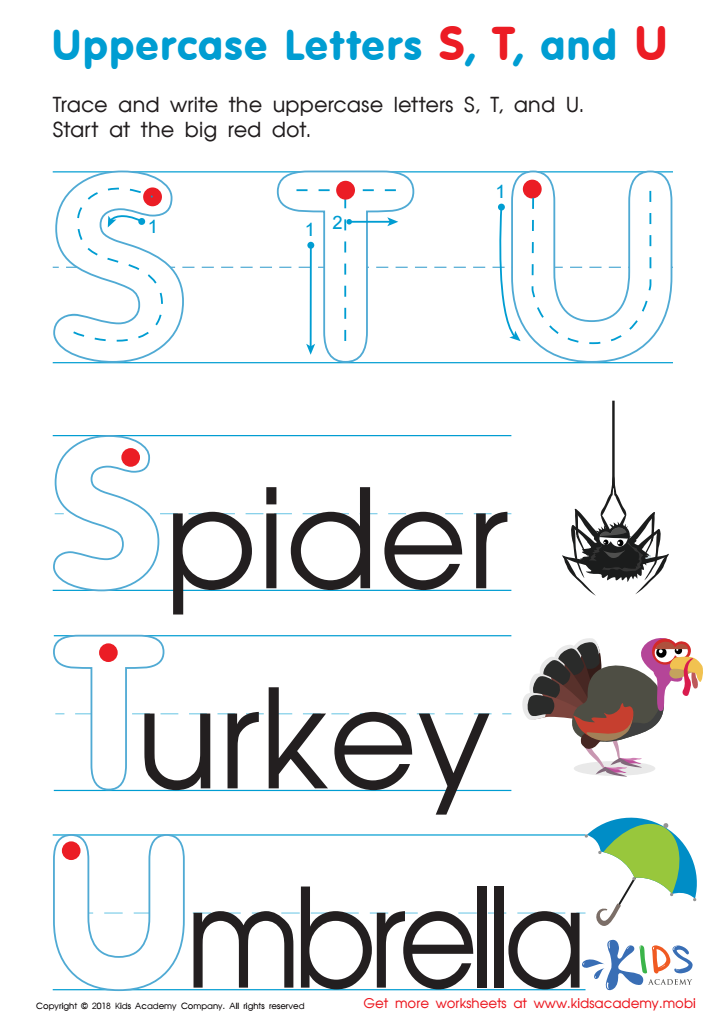
Uppercase Letters S, T, and U Worksheet
Help your kids learn to write upper-case letters with this fun tracing sheet. Start at the big red dot for each letter: S, T, and U. Show them the pictures and ask what letter each word starts with. Guide their hand and watch them learn!
 Assign to My Students
Uppercase Letters S, T, and U Worksheet
Worksheet
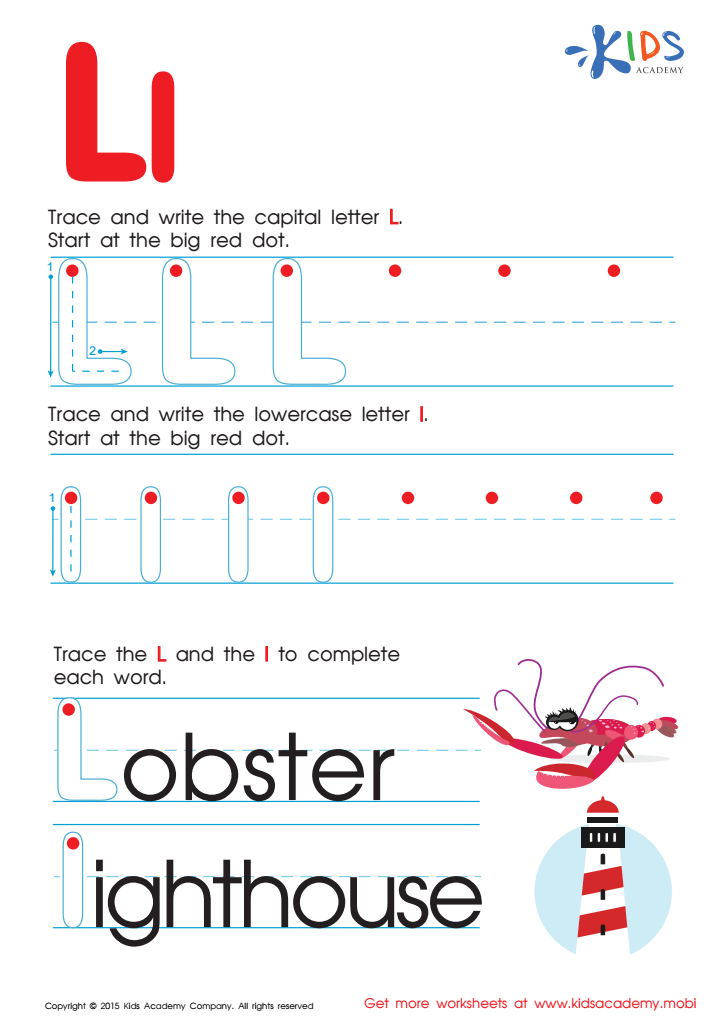
Letter L Tracing Page
Trace uppercase and lowercase letters to practice writing. Pay attention to the lowercase letters, like the "L", that are not as tall as an uppercase "I" or as short as a lowercase "i". Words like "lobster" and "lighthouse" are waiting to be completed. Enjoy!
Letter L Tracing Page
Worksheet
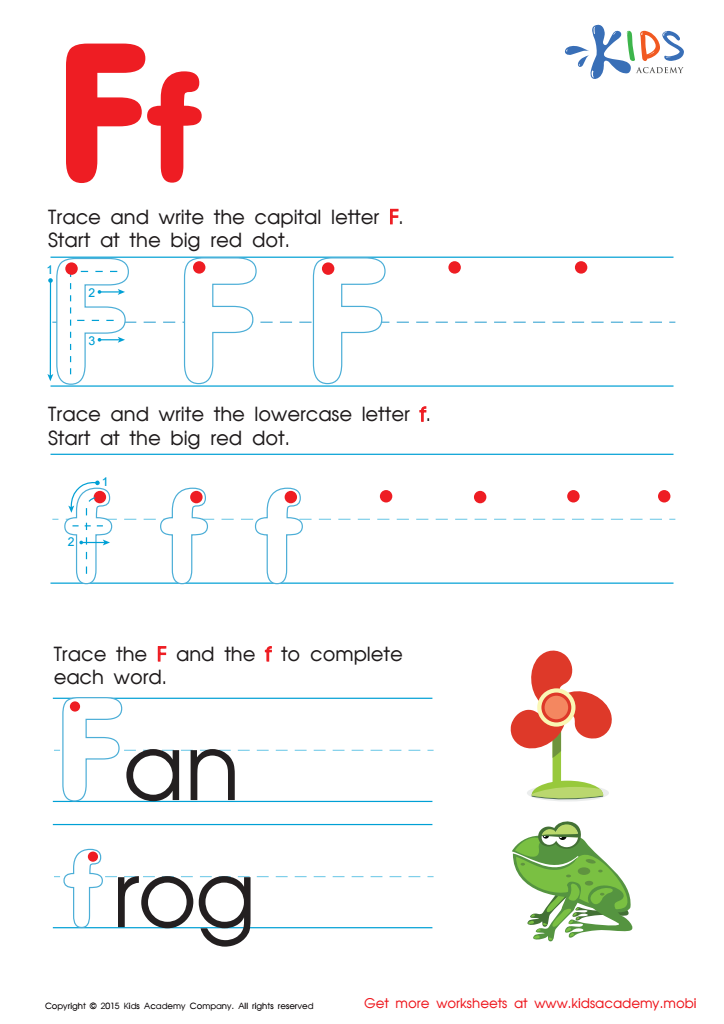
Letter F Tracing Page
Trace "F" with your pencil! Start at the red dot and draw lines — it's fun! Check it out — it looks great! Keep practicing to make it even better. Then, try completing words. Help out the broken fan and funny frog! Get free alphabet worksheets and activities for your kids. Come see our new tracing pages!
Letter F Tracing Page
Worksheet
Join Kids Academy for Free
Who is primarily going to use this learning content?








Parents and teachers should prioritize Alphabet Learning and Normal Letter Recognition for children ages 5-6 because it forms the foundation for literacy skills which are critical for academic success. This age is a pivotal developmental period when children’s brains are exceptionally receptive to acquiring new information. Recognizing letters accurately and understanding their sounds are prerequisites for phonemic awareness, the ability to hear and manipulate individual sounds in words, which is vital for reading and spelling proficiency.
Early letter recognition skills build confidence and curiosity, making learning engaging and less frustrating. Noticing letter shapes and associating them with sounds helps children begin to decode words, a skill that students will use throughout their entire school careers. Adept readers emerge from solid early literacy skills and tend to excel in other content areas, given that reading is the gateway to learning a multitude of subjects.
Moreover, early recognition and successful interaction with letters can prevent future learning difficulties. Studies show that children who lag in literacy skills often face prolonged academic challenges. By ensuring that children achieve normal letter recognition at the optimal age, parents and teachers contribute significantly to their overall cognitive development, fostering a love for reading and learning that can persist throughout their lives.








