Filters

30 filtered results

Clear all filters
Favorites
With answer key
Interactive

30 filtered results

Difficulty Level

Grade


Check out this FREE Trial Lesson on Letter Recognition for age 5-6!

H

Favorites
With answer key
Interactive
  • 5-6
  • Alphabet Recognition
  • Letter Recognition
  • Normal
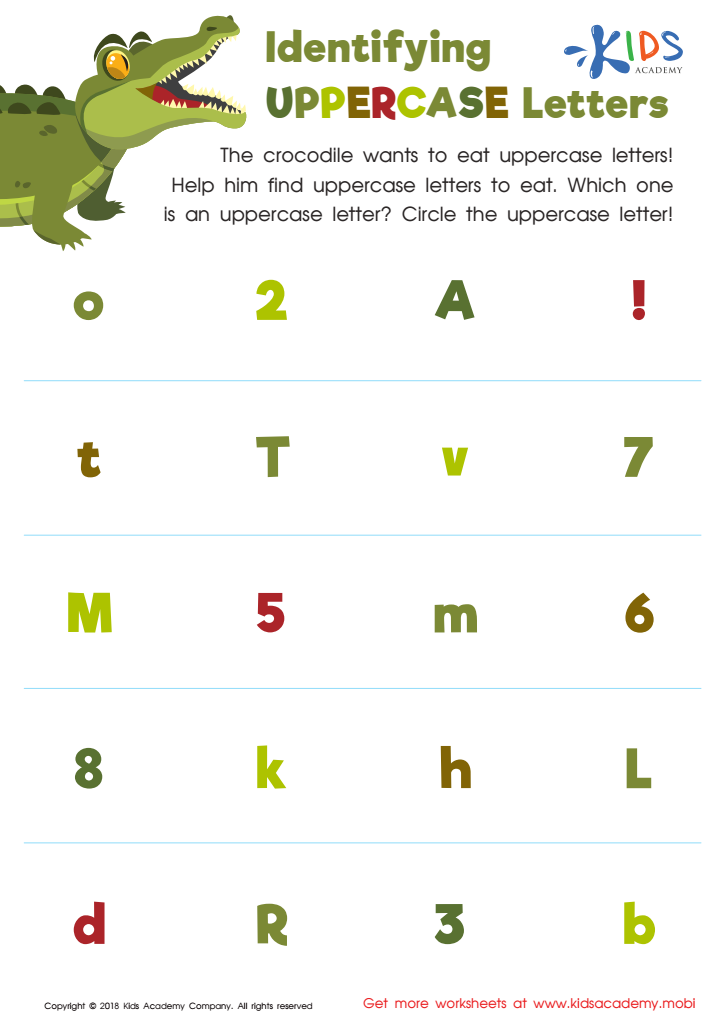
Identifying Uppercase Letters Worksheet Preview

Identifying Uppercase Letters Worksheet

It's essential for kindergarteners to know the distinction between uppercase and lowercase letters. This skill will aid them when starting to write. They can practice by selecting the uppercase letters among a mix of lowercase, uppercase letters and numbers. Whatever their level of learning, give your child confidence with this PDF!
Identifying Uppercase Letters Worksheet
Worksheet
Letter H Coloring Page

Letter H Coloring Sheet

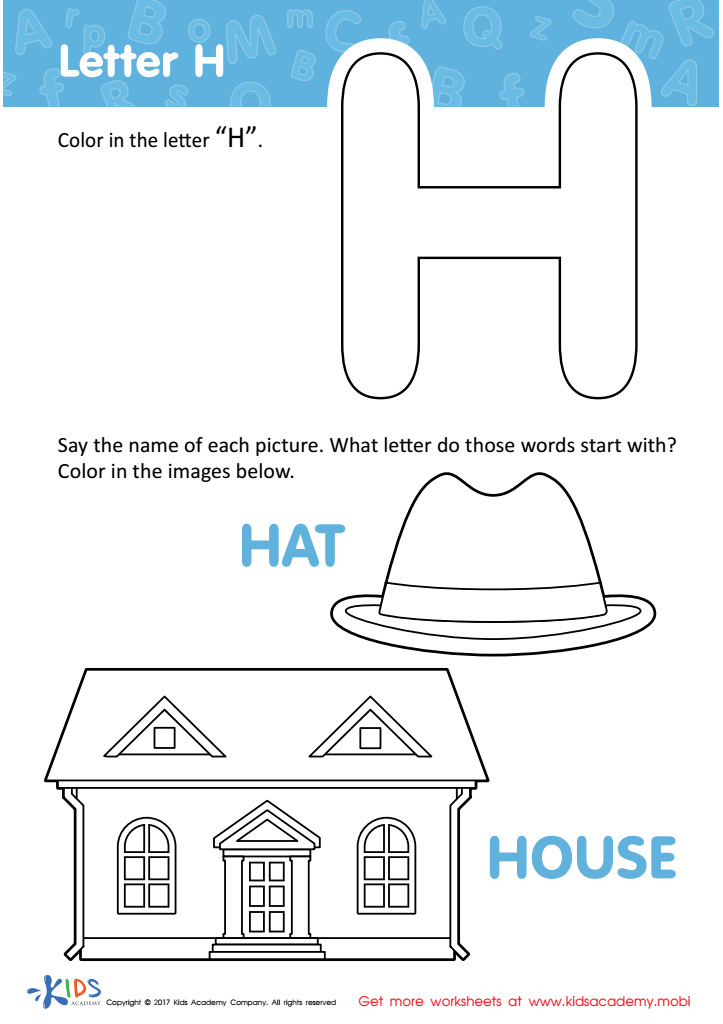
This fun "H" coloring page will help your child recognize the letter and sound of "H"! With a hat and house to color, your little learner will have a blast picking colors and creating designs, all while learning about the letter "H"!
Download (PDF)
Assign to My Students
Letter H Coloring Sheet
Worksheet
Letter A Coloring Page

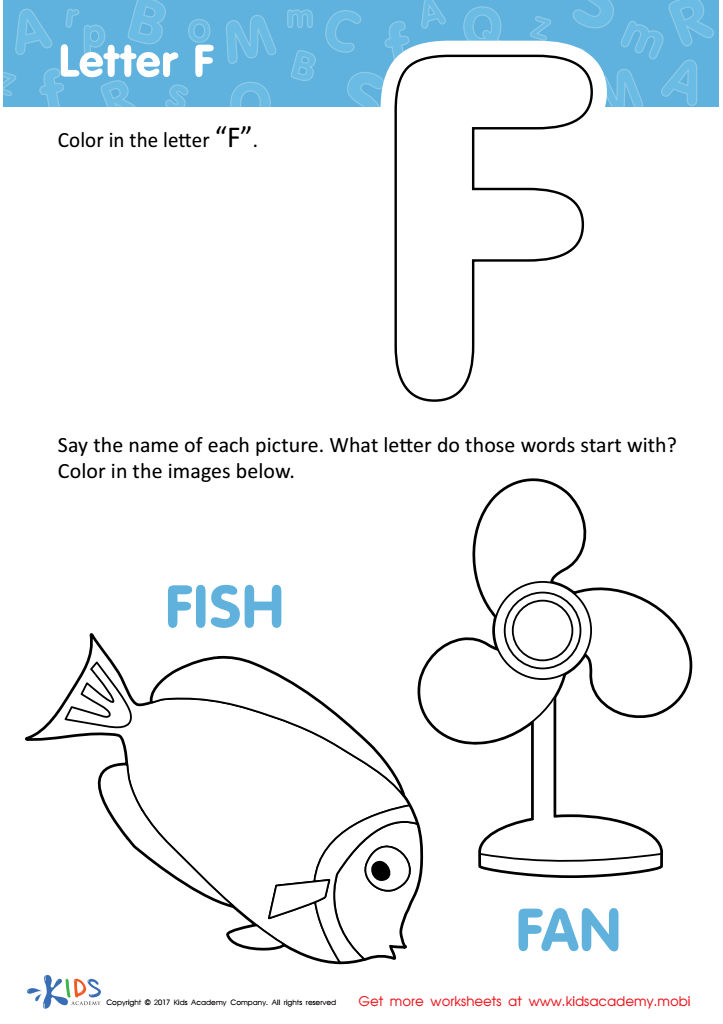
Letter F Coloring Sheet

Coloring pages help kids learn to recognize letters and sounds. Our "F" page has kids color a fish and a fan. It's a great way to introduce them to the letter "F" using words they already know.
Download (PDF)
Assign to My Students
Letter F Coloring Sheet
Worksheet
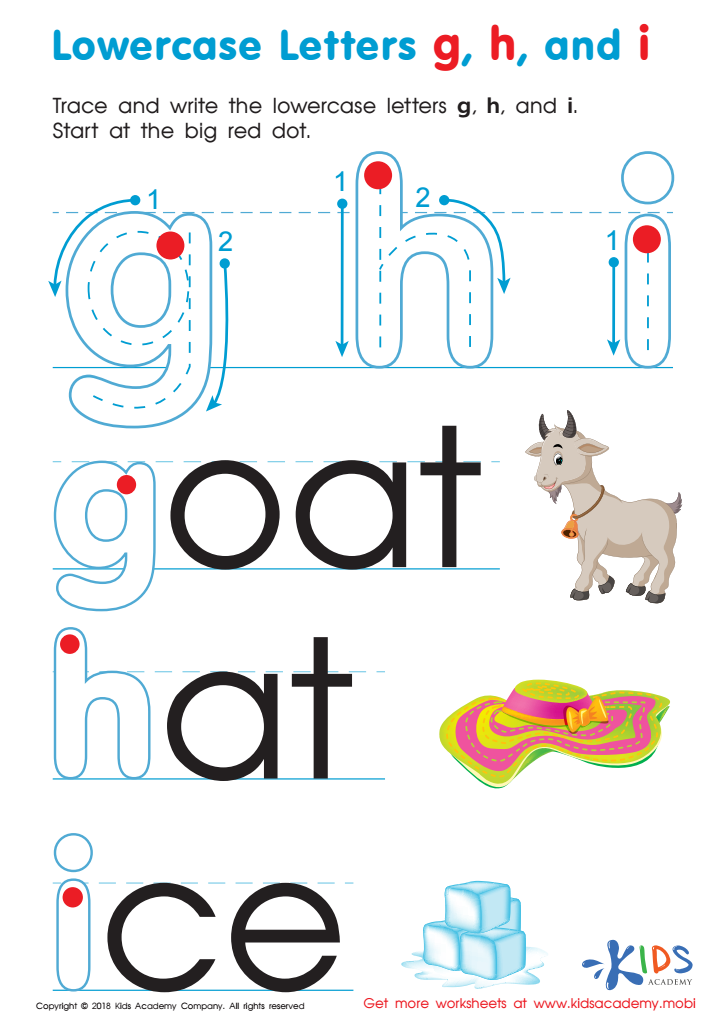
Lowercase Letters g h i Worksheet

Lowercase Letters g h i Worksheet

Learning is fun for your youngster with color and an enjoyable exercise. Help them build their understanding of the alphabet by starting at the big red dot drawn on each letter and carefully following the dotted lines to draw g, h, and i.
Lowercase Letters g h i Worksheet
Worksheet
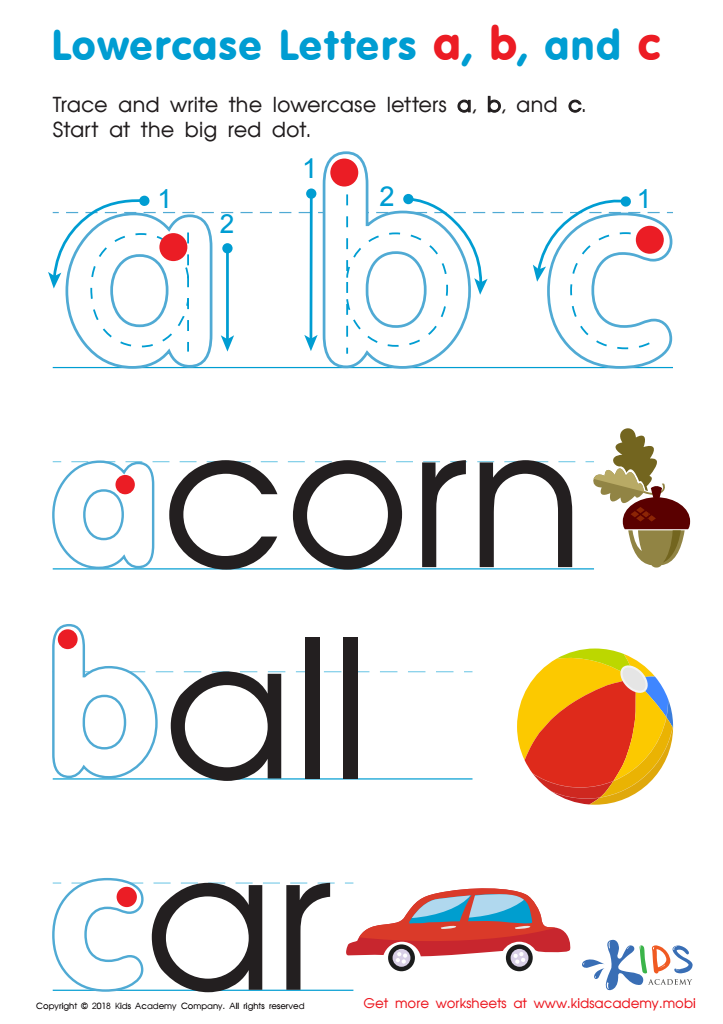
Lowercase Letters a b c Worksheet

Lowercase Letters a b c Worksheet

Help your child trace and write the lowercase letters of the alphabet with this fun worksheet. Start by following the arrows and directions from the red dot, and watch them improve their writing skills! Vibrant illustrations make it easy and enjoyable.
Lowercase Letters a b c Worksheet
Worksheet
Uppercase Letters V, W, and X Worksheet


Uppercase Letters V, W, and X Worksheet

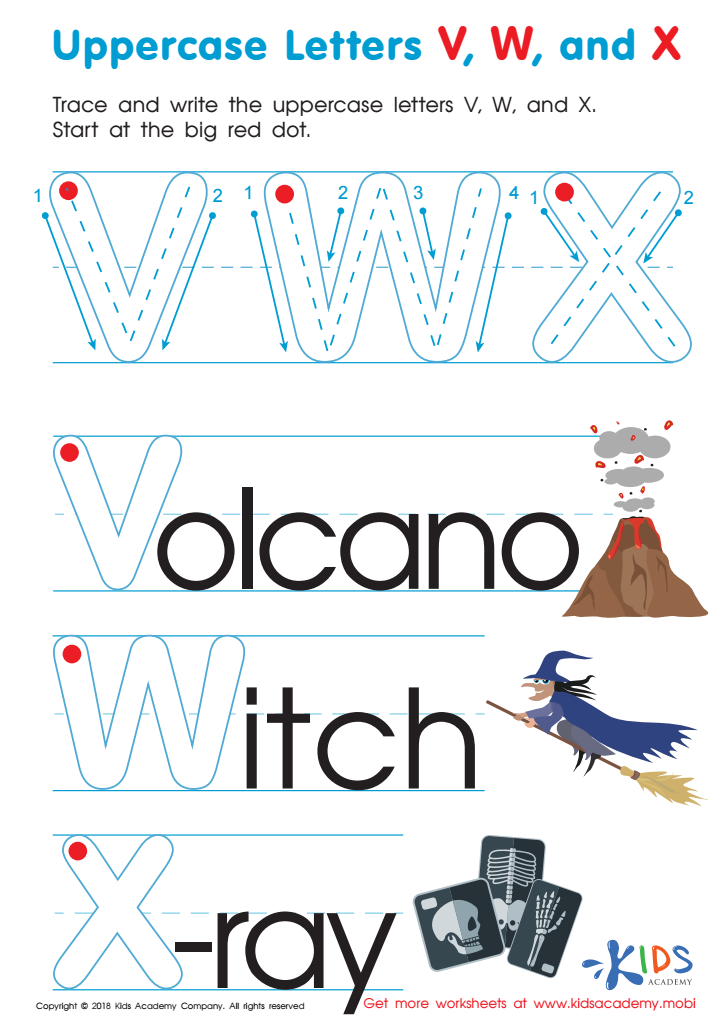
This worksheet is perfect for kids struggling to write uppercase letters V, W, and X. Warm up their brains first by having them name words starting with these letters. Then, help them trace and write each letter from the big red dot. With your assistance, they will quickly sharpen their writing skills.
Uppercase Letters V, W, and X Worksheet

Worksheet


Alphabet recognition and normal letter recognition are vital skills for children aged 5-6, as they serve as foundational elements for literacy development and future academic success. At this age, children are typically in the early stages of learning to read and write, making these skills critical for effective communication.

When parents and teachers emphasize alphabet recognition, they help children understand that letters are not just shapes; they represent sounds that combine to form words. This understanding enhances phonemic awareness, which is essential for reading proficiency. Moreover, recognizing letters allows children to begin writing their names and basic words, laying the groundwork for more complex writing skills.

Furthermore, familiarity with letter recognition fosters confidence, encouraging children to engage with books and written materials actively. This engagement can spark a lifelong love of reading and learning, which significantly influences and improves academic competencies in various subjects.

Additionally, letter recognition can enhance fine motor skills as children practice writing. By prioritizing these skills, parents and teachers play a crucial role in building strong literacy foundations, enabling children to thrive not only academically but also in their everyday lives as effective communicators. Focusing on alphabet recognition creates positive learning experiences, empowering children for future success.