
Alphabet understanding Normal Letter Recognition Worksheets for Ages 5-6
5 filtered results
Difficulty Level
Grade
Age
-
From - To
Subject
Activity
Standards
Our "Alphabet Understanding: Normal Letter Recognition Worksheets for Ages 5-6" are specially designed to boost your child's early literacy skills. Engaging and educational, these worksheets help young learners master letter recognition, both uppercase and lowercase, through fun activities. From tracing letters to identifying them in different contexts, each worksheet strengthens your child's ability to recognize, write, and understand the alphabet. Perfect for use at home or in the classroom, our worksheets ensure foundational learning that paves the way for reading success. Give your child the tools they need to become confident, proficient readers with our expertly crafted resources.
Favorites
With answer key
Interactive
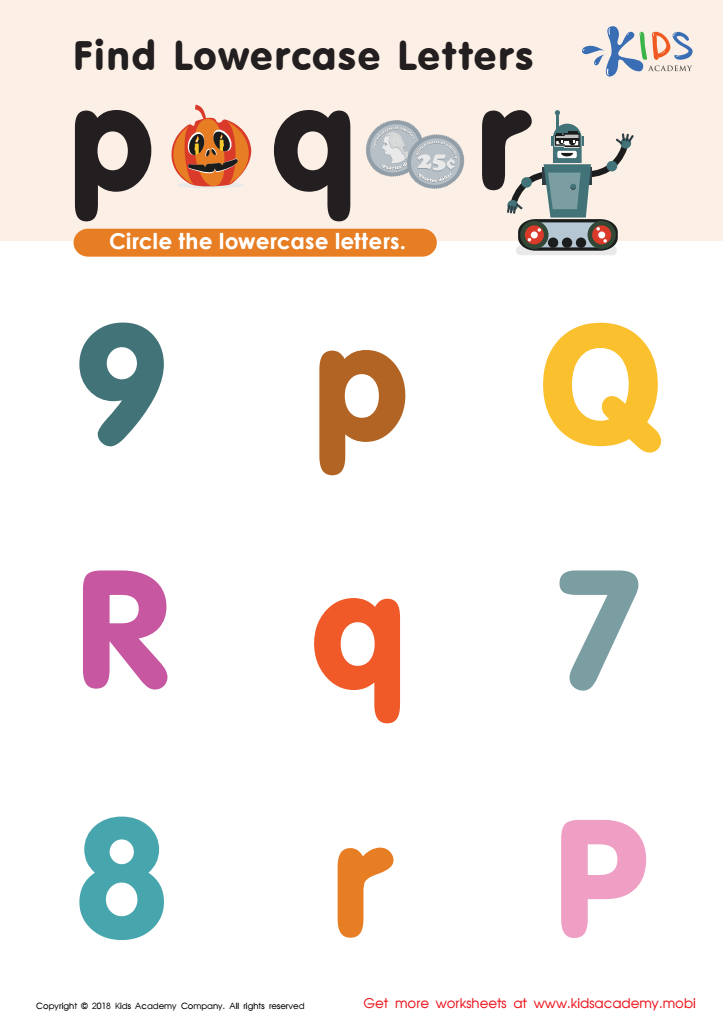
Find lowercase Letters p q r Worksheet
Help your child spot the lowercase letters among the numbers and uppercase letters in this worksheet. It's a great way to teach them to identify and write the lowercase and uppercase letters. Assist them in completing the exercise to give them a better understanding of the alphabets.
 Assign to My Students
Find lowercase Letters p q r Worksheet
Worksheet
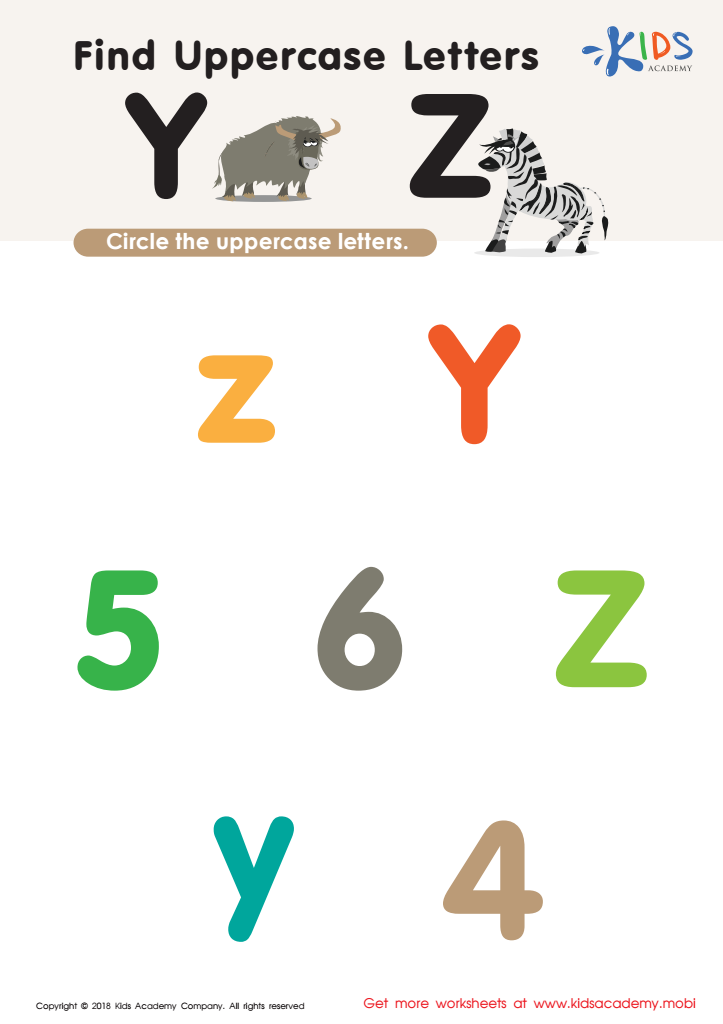
Find Uppercase Letters Y Z Worksheet
Download the worksheet! Help your youngster to learn the alphabet and distinguish uppercase from lowercase letters by having them circle the uppercase ones. It's an important first step towards reading and writing success!
Find Uppercase Letters Y Z Worksheet
Worksheet
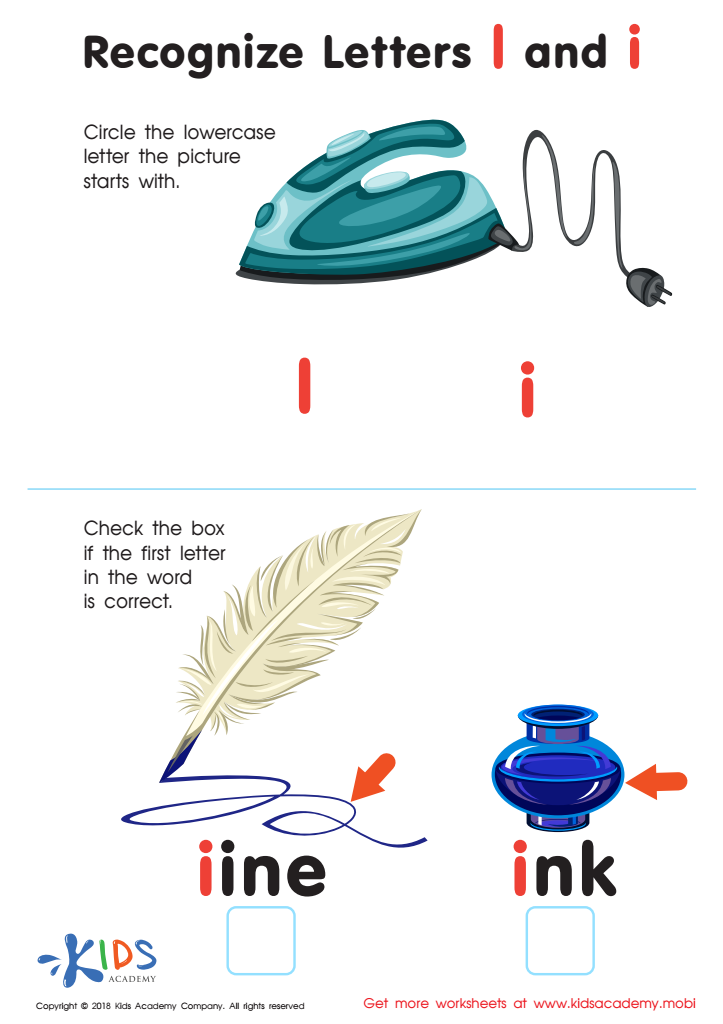
Recognize Letters l and i Worksheet
Help your child become familiar with uppercase and lowercase letters. Have them look at the pictures in the worksheet and circle the lowercase letter the picture starts with. For example: which one is the lowercase "i", the capital "I" or the small "i"?
Recognize Letters l and i Worksheet
Worksheet
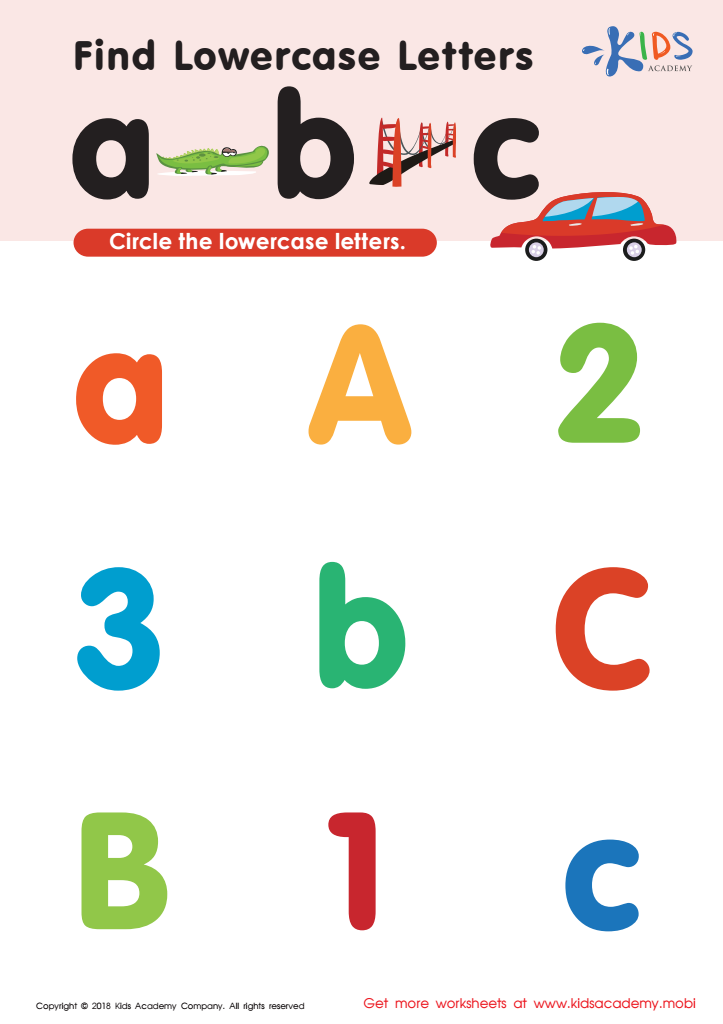
Find lowercase letters a b c Worksheet
Help your child identify lowercase letters with this worksheet. Carefully look at each letter and have your child circle the lowercase ones. This exercise is vital in helping them understand the alphabet and the difference between lower and uppercase letters.
Find lowercase letters a b c Worksheet
Worksheet
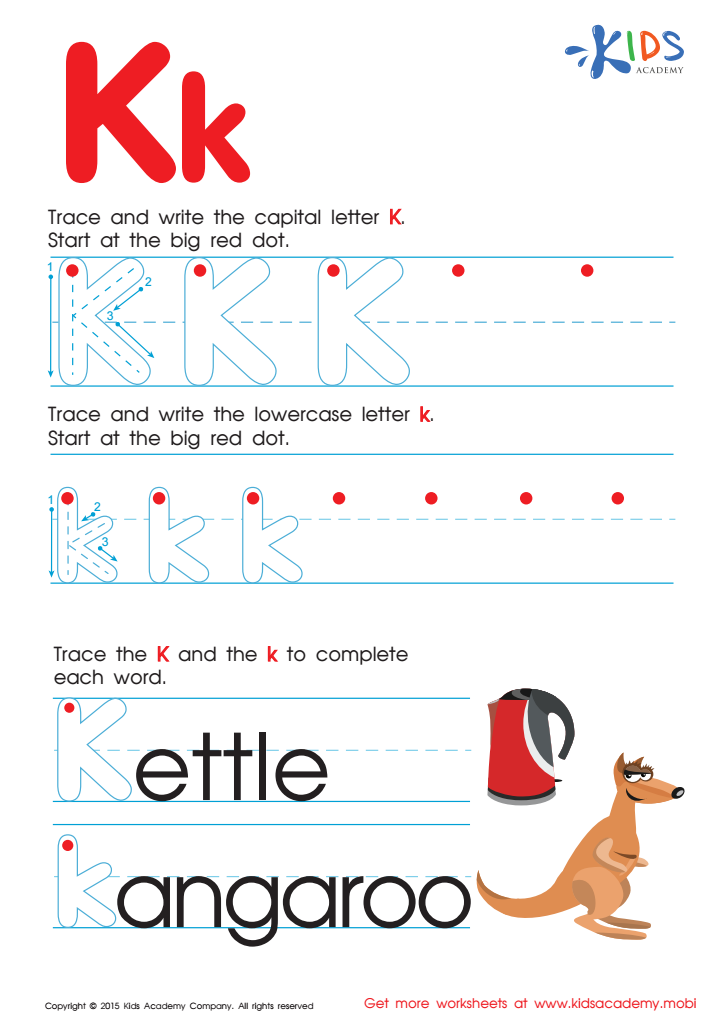
Letter K Tracing Page
Trace and write the letter K; start at the big red dot. Use it to complete words like "Kettle" and "Kangaroo". Visit Kids Academy for more free alphabet worksheets for kindergarten.
Letter K Tracing Page
Worksheet
Join Kids Academy for Free
Who is primarily going to use this learning content?








The foundational skill of alphabet recognition at ages 5-6 is critical for early literacy development, making it a key concern for parents and teachers alike. At this developmental stage, children's brains are highly receptive to learning new concepts, including letters and sounds. Recognizing and understanding the alphabet forms the basis for reading and writing, essential skills for academic success. When children can identify letters accurately, they can start decoding words, an ability that fuels reading fluency and comprehension.
Alphabet recognition also fosters confidence and enthusiasm for learning. Struggling with basics like letter recognition can lead to frustration and a negative attitude toward school. By ensuring children develop this skill early, parents and teachers enable smoother transitions into more complex literacy tasks. Moreover, the ability to recognize letters contributes to other cognitive developments, including memory, visual recognition, and linguistic skills.
Investing effort into this fundamental phase prepares children for a lifetime of learning, bridging gaps early on in case of any developmental delays. Therefore, prioritizing alphabet understanding during these formative years not only supports academic achievement but also plays a pivotal role in developing a holistic, lifelong learner.








