Fine motor skills development Normal Letter Recognition Worksheets for Ages 5-6
3 filtered results
-
From - To
Our "Fine Motor Skills Development Normal Letter Recognition Worksheets for Ages 5-6" are designed to enhance young learners' hand-eye coordination and dexterity while promoting letter recognition. Perfect for ages 5-6, these engaging activities help children practice writing, tracing, and identifying letters. Through fun, educational exercises, kids will improve fine motor skills essential for everyday tasks, such as writing and drawing. Our worksheets offer a playful yet structured approach to ensuring your child’s developmental milestones are met while fostering a love for learning. Propel your child's early education with our expertly crafted resources!
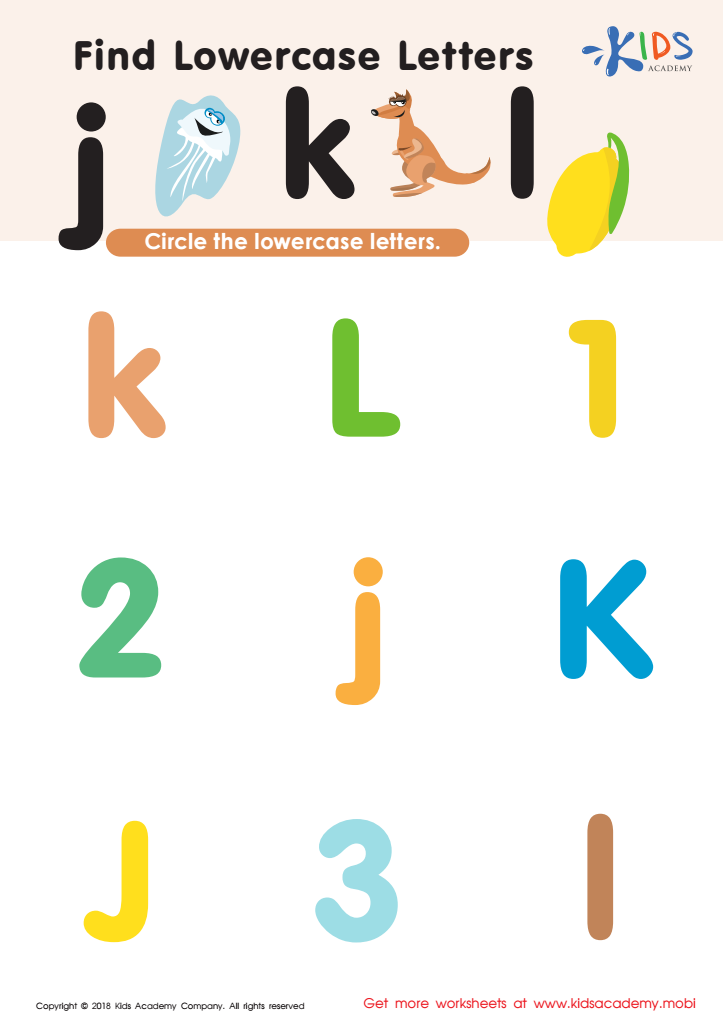
Find Lowercase Letters j k l Worksheet
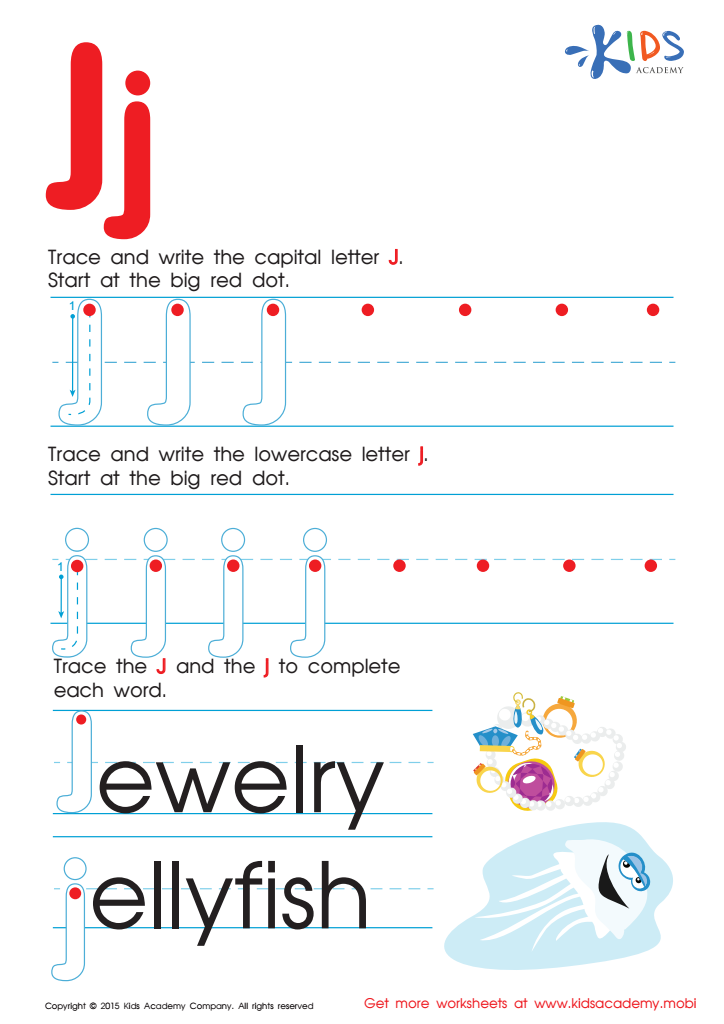
Letter J Tracing Page
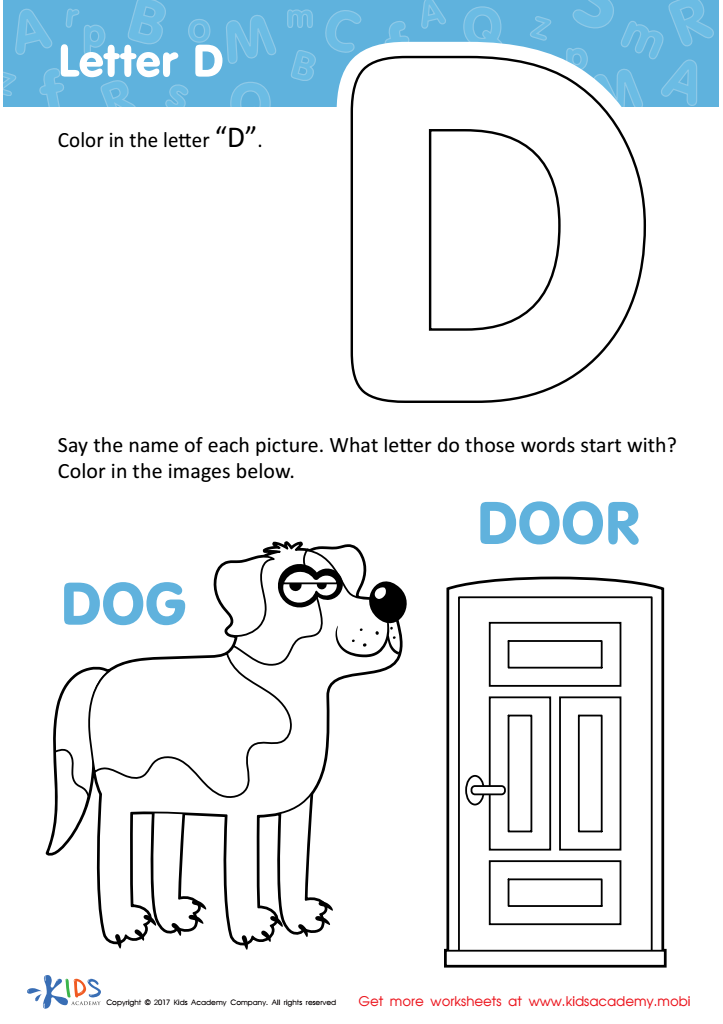
Letter D Coloring Sheet
 Assign to My Students








Fine motor skills development and normal letter recognition are crucial for children aged 5-6 for several important reasons. At this age, children are in a formative stage of their educational journey, where foundational skills are built for future learning. Fine motor skills involve the coordination of small muscles, particularly in the hands and fingers, enabling children to perform tasks such as holding a pencil, cutting with scissors, and tying shoelaces. Developing these skills is critical because they directly impact a child's ability to perform classroom-related activities efficiently and comfortably.
Normal letter recognition, on the other hand, is a precursor to effective reading and writing. By recognizing and understanding letters, children can begin to understand the basic principles of phonics, spelling, and word formation. This recognition skills fosters early literacy and sets the stage for more complex reading abilities and academic success in later years.
When parents and teachers prioritize the development of fine motor skills and normal letter recognition, children are given the tools necessary to thrive academically and gain confidence in their various abilities. Structured activities like drawing, tracing letters, and practicing handwriting can significantly support these developments. Consequently, fostering these skills not only enhances educational outcomes but also nurtures a child's overall growth and self-esteem.








