
Handwriting improvement Normal Letter Recognition Worksheets for Ages 5-6
3 filtered results
Difficulty Level
Grade
Age
-
From - To
Subject
Activity
Standards
Enhance your child's handwriting and letter recognition skills with our expert-designed Normal Letter Recognition Worksheets for ages 5-6. These engaging worksheets focus on improving handwriting through enjoyable activities that cultivate fine motor skills and letter familiarity. Your little learners will practice tracing, identifying, and writing letters in a playful way that keeps them motivated. With our resources, children can develop confidence in their writing abilities while strengthening their visual and cognitive skills. Equip your child with the foundational literacy skills needed for academic success in an effective and fun manner. Explore our collection and watch their progress soar!
Favorites
With answer key
Interactive
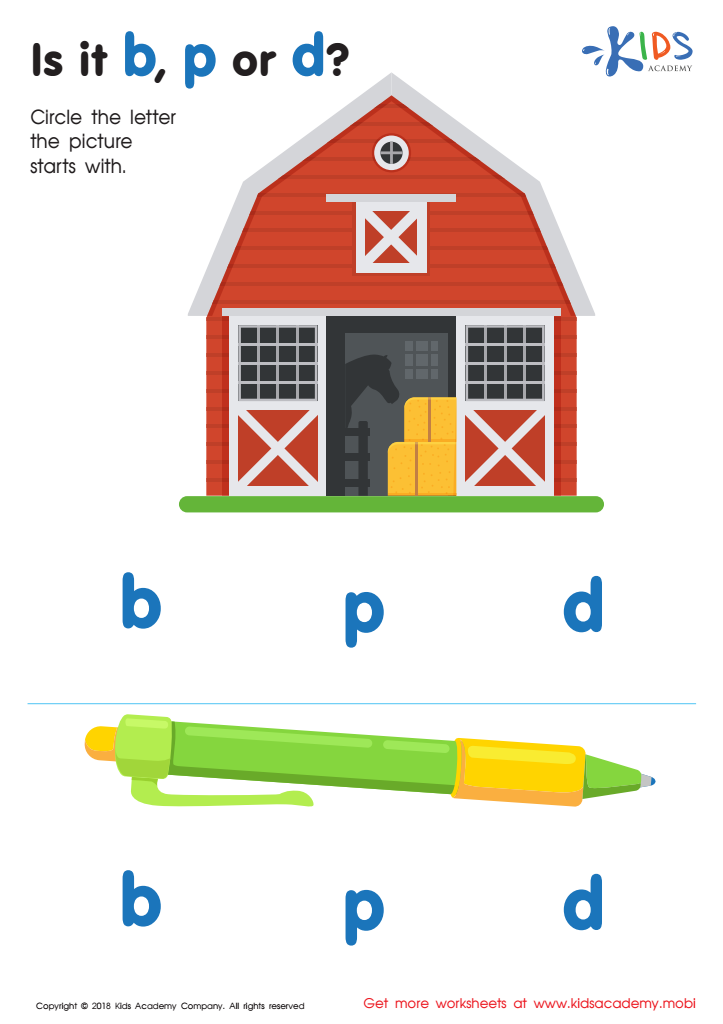
Is it b, p or d? Worksheet
Test your child's identification skills with this worksheet. They must identify the image and then circle the letter it begins with: 'b', 'p', or 'd' (e.g. an image of the sun would mean they circle 's').
 Assign to My Students
Is it b, p or d? Worksheet
Worksheet
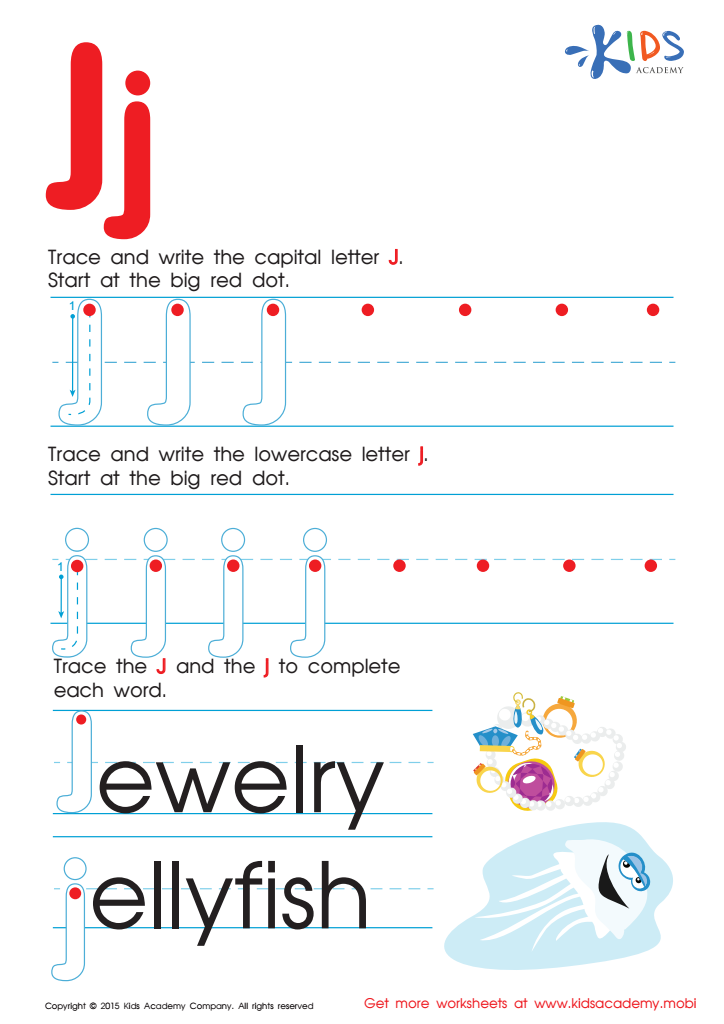
Letter J Tracing Page
Trace and write the letter "J" with our ABC worksheet - start at the big red dot! Have fun completing words like jewelry, jellyfish and more. Check out our kindergarten activities for more alphabet practice.
Letter J Tracing Page
Worksheet
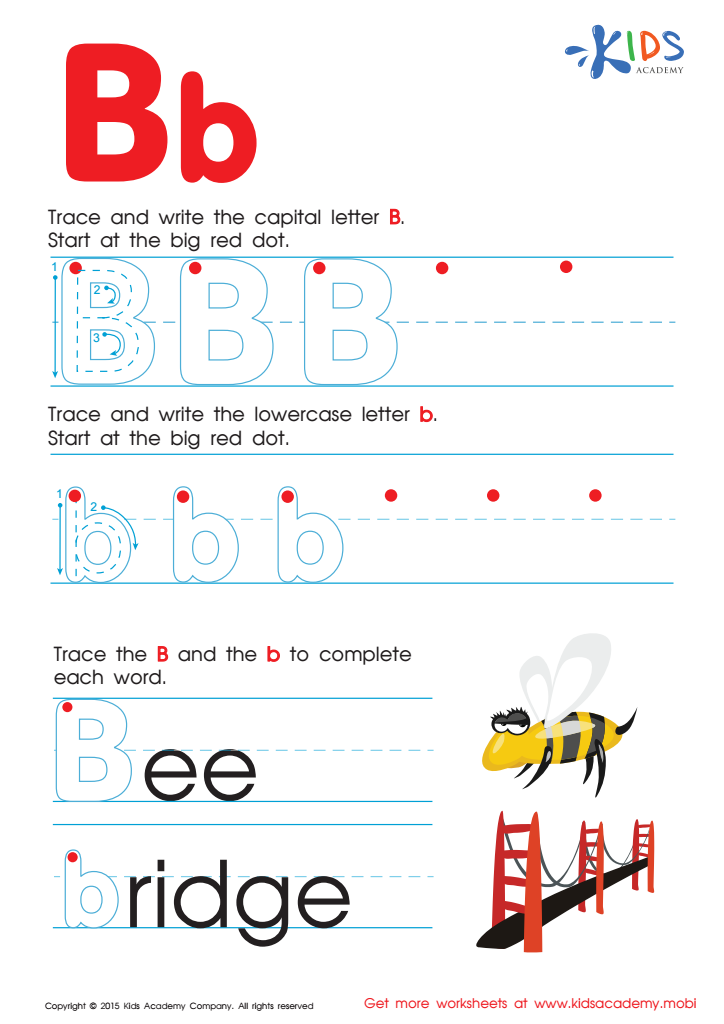
Letter B Tracing Page
Ready to learn the Alphabet? Put your pencil on the red dot and trace & write both capital & lowercase "B". Then have a look at the pictures. Catch the bee, cross the bridge & write the letters to complete the words. More ABC worksheets for kindergarten available!
Letter B Tracing Page
Worksheet
Join Kids Academy for Free
Who is primarily going to use this learning content?








Parents and teachers should prioritize handwriting improvement and normal letter recognition for children aged 5-6 because these foundational skills are vital for academic success and overall communication abilities. At this age, children are in the crucial stage of developing fine motor skills necessary for writing. Handwriting improvement not only enhances their ability to form letters clearly and legibly but also boosts their confidence in expressing their thoughts on paper.
Normal letter recognition is equally important. When children can easily identify letters, they can better understand the relationships between letters and sounds, which lays the groundwork for reading and spelling. This knowledge aids phonemic awareness, critical for early literacy development. Additionally, strong handwriting and letter recognition skills support classroom participation and engagement, as children will feel more comfortable contributing through written tasks.
Moreover, a solid foundation in handwriting can prevent future struggles with writing endurance and fluency, helping to foster a love for writing. Engaging with children's handwriting and reading development not only reinforces these essential skills but also sets the stage for lifelong learning, making it imperative for parents and teachers to actively support and encourage progress in these areas.








