
Phonics practice Normal Letter Recognition Worksheets for Ages 5-6
4 filtered results
Difficulty Level
Grade
Age
-
From - To
Subject
Activity
Standards
Unlock your child's reading potential with our Phonics Practice Normal Letter Recognition Worksheets, designed specifically for ages 5-6. These engaging and educational worksheets help young learners master the basics of letter recognition, essential for developing strong phonics skills. Each colorful and interactive worksheet guides children to identify, differentiate, and correctly sound out letters, laying a strong foundation for reading success. Perfect for home or classroom use, these resources make learning fun and effective. Give your child the tools they need to excel in reading with our expertly crafted phonics practice worksheets. Visit us today to get started!
Favorites
With answer key
Interactive
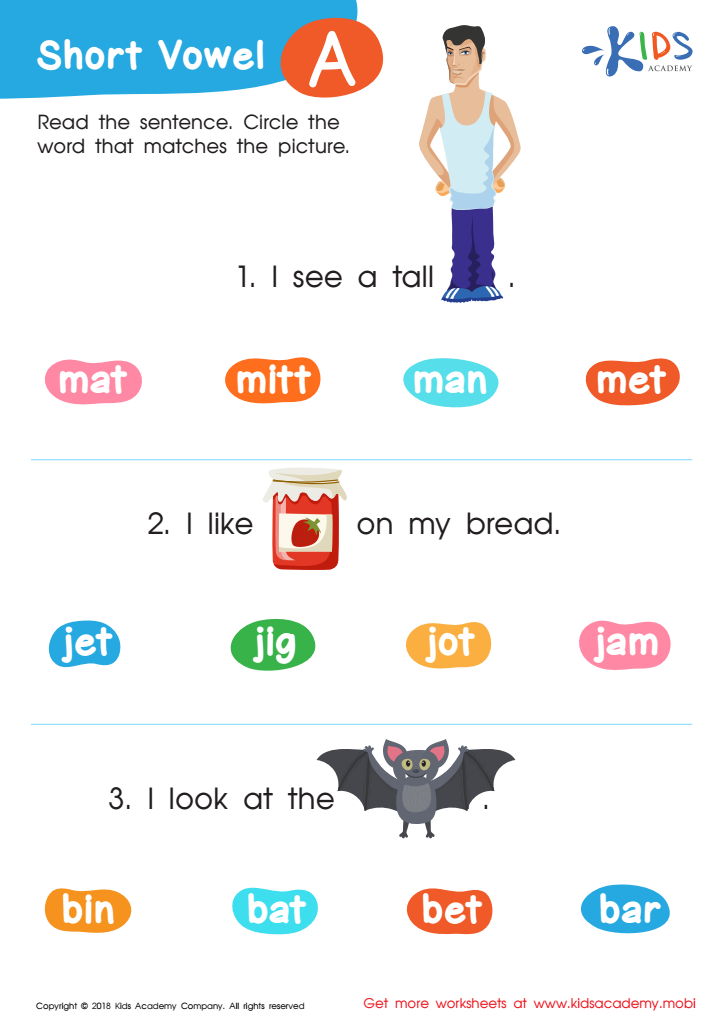
Short Vowel /a/ Worksheet
This free PDF helps new readers use sight words and pictures to read basic sentences. Then, they use accompanying word choices to find the correct word with the short a vowel sound. A key early reading skill, discriminating between short vowel sounds can be tricky in monosyllabic words, so use this PDF to help your reader reinforce it.
Short Vowel /a/ Worksheet
Worksheet
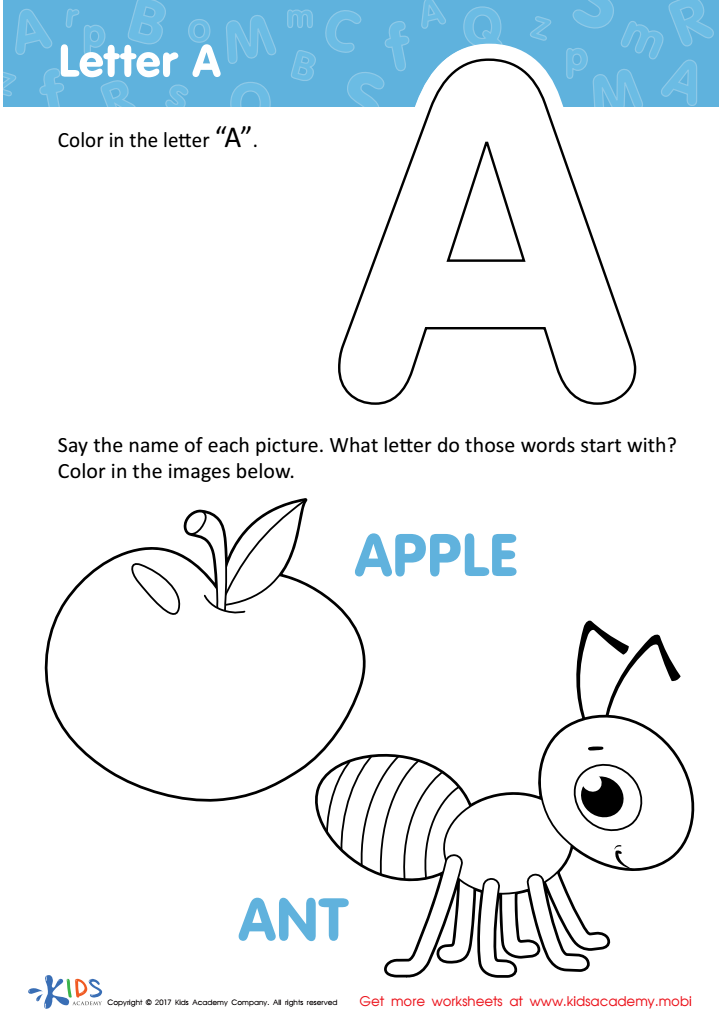
Letter A Coloring Sheet
This letter "A" coloring page is great for introducing kids to the alphabet! Let them exercise their creativity while they learn to recognize letters and sounds - it's a fun and easy way to help them get started.
Download (PDF)
 Assign to My Students
Assign to My Students
Letter A Coloring Sheet
Worksheet
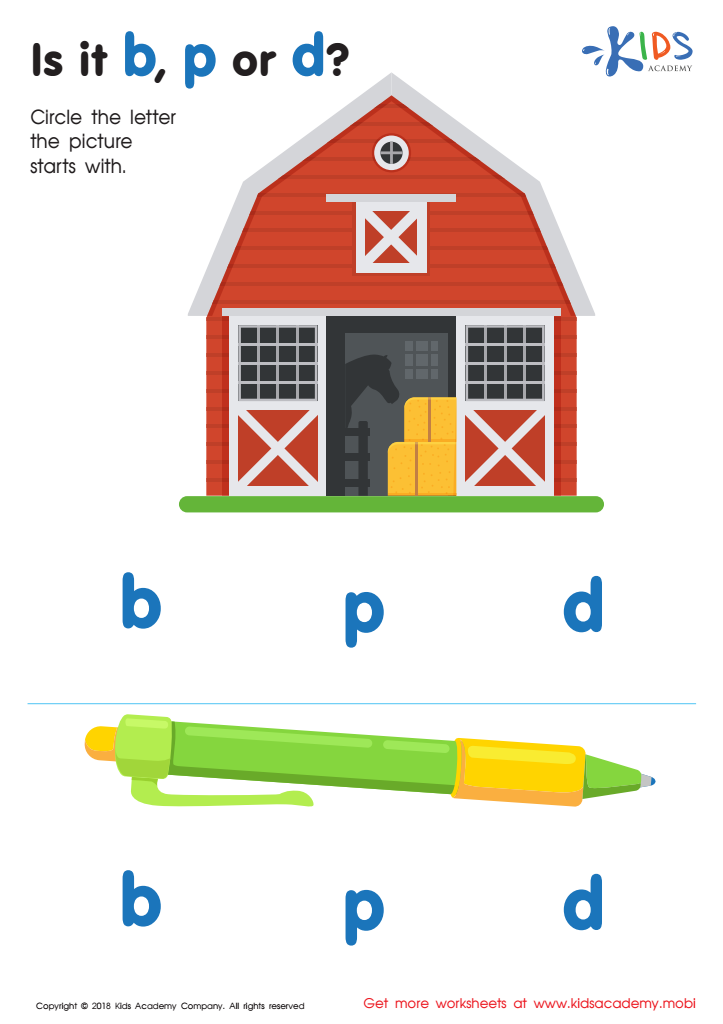
Is it b, p or d? Worksheet
Test your child's identification skills with this worksheet. They must identify the image and then circle the letter it begins with: 'b', 'p', or 'd' (e.g. an image of the sun would mean they circle 's').
Is it b, p or d? Worksheet
Worksheet
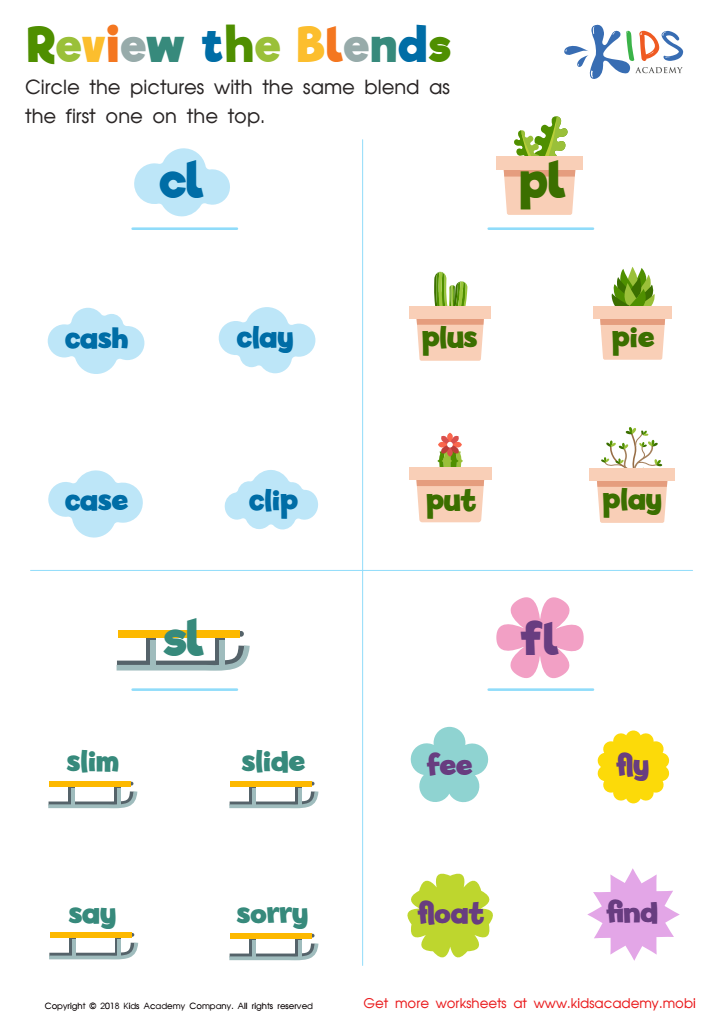
Review the Blends Worksheet
Consonant blends are two or three consonants that make a sound when pronounced together. L-blends like cl, bl, sl, fl and 3-letter blends like str, slp are common. This phonics worksheet helps early readers identify words containing two letter L-blends. Students must circle the words then read them aloud.
Review the Blends Worksheet
Worksheet
Join Kids Academy for Free
Who is primarily going to use this learning content?








Parents and teachers should care about phonics and normal letter recognition for children aged 5-6 because these skills provide the essential foundation for literacy development. Phonics—the relationship between letters and their corresponding sounds—enables young learners to decode new words, boosting reading fluency and comprehension. By practicing letter recognition, children become familiar with the alphabet, an activity that enhances their ability to link written text to spoken language.
Early mastery of phonics and letter recognition sets the stage for academic success. Children who grasp these concepts early can transition more smoothly into reading and writing, which are crucial for learning across all subjects. Without a strong foundation in these skills, children may struggle to keep up, leading to frustration and potential challenges in literacy acquisition.
Furthermore, engaging in phonics and letter recognition activities can make learning interactive and enjoyable. Games, songs, and hands-on activities can foster a love of reading that extends beyond the classroom. By ensuring that children have a strong start with these foundational skills, parents and teachers are investing in their long-term educational growth, helping to foster confident, competent, and enthusiastic readers. Thus, phonics practice and letter recognition are not just beneficial; they are indispensable in a child's early education.








